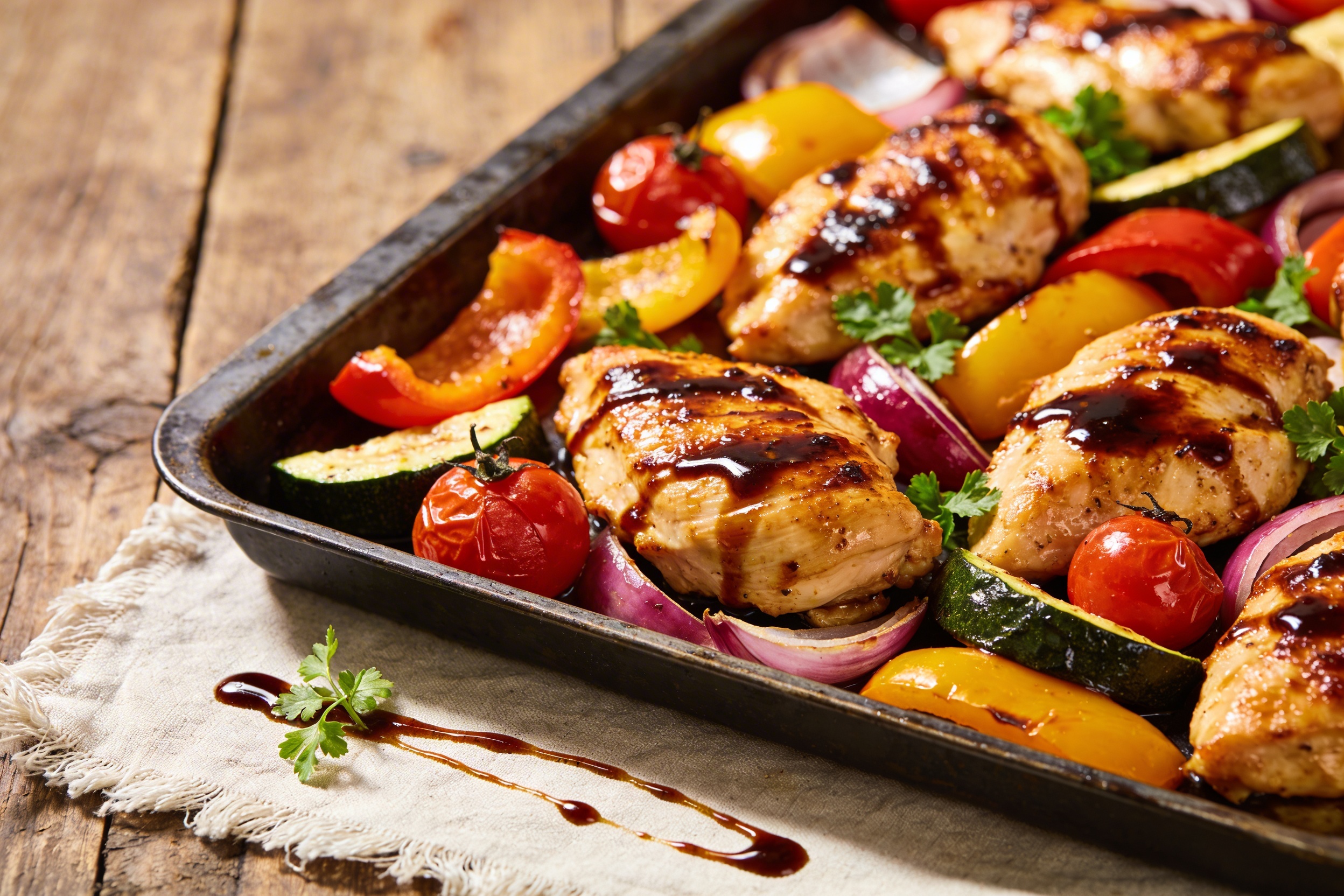
I love making sheet pan meals because they feel cozy and complete without a lot of fuss. This Balsamic Glazed Chicken and Veggies comes together in one pan, which means less cleanup and more time around the table with people you care about. It’s perfect for weeknights when you want something tasty but easy, or for gatherings where you want to feed a crowd without standing over a stove. The combination of juicy chicken, sweet-tenacious glaze, and colorful vegetables feels both comforting and bright, and it uses simple, easy-to-find ingredients. Let’s break down exactly how to make Balsamic Glazed Chicken and Veggies, along with helpful tips and variations to make it your own.
Ingredients You’ll Need for Balsamic Glazed Chicken and Veggies
Good ingredients matter here because the pan-crisped textures and the glaze rely on quality flavors to shine. The chicken should be boneless, skinless breasts or thighs, depending on your preference for lean meat or a little extra juiciness; either works well when cut into even pieces. The vegetables should be firm and fresh for a crisp-tinish bite once roasted, so choose colors you love—bell peppers, zucchini, red onion, and cherry tomatoes are all excellent. The balsamic glaze brings sweetness and acidity that caramelizes beautifully in the hot oven, so a good traditional balsamic is worth it, though a seasoned supermarket bottle will also do the job. For the glaze, a touch of honey or maple syrup balances the vinegar’s tang, while garlic and a pinch of dried herbs round out the savoriness without overpowering the dish.
For the marinade and protein, you’ll use boneless, skinless chicken breasts or thighs as the main protein, cut into uniform, bite-sized pieces so they cook evenly. The marinade is simple: olive oil, balsamic vinegar, minced garlic, salt, and pepper blend to coat every piece while adding a subtle gloss that helps the glaze cling later. For the sauce and topping, you’ll whisk together more balsamic vinegar, a touch of honey or maple syrup, soy sauce or Dijon mustard (optional), and a pinch of red pepper flakes to create a glossy, flavorful glaze that caramelizes in the heat. The base vegetables include colorful bell peppers, zucchini or yellow squash, red onion, and cherry tomatoes—add anything you love that roasts well. Finally, you’ll finish with a handful of fresh herbs like parsley or basil to brighten the dish at the end.
To assemble, you’ll also need a light coating of olive oil to help everything roast and a pinch of salt and pepper to season as you go. Optional toppings like crushed red pepper flakes, sesame seeds, or torn fresh herbs let you customize the dish for your taste and color preferences.
How to Make Balsamic Glazed Chicken and Veggies
How to Make the Marinade and Roast the Chicken and Veggies
- Prepare the marinade: In a small bowl, whisk together olive oil, balsamic vinegar, minced garlic, salt, and black pepper. This basic blend infuses the chicken with flavor and helps the glaze cling during roasting.
- Cut and coat the chicken: Cut the chicken into evenly sized pieces so they cook uniformly. Toss with a portion of the marinade and set aside to rest while you prep the vegetables. The resting time helps the flavors begin to penetrate the meat.
- Prepare the vegetables: Slice bell peppers and zucchini into bite-sized chunks; cut red onion into wedges or slices. Toss vegetables lightly with olive oil, salt, and pepper so every piece gets a thin, even coat.
- Roast and glaze step: Spread the chicken and vegetables out in a single layer on a large sheet pan. Roast in a hot oven until the chicken just starts to turn opaque and the vegetables begin to blister and soften, about 14–18 minutes depending on your pan and oven. Meanwhile, prepare the glaze by whisking balsamic vinegar, a little honey or maple syrup, and a splash of soy sauce or mustard if using, plus a pinch of red pepper flakes for a gentle kick.
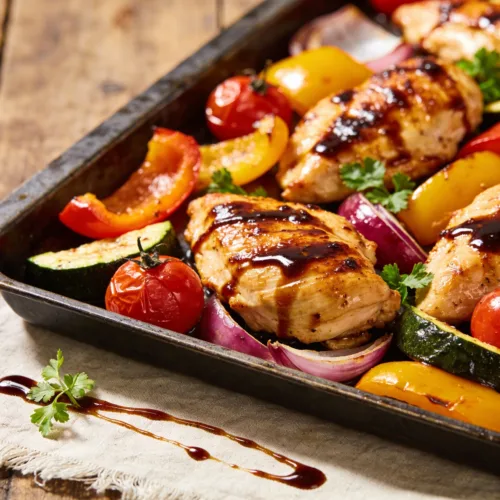
- Finish with glaze and serve: Remove the pan from the oven and drizzle the glaze over the chicken and vegetables. Return to the oven for a final 5–7 minutes, or until the sauce thickens and coats the pieces with a glossy finish. Scatter chopped herbs over the top and serve hot.
How to Roast the Chicken and Veggies on a Sheet Pan
![[HERO] closeup balsamic glazed chicken on rustic wooden board](https://flavorterrace.com/wp-content/uploads/2026/03/temp_1774379246348.jpg)
Roasting in a single pan is what makes this dish come together so quickly and with minimal cleanup. The vegetables should caramelize a bit and the chicken should stay juicy, not dried out. Here’s how to do it right.
- Preheat and prepare: Preheat your oven to 425°F (220°C). Line a large sheet pan with parchment for easy cleanup and even browning.
- Spread in a single layer: Place the chicken pieces and the prepared vegetables on the pan in a single layer with a little space around each item. Crowding can cause steaming rather than roasting, so give everything room to roast.
- Roast with partial stirring: Roast for 14–18 minutes, then give the pan a quick stir to ensure even browning. Return to the oven and roast until the chicken reaches 165°F (74°C) and the vegetables are tender and lightly caramelized.
- Glaze and finalize: In the last 5–7 minutes, brush or drizzle the balsamic glaze over the chicken and veggies. Let it reduce just enough to coat the pieces, forming a seamless, tasty glaze that sticks to the surface.
Assembling the Perfect Balsamic Glazed Chicken and Veggies
This final step is all about bringing it together with balanced flavors and a fresh finish. The chicken should be tender and juicy, the vegetables crisp-tender, and the glaze a glossy, slightly sweet and tangy finish that unifies the plate.
- Rest briefly: Let the pan rest for 2–3 minutes after removing from the oven so the juices redistribute for the chicken chunks.
- Garnish: Scatter chopped parsley or basil over the top for color and brightness. A light squeeze of fresh lemon can also lift the overall flavor if you like a citrus note.
- Serve: Spoon portions onto plates or into bowls, ensuring every plate gets a good mix of chicken and vegetables with enough glaze to bring the flavors together in every bite.
Tips for the Best Balsamic Glazed Chicken and Veggies at Home
- Choose chicken pieces that are roughly the same size to ensure even cooking across the pan.
- Pat the chicken dry before marinating to help the glaze adhere better and to promote crisp browning.
- Use a high-quality balsamic vinegar for a richer glaze; if yours is a bit sharp, add a touch more honey to balance the acidity.
- Cut vegetables into uniform sizes so they roast at the same rate and avoid underdone spots.
- Finish with a fresh herb and a squeeze of lemon to brighten the glaze and add a layer of freshness to the dish.
Delicious Variations to Try
![[RECIPE 1] closeup sheet-pan roasted veggies on white plate](https://flavorterrace.com/wp-content/uploads/2026/03/temp_1774379256779.jpg)
- Spicy twist: Add a pinch of red pepper flakes to the glaze for a subtle, warming heat that lingers on the palate.
- Protein swap: Substitute salmon or shrimp for chicken for a seafood variation, adjusting cooking time as needed for doneness.
- Dairy-free option: The glaze contains no dairy; simply ensure any garnish uses dairy-free herbs and coatings if needed.
- Low-carb version: Serve over a bed of wilted greens or roasted cauliflower rice instead of traditional grains for a lighter, low-carb option.
- Vegetarian alternative: Use thick slices of tofu or halloumi (for a cheese-forward version) and roast with the same glaze for a plant-based meal.
- Herb-forward finish: Swap parsley for fresh basil or thyme to shift the aroma and flavor profile to your preferences.
What to Serve with Balsamic Glazed Chicken and Veggies
- Cooked grains: Quinoa, brown rice, or farro provide a hearty base that soaks up the glaze beautifully.
- Leafy greens: A simple side salad or sautéed spinach adds a refreshing contrast to the warm, glossy chicken and veggies.
- Roasted potatoes: Crispy-skinned potatoes seasoned with a hint of rosemary work wonderfully with the glaze.
- Grilled bread or baguette slices: Perfect for mopping up any extra glaze on the pan.
- Bead of citrus: A light squeeze of lemon or orange juice on top before serving brightens the dish even more.
Recipe FAQ’s
Can I make this ahead?
You can mix the chicken and vegetables with the marinade a few hours in advance and store covered in the refrigerator. Do not glaze until you’re ready to roast so the glaze remains glossy and won’t burn during cooking. When ready, roast as directed and finish with the glaze in the last few minutes.
Can I swap equipment or use a different pan?
A rimmed baking sheet works best to catch any juices that spill over, but you can also use a two-pan setup if you need more space. If using a smaller pan, consider roasting in two batches to maintain the proper pan-to-food contact for browning.
How should I store leftovers?
Store cooled leftovers in an airtight container in the refrigerator for up to 3 days. Reheat in a skillet over medium heat, stirring to recoat with the glaze, or warm gently in the oven to preserve texture.
Balsamic Glazed Chicken and Veggies (Sheet Pan)
Ingredients
For the Marinade
- 1/4 cup olive oil
- 1/3 cup balsamic vinegar
- 2 cloves garlic minced
- 1/2 teaspoon salt
- 1/4 teaspoon black pepper
For the Balsamic Glaze
- 1/3 cup balsamic vinegar
- 1 tbsp honey or maple syrup
- 1 teaspoon soy sauce or Dijon mustard
- Pinch of red pepper flakes
For Assembly
- 1 pound boneless, skinless chicken breast or thighs cut into 1-inch pieces
- 1 red bell pepper chopped
- 1 yellow bell pepper chopped
- 1 small zucchini sliced into half-moons
- 1/2 red onion cut into wedges
- 1 tbsp olive oil for roasting
- Salt and black pepper to taste
Instructions
Step 1: Marinate the Chicken
- In a medium bowl, whisk together the olive oil, balsamic vinegar, minced garlic, salt, and pepper until combined. Add the chicken pieces and toss until every piece is evenly coated. Set aside to marinate for at least 10 minutes at room temperature — or cover and refrigerate for up to 4 hours if prepping ahead. The longer the marinate, the deeper the flavor.
Step 2: Prep the Vegetables
- Chop all vegetables into roughly uniform pieces — this ensures they roast evenly and finish at the same time as the chicken. Spread them out in a large bowl and toss with the olive oil, a pinch of salt, and black pepper until lightly coated. Avoid over-oiling, as the glaze will add plenty of richness later.
Step 3: Roast the Chicken and Vegetables
- Preheat your oven to 425°F (220°C) and line a large sheet pan with parchment paper. Spread the chicken and vegetables in a single, even layer — give each piece room to breathe so they roast rather than steam. Roast for 14–18 minutes, until the chicken is nearly cooked through and the vegetables are tender with caramelized edges. While they roast, whisk together the glaze ingredients — balsamic vinegar, honey or maple syrup, soy sauce or mustard if using, and a pinch of red pepper flakes — in a small bowl until smooth.
Step 4: Add the Glaze and Finish
- Remove the pan from the oven and drizzle the balsamic glaze evenly over the chicken and vegetables. Use a spoon or brush to coat everything well. Return the pan to the oven for a final 5–7 minutes, until the glaze thickens, turns glossy, and begins to caramelize at the edges. Watch closely during this final stage — balsamic can go from beautifully sticky to burnt quickly. Remove from the oven, scatter fresh herbs over the top, and serve immediately straight from the pan.