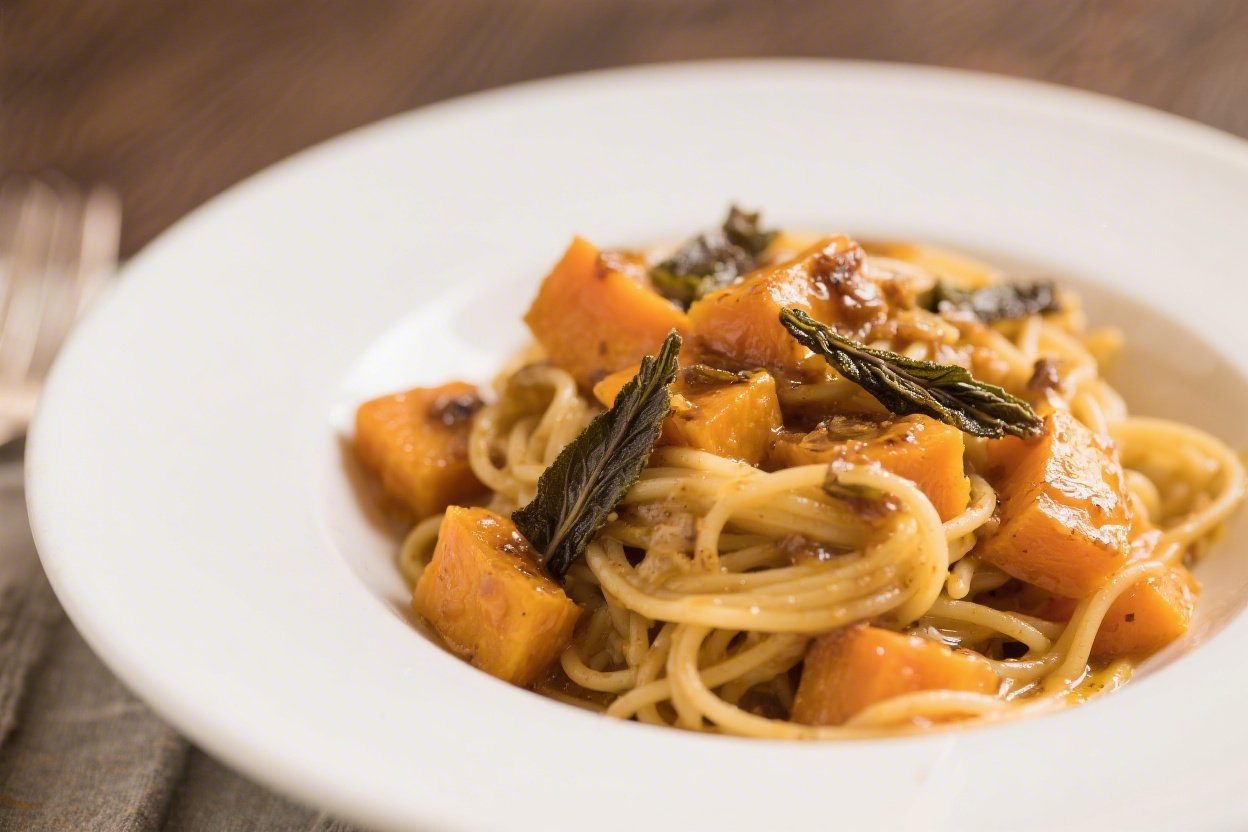
This is the kind of pasta you make when you want something special without fuss. Butternut squash turns silky and sweet, browned butter adds a nutty backbone, and crispy sage brings a hint of earthiness. It’s simple, seasonal, and deeply satisfying.
You don’t need fancy tools or hours in the kitchen—just a few good ingredients and a big skillet. Serve it on a weeknight or for friends on the weekend; it always feels like a treat.
Why This Recipe Works

Browned butter builds flavor fast. Gently cooking butter until it turns golden creates a toasty, nutty taste that pairs perfectly with sweet squash. The sage gets crisp in that butter, infusing the sauce without overpowering it.
Roasting the squash concentrates sweetness. High heat caramelizes the edges and keeps the interior tender. You’ll get bites that are soft but still hold their shape—ideal for tossing with pasta.
Pasta water ties it all together. A splash of starchy water loosens the browned butter and helps it cling to the noodles, turning everything into a glossy, savory-sweet sauce.
Parmesan balances the sweetness. A salty, umami finish rounds out the dish and makes every bite more complex.
What You’ll Need
- Butternut squash: About 1 medium (2 to 2.5 pounds), peeled, seeded, and cut into 1/2-inch cubes
- Butter: 6 tablespoons, unsalted
- Fresh sage: 10–12 leaves
- Garlic: 2 cloves, thinly sliced
- Pasta: 12 ounces (short shapes like rigatoni, orecchiette, or penne work best)
- Olive oil: 1–2 tablespoons (for roasting the squash)
- Parmesan cheese: 1/2 to 3/4 cup, finely grated, plus more for serving
- Lemon: 1, for zest and a squeeze of juice
- Red pepper flakes: A pinch, optional
- Salt and black pepper: To taste
- Reserved pasta water: 1/2 to 3/4 cup
- Optional extras: Toasted walnuts or pine nuts for crunch, baby spinach for greens
How to Make It

- Heat the oven and prep the squash. Set the oven to 425°F (220°C). Toss squash cubes with olive oil, salt, and pepper on a sheet pan. Spread in a single layer.
- Roast until caramelized. Bake for 20–25 minutes, flipping once, until the edges are golden and the centers are tender but not mushy. Set aside.
- Boil the pasta. Bring a large pot of salted water to a boil. Cook pasta until just shy of al dente. Reserve 3/4 cup of the starchy cooking water, then drain.
- Brown the butter. In a large skillet over medium heat, melt the butter. Add sage leaves and cook, stirring, until the butter foams and turns golden with brown specks and the sage crisps, about 3–4 minutes. Adjust heat as needed to prevent burning.
- Add garlic and optional heat. Stir in the sliced garlic and a pinch of red pepper flakes. Cook 30–45 seconds until fragrant.
- Build the sauce. Add 1/2 cup reserved pasta water to the skillet to stop the butter from getting too dark. Simmer 30 seconds, scraping up any browned bits.
- Toss it all together. Add the pasta and roasted squash to the skillet. Toss gently over low heat. Sprinkle in the Parmesan and a small squeeze of lemon juice, tossing until glossy. Add more pasta water as needed to loosen and coat.
- Finish and season. Taste and adjust salt and pepper. Add lemon zest for brightness. If using, fold in a handful of baby spinach to wilt slightly.
- Serve. Plate with extra Parmesan and a few crispy sage leaves on top. Add toasted nuts if you like crunch.
How to Store
- Refrigerator: Store leftovers in an airtight container for up to 3 days.
- Reheat: Warm gently in a skillet with a splash of water or broth to loosen the sauce. Avoid high heat so the pasta doesn’t dry out.
- Freezer: Not ideal. The texture of the squash and pasta softens too much after thawing.
- Make-ahead tip: Roast the squash up to 2 days ahead and keep chilled. Brown the butter and crisp the sage just before serving for best flavor.
Health Benefits
- Butternut squash is nutrient-dense. It’s rich in vitamin A (beta-carotene), vitamin C, potassium, and fiber, which support immunity, eye health, and digestion.
- Balanced comfort food. Pasta provides energy, while the squash adds fiber and micronutrients. A moderate amount of butter and cheese keeps it satisfying without going overboard.
- Healthy fats and herbs. Sage offers antioxidants, and using a controlled amount of butter gives you flavor with portion awareness. Add spinach or arugula for extra vitamins and iron.
Common Mistakes to Avoid
- Cutting the squash too large. Oversized chunks won’t cook evenly. Aim for 1/2-inch cubes so they caramelize and stay tender.
- Rushing the brown butter. Keep the heat moderate and watch closely. You want golden brown, not black. If it smells acrid, start over.
- Skipping the pasta water. It’s the key to a silky sauce. Always reserve some before draining.
- Overcooking the pasta. Keep it just shy of al dente so it finishes in the pan and absorbs flavor.
- Adding cheese off the heat. If the pan is too hot, Parmesan can clump. Lower the heat, then add cheese gradually while tossing.
Variations You Can Try
- Sausage and sage. Brown Italian sausage before the butter step. Remove, then proceed with the recipe and fold the sausage back in.
- Brown butter hazelnut. Swap nuts: toast chopped hazelnuts or walnuts and sprinkle on top for crunch.
- Greens upgrade. Stir in baby spinach, kale ribbons, or arugula at the end for extra color and nutrients.
- Gluten-free. Use your favorite gluten-free pasta and watch the cook time closely.
- Creamy twist. Add a splash of heavy cream or mascarpone after the pasta water for a richer sauce.
- Dairy-light option. Use 3–4 tablespoons of butter instead of 6 and finish with a small amount of olive oil and nutritional yeast.
FAQ
Can I use pre-cut butternut squash?
Yes. Choose pieces that are evenly sized and fresh-looking, not slimy or dried out. You may need to trim oversized chunks for even roasting.
What pasta shape works best?
Short, ridged shapes like rigatoni, penne, or orecchiette grab the sauce and bits of squash. That said, spaghetti or fettuccine still taste great if that’s what you have.
How do I know when the butter is properly browned?
Watch for foaming to subside, a deep golden color, and tiny brown milk solids at the bottom of the pan. It should smell nutty and toasty, not burnt.
Can I make this vegetarian?
It already is. To keep it vegetarian and rennet-free, choose a Parmesan-style cheese labeled suitable for vegetarians or use Pecorino alternatives made without animal rennet.
What can I use instead of sage?
Fresh thyme or rosemary works, though the flavor shifts. Use less rosemary since it’s stronger. A handful of fresh parsley at the end adds brightness.
Can I add protein?
Absolutely. Cooked chicken, crispy prosciutto, or sautéed mushrooms fit nicely. Add them when tossing the pasta so everything warms through together.
Why is my sauce greasy?
You may need more pasta water to emulsify the butter, or your heat was too high when adding cheese. Lower the heat and whisk in more starchy water until it turns glossy.
Is frozen squash okay?
Yes, but roast it from frozen at a slightly higher heat (about 450°F/230°C) and expect softer edges. Pat dry if it releases excess moisture.
Wrapping Up
Brown Butter Sage Butternut Squash Pasta is cozy, quick, and full of layered flavor. With roasted squash, nutty butter, and a hint of lemon, it feels both comforting and fresh.
Keep this one in your back pocket for cool evenings, easy gatherings, or anytime you want a bowl of something warm and satisfying. Simple ingredients, big payoff—just how weeknight cooking should be.
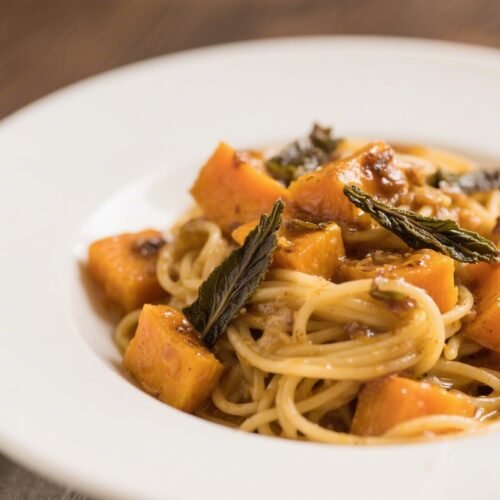
Brown Butter Sage Butternut Squash Pasta
Ingredients
- Butternut squash: About 1 medium (2 to 2.5 pounds), peeled, seeded, and cut into 1/2-inch cubes
- Butter: 6 tablespoons, unsalted
- Fresh sage: 10–12 leaves
- Garlic: 2 cloves, thinly sliced
- Pasta: 12 ounces (short shapes like rigatoni, orecchiette, or penne work best)
- Olive oil: 1–2 tablespoons (for roasting the squash)
- Parmesan cheese: 1/2 to 3/4 cup, finely grated, plus more for serving
- Lemon: 1, for zest and a squeeze of juice
- Red pepper flakes: A pinch, optional
- Salt and black pepper: To taste
- Reserved pasta water: 1/2 to 3/4 cup
- Optional extras: Toasted walnuts or pine nuts for crunch, baby spinach for greens
Instructions
- Heat the oven and prep the squash. Set the oven to 425°F (220°C). Toss squash cubes with olive oil, salt, and pepper on a sheet pan. Spread in a single layer.
- Roast until caramelized. Bake for 20–25 minutes, flipping once, until the edges are golden and the centers are tender but not mushy. Set aside.
- Boil the pasta. Bring a large pot of salted water to a boil. Cook pasta until just shy of al dente. Reserve 3/4 cup of the starchy cooking water, then drain.
- Brown the butter. In a large skillet over medium heat, melt the butter. Add sage leaves and cook, stirring, until the butter foams and turns golden with brown specks and the sage crisps, about 3–4 minutes. Adjust heat as needed to prevent burning.
- Add garlic and optional heat. Stir in the sliced garlic and a pinch of red pepper flakes. Cook 30–45 seconds until fragrant.
- Build the sauce. Add 1/2 cup reserved pasta water to the skillet to stop the butter from getting too dark. Simmer 30 seconds, scraping up any browned bits.
- Toss it all together. Add the pasta and roasted squash to the skillet. Toss gently over low heat. Sprinkle in the Parmesan and a small squeeze of lemon juice, tossing until glossy. Add more pasta water as needed to loosen and coat.
- Finish and season. Taste and adjust salt and pepper. Add lemon zest for brightness. If using, fold in a handful of baby spinach to wilt slightly.
- Serve. Plate with extra Parmesan and a few crispy sage leaves on top. Add toasted nuts if you like crunch.