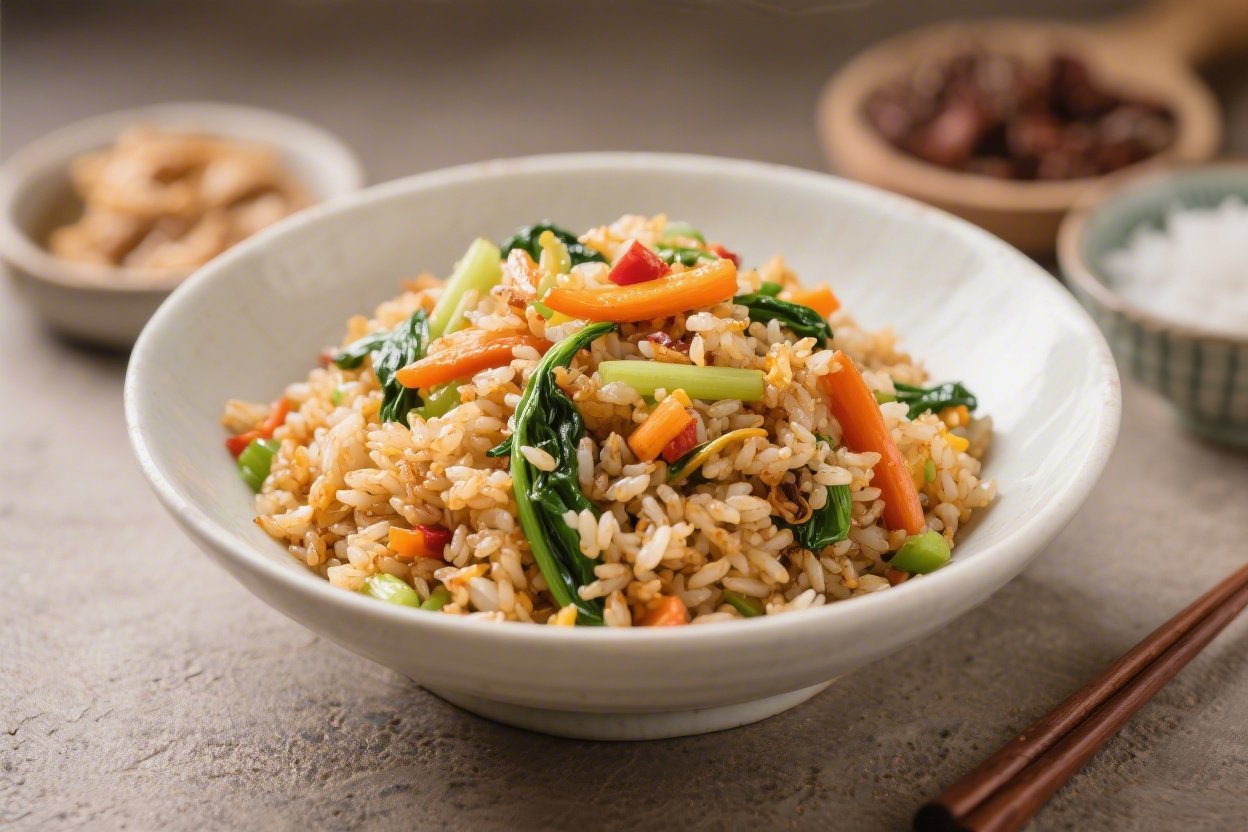
This is the kind of weeknight dinner that makes you feel clever. It’s quick, flexible, and delivers bold flavor with simple ingredients. Korean Veggie Fried Rice hits that sweet spot of comfort and freshness, thanks to smoky sesame oil, savory soy, and a spicy-sweet kick of gochujang.
It uses leftover rice and whatever vegetables you have on hand. The result is a colorful, hearty bowl that tastes like it took way more effort than it did.
What Makes This Recipe So Good
- Big flavor, little effort: Gochujang, garlic, and sesame oil build deep, layered taste in minutes.
- Perfect for leftovers: Day-old rice fries beautifully and turns pantry vegetables into a full meal.
- Balanced texture: Crisp-tender veggies, chewy rice, and a jammy or crispy egg on top if you like.
- Flexible and friendly: Easy to make vegan, gluten-free, or protein-packed with tofu or edamame.
- Fast cleanup: One pan, one bowl, dinner done.
Ingredients
- 3 cups day-old cooked rice (short- or medium-grain preferred; cold from the fridge)
- 2 tablespoons neutral oil (avocado, canola, or light olive oil)
- 1 tablespoon toasted sesame oil
- 1 small yellow onion, finely chopped
- 2 garlic cloves, minced
- 1 teaspoon fresh ginger, minced or grated (optional but great)
- 1 cup carrot, diced small
- 1 cup zucchini, diced small
- 1 cup cabbage, thinly sliced (napa or green)
- 1/2 cup frozen peas or edamame, thawed
- 2 green onions, sliced (white and green parts separated)
- 1–2 tablespoons gochujang (Korean red pepper paste), to taste
- 2 tablespoons soy sauce (use tamari or gluten-free soy if needed)
- 1 teaspoon rice vinegar or apple cider vinegar
- 1 teaspoon sugar or maple syrup (balances heat)
- Black pepper, to taste
- 2 eggs (optional; for frying or scrambling into the rice)
- Sesame seeds, for garnish
- Optional toppings: kimchi, nori strips, extra gochujang or soy sauce
How to Make It

- Prep the rice: Break up any clumps with your hands so the grains separate. This helps the rice fry instead of steaming.
- Make the sauce: In a small bowl, whisk gochujang, soy sauce, vinegar, and sugar until smooth. Adjust gochujang for spice level.
- Heat the pan: Set a large skillet or wok over medium-high heat. Add neutral oil and swirl to coat.
- Cook aromatics: Add onion and the white parts of the green onion. Stir-fry 2–3 minutes until softened. Add garlic and ginger; cook 30 seconds until fragrant.
- Stir-fry the veggies: Add carrot and zucchini. Cook 3–4 minutes, stirring often. Add cabbage and peas/edamame; cook 2 more minutes until crisp-tender.
- Add the rice: Push the veggies to the sides. Drizzle a little oil in the center and add rice. Let it sit 30–45 seconds to sear, then toss everything together. Cook 2–3 minutes to heat through.
- Sauce it up: Pour in the gochujang mixture and the sesame oil. Toss well so every grain is coated. Season with black pepper and taste for salt/soy.
- Egg option:
- For fried eggs: In a separate small pan, fry eggs to your liking in a little oil.
- For scrambled-in: Push rice to the sides, add a touch of oil, pour in beaten eggs, scramble softly, then fold into the rice.
- Finish and serve: Stir in the green parts of the green onion. Top with sesame seeds, fried egg if using, and optional kimchi or nori. Serve hot.
How to Store
- Fridge: Cool completely, then store in an airtight container for up to 4 days.
- Freeze: Portion into freezer-safe bags, press flat, and freeze up to 2 months. Thaw overnight in the fridge.
- Reheat: Warm in a hot skillet with a splash of water or oil, stirring until steamy. Microwave works too; cover and heat in short bursts, stirring between.
- Food safety note: Cool rice quickly and refrigerate within 1–2 hours to keep it safe and tasty.
Why This is Good for You
- Veggie-dense: Carrots, cabbage, and zucchini bring fiber, vitamin C, and beta carotene for a more filling, colorful meal.
- Protein options: Eggs or edamame add satisfying protein without heavy prep. Tofu cubes crisp up well and soak in the sauce.
- Smarter carbs: Using day-old rice helps with texture, and brown rice works if you want extra fiber and minerals.
- Healthy fats: Sesame oil adds flavor with a small amount, so you get richness without greasiness.
Common Mistakes to Avoid
- Using fresh, hot rice: It clumps and turns mushy. Use chilled rice or spread warm rice on a tray to cool and dry for 20 minutes.
- Overcrowding the pan: Too many veggies steam instead of sear. Cook in batches if needed.
- Adding sauce too early: Wet sauce before the rice is hot can make things soggy. Heat the rice first, then add sauce.
- Skipping high heat: You want a little char and wok fragrance. Keep the pan hot and move fast.
- Forgetting to taste: Adjust salt, acid, and heat at the end. A touch more soy or vinegar can brighten everything.
Alternatives
- Grains: Swap rice for quinoa, farro, or cauliflower rice. For cauliflower rice, cook briefly to avoid sogginess.
- Proteins: Add crispy tofu, tempeh, seared mushrooms, or leftover chicken/shrimp if not keeping it vegetarian.
- Veg swaps: Bell peppers, spinach, corn, bean sprouts, or broccoli stems work well. Keep pieces small and even.
- Sauce tweaks: Mix in a little oyster sauce (or vegan mushroom sauce) for extra umami, or a dash of gochugaru for more heat.
- Gluten-free: Use tamari or a certified gluten-free soy sauce. Many gochujang brands contain wheat; choose a gluten-free one.
- No gochujang on hand: Combine chili paste or sriracha with a bit of miso or tomato paste plus honey to mimic the sweet heat.
FAQ
Can I use freshly cooked rice?
Yes, but spread it on a baking sheet and let it steam off and cool for at least 20–30 minutes. Chilling in the fridge speeds this up and helps dry the grains so they fry better.
How spicy is this?
It’s mildly to moderately spicy with 1 tablespoon of gochujang. For less heat, start with 1 teaspoon and add more at the end. For extra kick, add gochugaru or a drizzle of chili oil.
What pan should I use?
A wok is ideal for high heat and quick tossing, but a large, heavy skillet works too.
The key is a wide surface area so the rice and veggies can sear instead of steam.
Can I make it vegan?
Absolutely. Skip the eggs and use edamame or tofu for protein. Also check that your gochujang is vegan, as some brands may include non-vegan additives.
How do I keep the rice from sticking?
Preheat the pan well, use enough oil, and avoid stirring constantly.
Let the rice sit for brief moments to develop a light crust, then toss.
What’s the best way to add kimchi?
Chop and stir in a small handful near the end for bright flavor, or serve it on top to keep its crunch. If adding to the pan, reduce other salt a touch since kimchi is salty.
Can I double the recipe?
Yes, but cook in two batches to maintain high heat and good texture. Combine everything at the end to warm through and season to taste.
Final Thoughts
Korean Veggie Fried Rice is a reliable, high-flavor meal you can make with what’s already in your kitchen.
The gochujang and sesame oil do the heavy lifting, while crisp veggies and well-fried rice bring texture and comfort. Keep a tub of cooked rice in the fridge, and this becomes a 20-minute dinner that never gets old. Play with the vegetables, adjust the heat, and make it your own.
It’s the kind of simple cooking that always pays off.
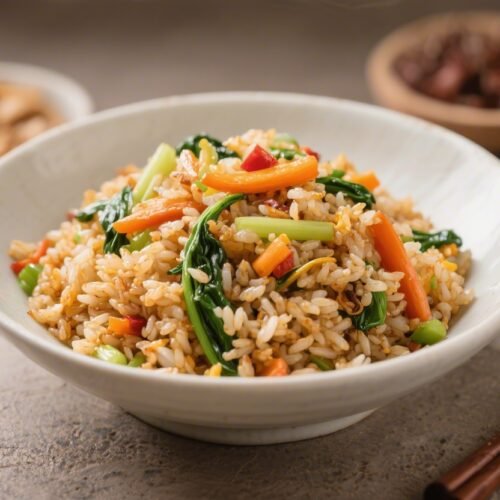
Korean Veggie Fried Rice - Fast, Flavorful, and Satisfying
Ingredients
- 3 cups day-old cooked rice (short- or medium-grain preferred; cold from the fridge)
- 2 tablespoons neutral oil (avocado, canola, or light olive oil)
- 1 tablespoon toasted sesame oil
- 1 small yellow onion, finely chopped
- 2 garlic cloves, minced
- 1 teaspoon fresh ginger, minced or grated (optional but great)
- 1 cup carrot, diced small
- 1 cup zucchini, diced small
- 1 cup cabbage, thinly sliced (napa or green)
- 1/2 cup frozen peas or edamame, thawed
- 2 green onions, sliced (white and green parts separated)
- 1–2 tablespoons gochujang (Korean red pepper paste), to taste
- 2 tablespoons soy sauce (use tamari or gluten-free soy if needed)
- 1 teaspoon rice vinegar or apple cider vinegar
- 1 teaspoon sugar or maple syrup (balances heat)
- Black pepper, to taste
- 2 eggs (optional; for frying or scrambling into the rice)
- Sesame seeds, for garnish
- Optional toppings: kimchi, nori strips, extra gochujang or soy sauce
Instructions
- Prep the rice: Break up any clumps with your hands so the grains separate. This helps the rice fry instead of steaming.
- Make the sauce: In a small bowl, whisk gochujang, soy sauce, vinegar, and sugar until smooth. Adjust gochujang for spice level.
- Heat the pan: Set a large skillet or wok over medium-high heat. Add neutral oil and swirl to coat.
- Cook aromatics: Add onion and the white parts of the green onion. Stir-fry 2–3 minutes until softened. Add garlic and ginger; cook 30 seconds until fragrant.
- Stir-fry the veggies: Add carrot and zucchini. Cook 3–4 minutes, stirring often. Add cabbage and peas/edamame; cook 2 more minutes until crisp-tender.
- Add the rice: Push the veggies to the sides. Drizzle a little oil in the center and add rice. Let it sit 30–45 seconds to sear, then toss everything together. Cook 2–3 minutes to heat through.
- Sauce it up: Pour in the gochujang mixture and the sesame oil. Toss well so every grain is coated. Season with black pepper and taste for salt/soy.
- Egg option: For fried eggs: In a separate small pan, fry eggs to your liking in a little oil.
- For scrambled-in: Push rice to the sides, add a touch of oil, pour in beaten eggs, scramble softly, then fold into the rice.
- Finish and serve: Stir in the green parts of the green onion. Top with sesame seeds, fried egg if using, and optional kimchi or nori. Serve hot.