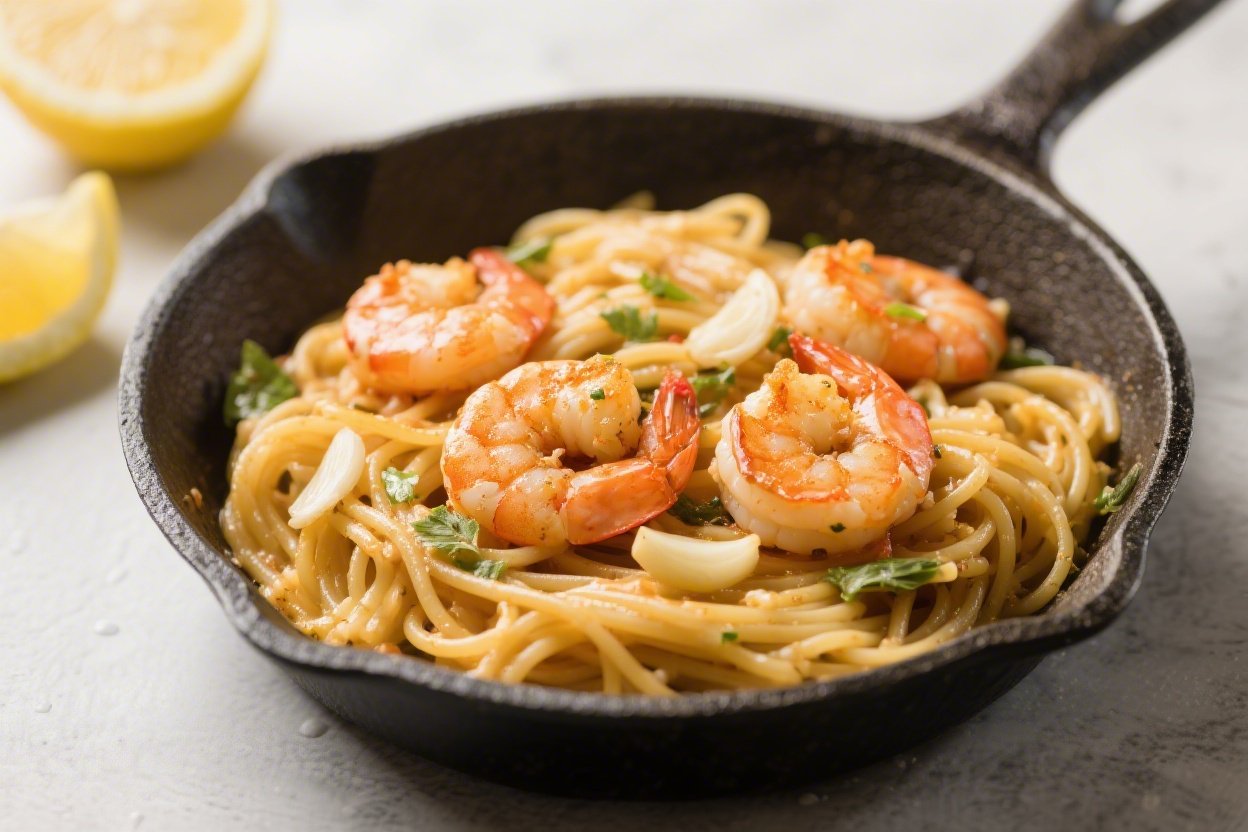
This is the kind of weeknight dinner that tastes like something from a little seaside bistro, but it comes together in one pan on your stove. Lemon, garlic, and a touch of butter coat tender shrimp and twirl-friendly pasta, creating a light, zesty sauce that feels fresh, not heavy. Everything cooks in the same pan, so cleanup is simple and stress-free.
It’s bright enough for spring, cozy enough for winter, and quick enough for any busy evening. If you can squeeze a lemon and boil water, you can make this.
Why This Recipe Works

This pasta leans on a few hard-working ingredients that deliver big flavor fast. The pasta cooks right in a lemony, garlicky broth, which means the noodles absorb flavor instead of just wearing sauce on the outside.
Starch from the pasta helps the sauce emulsify with butter and olive oil, so it turns silky without cream. Shrimp cook in minutes, so you get protein on the table quickly without overcomplicating things. Fresh lemon juice and zest wake everything up, while a pinch of red pepper flakes keeps it lively.
Shopping List
- Shrimp: 1 pound large shrimp, peeled and deveined (tails on or off)
- Pasta: 12 ounces spaghetti, linguine, or thin spaghetti
- Lemons: 2 lemons (you’ll use zest and juice)
- Garlic: 4–6 cloves, thinly sliced or minced
- Olive oil: Extra-virgin preferred
- Butter: 3 tablespoons (salted or unsalted)
- Chicken or vegetable broth: About 4 cups (low-sodium)
- Red pepper flakes: Optional, for gentle heat
- Fresh parsley: A small bunch, chopped
- Parmesan cheese: Freshly grated, for serving (optional)
- Salt and black pepper: To taste
How to Make It

- Prep the shrimp and aromatics: Pat the shrimp dry and season with a pinch of salt and pepper. Zest both lemons, then juice them (you should get about 1/4 to 1/3 cup juice). Slice or mince the garlic. Chop the parsley.
- Warm the base: In a large, deep skillet or wide pot, heat 2 tablespoons olive oil over medium heat. Add the garlic and a pinch of red pepper flakes. Cook 30–60 seconds until fragrant, not browned.
- Build the cooking liquid: Pour in the broth, 1/4 cup lemon juice, and half the lemon zest. Add 1/2 teaspoon salt to start. Bring to a lively simmer.
- Add the pasta: Lay the pasta in the pan. If it doesn’t fit, nudge it down as it softens. Stir and separate strands to prevent sticking. Cook at a steady simmer, uncovered, stirring often, until al dente (usually 8–10 minutes). If liquid gets too low before pasta is done, add a splash of hot water or more broth.
- Finish the sauce: When the pasta is just shy of al dente, add the butter. Toss until melted and glossy. Taste and adjust with more lemon juice, salt, or pepper. The sauce should be lightly thickened and cling to the noodles.
- Cook the shrimp: Push pasta to the sides to make a well. Add a drizzle of olive oil if the pan looks dry. Add shrimp in a single layer and cook 1–2 minutes per side, just until pink and opaque. Toss shrimp through the pasta.
- Brighten and serve: Stir in remaining lemon zest and most of the parsley. If you like, add a handful of Parmesan to enrich the sauce. Twirl into bowls, sprinkle with extra parsley, black pepper, and Parmesan. Serve immediately with lemon wedges.
Storage Instructions
Cool leftovers, then store in an airtight container in the fridge for up to 2 days. Shrimp are delicate, so avoid longer storage.
Reheat gently in a skillet over low heat with a splash of water or broth to loosen the sauce. Microwave on medium power in short bursts, stirring in between to prevent overcooking the shrimp. Fresh lemon squeezed on after reheating helps revive the flavor.
Why This is Good for You
- Lean protein: Shrimp deliver protein with minimal saturated fat, supporting muscle repair without weighing you down.
- Healthy fats: Olive oil brings heart-friendly monounsaturated fats that help you absorb fat-soluble nutrients.
- Bright, fresh flavors: Lemon and garlic add flavor without heavy cream or excess calories.
- Portion-friendly carbs: Pasta provides energy; pairing it with protein and healthy fats helps you feel satisfied.
- Antioxidants: Garlic, lemon zest, and parsley bring vitamins and plant compounds that support overall wellness.
Pitfalls to Watch Out For
- Overcooked shrimp: They turn rubbery fast. Pull them as soon as they’re pink and opaque.
- Dry pasta: Keep an eye on liquid levels. Add a splash of hot water if the pan looks dry before pasta is done.
- Bitter garlic: Garlic burns quickly. Keep heat moderate and stir as it sizzles in oil.
- Too tangy or too flat: Taste as you go. Balance lemon juice with salt and a touch more butter or Parmesan if needed.
- Clumpy noodles: Stir often in the first few minutes so the pasta doesn’t stick together.
Recipe Variations
- Veggie boost: Add asparagus pieces, cherry tomatoes, or baby spinach in the last 2–3 minutes of cooking.
- Herb swap:</-strong> Try basil, dill, or chives instead of parsley for a different finish.
- Spice it up:</-strong> Use more red pepper flakes or a pinch of smoked paprika for warmth.
- Creamy twist:</-strong> Stir in 2–3 tablespoons of cream cheese or a splash of heavy cream at the end for a richer sauce.
- Gluten-free:</-strong> Use gluten-free spaghetti and watch liquid levels, as cook times can vary.
- No broth on hand:</-strong> Use salted water and a splash of white wine for depth.
- Extra lemony:</-strong> Add preserved lemon peel (rinsed and minced) for a concentrated citrus punch.
FAQ
Can I use frozen shrimp?
Yes. Thaw them in the fridge overnight or quickly under cold running water. Pat dry well before cooking so they sear instead of steaming.
Frozen shrimp can release extra moisture, so don’t crowd the pan when you add them.
What pasta shape works best?
Spaghetti or linguine are classic because they coat nicely in a light sauce. Thin spaghetti cooks fastest. If you prefer short shapes, penne or rotini work too—just stir a bit more to keep them from sticking.
Is Parmesan necessary?
No, but it adds savory depth and helps emulsify the sauce.
If you skip dairy, taste and adjust with a pinch more salt, a drizzle of olive oil, and extra lemon zest to keep flavors balanced.
How do I make it less acidic?
Use less lemon juice at first and add more at the end to taste. You can also melt in an extra tablespoon of butter or a spoonful of Parmesan, which softens sharp edges. A small pinch of sugar can help if your lemons are very tart.
Can I substitute the shrimp?
Yes.
Try scallops (sear briefly), chunks of firm white fish added at the end, or even shredded rotisserie chicken folded in after the pasta is done. For a vegetarian version, add cannellini beans and extra veggies.
What if my sauce is too thin?
Simmer uncovered for a minute or two, tossing the pasta so starch thickens the sauce. A small handful of Parmesan also helps it cling.
Avoid high heat that could overcook the shrimp.
What if my sauce is too thick or sticky?
Add a splash of hot water or broth and toss to loosen. Finish with a drizzle of olive oil and a squeeze of lemon to bring it back to glossy and bright.
Final Thoughts
One Pan Lemon Garlic Shrimp Pasta hits that sweet spot of fast, fresh, and flavorful. It’s simple enough for a Tuesday but special enough for company, and it won’t leave you with a sink full of dishes.
Keep lemons, garlic, broth, and a bag of shrimp on hand, and you’ve always got dinner ready in minutes. Make it once and it will slide into your regular rotation—no fuss, big payoff, and clean plates all around.
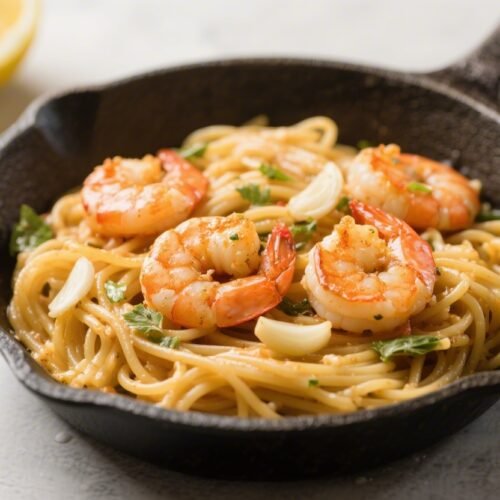
One Pan Lemon Garlic Shrimp Pasta - Bright, Easy, and Ready Fast
Ingredients
- Shrimp: 1 pound large shrimp, peeled and deveined (tails on or off)
- Pasta: 12 ounces spaghetti, linguine, or thin spaghetti
- Lemons: 2 lemons (you’ll use zest and juice)
- Garlic: 4–6 cloves, thinly sliced or minced
- Olive oil: Extra-virgin preferred
- Butter: 3 tablespoons (salted or unsalted)
- Chicken or vegetable broth: About 4 cups (low-sodium)
- Red pepper flakes: Optional, for gentle heat
- Fresh parsley: A small bunch, chopped
- Parmesan cheese: Freshly grated, for serving (optional)
- Salt and black pepper: To taste
Instructions
- Prep the shrimp and aromatics: Pat the shrimp dry and season with a pinch of salt and pepper. Zest both lemons, then juice them (you should get about 1/4 to 1/3 cup juice). Slice or mince the garlic. Chop the parsley.
- Warm the base: In a large, deep skillet or wide pot, heat 2 tablespoons olive oil over medium heat. Add the garlic and a pinch of red pepper flakes. Cook 30–60 seconds until fragrant, not browned.
- Build the cooking liquid: Pour in the broth, 1/4 cup lemon juice, and half the lemon zest. Add 1/2 teaspoon salt to start. Bring to a lively simmer.
- Add the pasta: Lay the pasta in the pan. If it doesn’t fit, nudge it down as it softens. Stir and separate strands to prevent sticking. Cook at a steady simmer, uncovered, stirring often, until al dente (usually 8–10 minutes). If liquid gets too low before pasta is done, add a splash of hot water or more broth.
- Finish the sauce: When the pasta is just shy of al dente, add the butter. Toss until melted and glossy. Taste and adjust with more lemon juice, salt, or pepper. The sauce should be lightly thickened and cling to the noodles.
- Cook the shrimp: Push pasta to the sides to make a well. Add a drizzle of olive oil if the pan looks dry. Add shrimp in a single layer and cook 1–2 minutes per side, just until pink and opaque. Toss shrimp through the pasta.
- Brighten and serve: Stir in remaining lemon zest and most of the parsley. If you like, add a handful of Parmesan to enrich the sauce. Twirl into bowls, sprinkle with extra parsley, black pepper, and Parmesan. Serve immediately with lemon wedges.