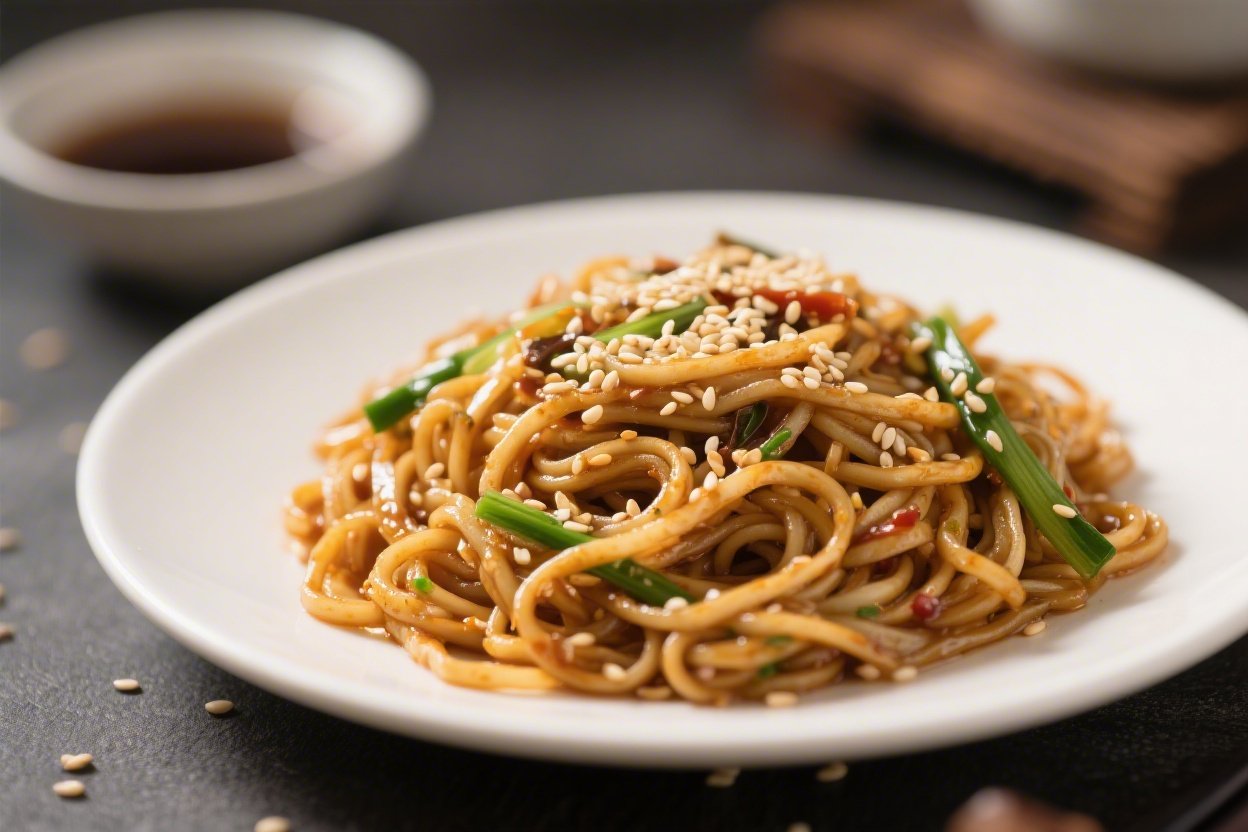
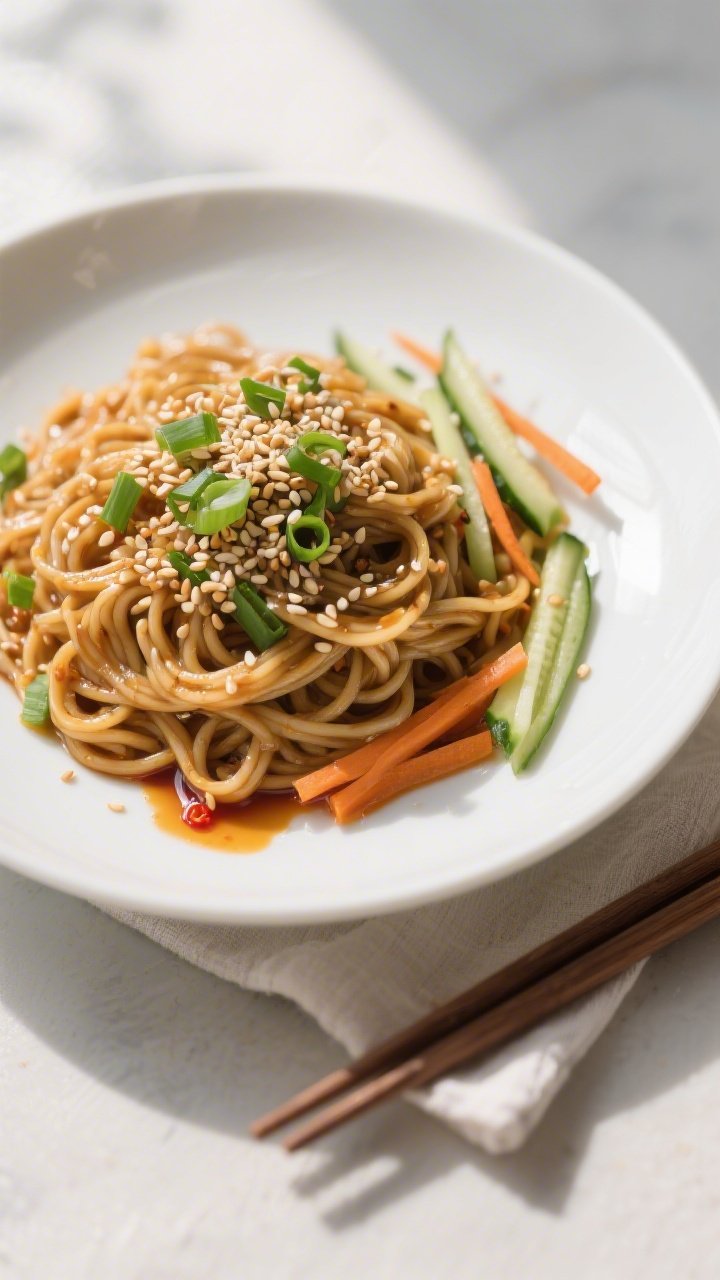
Asian Sesame Noodles are the kind of dish you make once and then add to your weeknight rotation. They’re nutty, garlicky, and a little sweet, with just enough heat to keep things interesting. Best of all, the sauce comes together in minutes and clings beautifully to warm noodles.
You can serve them hot, cold, or room temperature, and they play well with almost any protein or veggie you have on hand. If you love big flavor without a lot of work, this recipe is for you.
What Makes This Recipe So Good
- Balanced flavor: Toasted sesame, soy, garlic, and a touch of sweetness create a sauce that tastes complex but uses simple pantry staples.
- Quick to make: From boiling the noodles to tossing the sauce, you’re looking at about 20 minutes, start to finish.
- Flexible: Works with spaghetti, ramen, soba, or rice noodles. Add chicken, tofu, shrimp, or just veggies.
- Great hot or cold: Perfect for meal prep and lunch boxes. The flavors deepen as the noodles rest.
- Budget-friendly: Inexpensive ingredients deliver takeout-level taste.
Shopping List
- Noodles: 12 ounces of spaghetti, linguine, ramen, lo mein, or soba
- Soy sauce: Low-sodium, if possible
- Sesame oil: Toasted sesame oil for flavor
- Rice vinegar: Unseasoned preferred
- Sweetener: Brown sugar, honey, or maple syrup
- Garlic: Fresh cloves
- Ginger: Fresh, or use a little ginger paste
- Chili element: Chili-garlic sauce, sambal oelek, or red pepper flakes
- Neutral oil: Avocado, canola, or peanut oil
- Green onions: For garnish and crunch
- Sesame seeds: Toasted, for finishing
- Optional add-ins: Shredded carrot, cucumber matchsticks, bell pepper, snap peas, sautéed mushrooms, rotisserie chicken, crispy tofu, or shrimp
Instructions
- Cook the noodles: Bring a large pot of salted water to a boil. Cook noodles according to package directions until just tender. Reserve 1/4 cup of the starchy pasta water, then drain well.
- Make the sauce base: In a small bowl, whisk 1/4 cup soy sauce, 2 tablespoons rice vinegar, 2 tablespoons brown sugar (or honey), and 1 to 2 teaspoons chili-garlic sauce. Adjust sweetness and heat to taste.
- Sauté aromatics: In a large skillet over medium heat, warm 1 tablespoon neutral oil. Add 3 minced garlic cloves and 1 tablespoon grated ginger. Cook 30 to 45 seconds, just until fragrant. Don’t brown the garlic.
- Combine with noodles: Add the drained noodles to the skillet. Pour in the sauce mixture and toss with tongs until coated. If the noodles seem dry, splash in a little reserved pasta water to loosen and help the sauce cling.
- Add sesame oil: Turn off the heat. Drizzle in 1 to 2 teaspoons toasted sesame oil and toss again. This keeps the sesame aroma bright and bold.
- Season and finish: Taste and add more soy sauce for salt, vinegar for tang, or sugar for balance. Toss in sliced green onions and a tablespoon of toasted sesame seeds.
- Optional mix-ins: Fold in cooked protein or quick-cook veggies. For raw crunch (like cucumber or carrot), add just before serving.
- Serve: Enjoy warm, room temp, or chilled. Garnish with extra green onions, sesame seeds, and a light drizzle of sesame oil if you like.
How to Store
- Fridge: Store in an airtight container for up to 4 days. The flavors get even better by day two.
- Reheating: Gently warm on the stovetop over low heat with a splash of water to loosen. Or microwave in short bursts, stirring in between. Add a tiny drizzle of sesame oil at the end to refresh.
- Make-ahead: Toss noodles with a teaspoon of neutral oil after draining to prevent sticking, then add sauce when ready to serve.
- Freezer: Not ideal. The noodles can turn mushy and the sauce can separate.
Benefits of This Recipe
- Fast and practical: Perfect for busy nights when you want real flavor without a long prep.
- Customizable nutrition: Add lean protein and lots of veggies to boost fiber and protein while keeping the dish satisfying.
- Pantry-friendly: Most ingredients are shelf-stable, so you can make this anytime.
- Meal-prep winner: Holds up well for lunches and picnics. Tastes great cold.
- Kid-friendly: Dial back the heat and keep the sweetness mild, and most kids will be on board.
Pitfalls to Watch Out For
- Overcooking noodles: Go for just tender. Overcooked noodles get mushy and won’t hold the sauce well.
- Burning garlic: It turns bitter fast. Keep heat moderate and stir constantly during that quick sauté.
- Too much sesame oil: It’s potent. A little goes a long way. Add at the end and taste as you go.
- Skipping acidity: The rice vinegar lifts the whole dish. Without it, the noodles can taste flat.
- Under-seasoning: Sauces vary in saltiness. Taste and adjust with soy, vinegar, and sugar until it’s balanced.
Alternatives
- Gluten-free: Use gluten-free tamari instead of soy sauce and choose gluten-free rice noodles or GF spaghetti.
- Nutty twist: Whisk 1 to 2 tablespoons tahini or peanut butter into the sauce for creamier, richer noodles.
- No-heat version: Skip chili sauce and add a pinch of white pepper for subtle warmth.
- Citrus pop: Swap half the rice vinegar for fresh lime juice and add torn cilantro.
- Vegetable-forward: Double the veggies—think julienned bell pepper, carrot, edamame, and snap peas—to make it a complete one-bowl meal.
- Protein options: Top with grilled chicken, pan-seared shrimp, or crispy tofu. Marinate briefly in soy, garlic, and a touch of sugar for extra flavor.
FAQ
What kind of noodles work best?
Any long, slurpable noodle works. Spaghetti is convenient and sturdy, lo mein and ramen feel classic, soba adds earthiness, and rice noodles keep it light and gluten-free.
Choose what you have and cook to just tender.
Can I serve these noodles cold?
Yes. They’re excellent cold or at room temperature. If chilling, toss with a small splash of neutral oil after cooking to prevent clumping, then add a bit more sauce or a drizzle of sesame oil before serving.
How do I make it spicier?
Increase the chili-garlic sauce or add a dash of sriracha.
A sprinkle of red pepper flakes or a drizzle of chili crisp also does the trick without overwhelming the sesame flavor.
Is there a way to add more protein without cooking a separate dish?
Stir in shelled edamame, shredded rotisserie chicken, or pan-fried tofu cubes. You can also scramble an egg in the skillet before adding the noodles for a quick boost.
What if I don’t have rice vinegar?
Use apple cider vinegar or white wine vinegar, starting with a smaller amount and tasting as you go. Add a squeeze of lime if you want a fresher edge.
Can I reduce the sodium?
Use low-sodium soy sauce or tamari, and thin the sauce with a couple of tablespoons of water.
Taste and adjust the acid and sweetness to keep the flavor balanced.
How do I keep the noodles from sticking together?
Don’t overcook them, drain well, and toss immediately with the sauce. If you’re not serving right away, mix in a teaspoon of neutral oil to keep them loose, then refresh with a splash of sauce later.
Can I make this sauce ahead?
Absolutely. Whisk it up and store in a jar in the fridge for up to a week.
Give it a quick shake before using, as the sugar may settle.
Final Thoughts
Asian Sesame Noodles check all the boxes: quick, affordable, and big on flavor. The ingredients are easy to find, and the method is simple enough for a busy weeknight. Play with heat, sweetness, and add-ins until it suits your taste.
Once you nail your favorite balance, this becomes an easy, reliable go-to you’ll crave again and again.
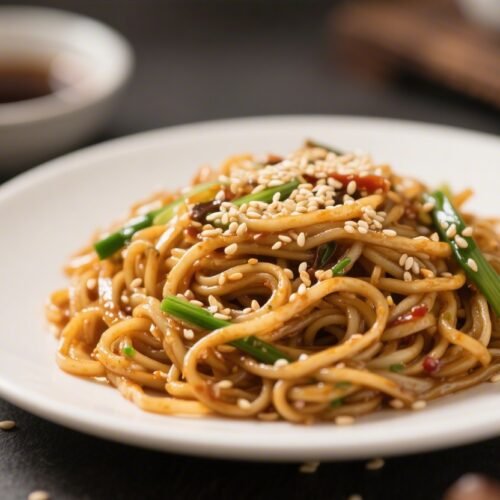
Asian Sesame Noodles - A Fast, Flavor-Packed Weeknight Favorite
Ingredients
- Noodles: 12 ounces of spaghetti, linguine, ramen, lo mein, or soba
- Soy sauce: Low-sodium, if possible
- Sesame oil: Toasted sesame oil for flavor
- Rice vinegar: Unseasoned preferred
- Sweetener: Brown sugar, honey, or maple syrup
- Garlic: Fresh cloves
- Ginger: Fresh, or use a little ginger paste
- Chili element: Chili-garlic sauce, sambal oelek, or red pepper flakes
- Neutral oil: Avocado, canola, or peanut oil
- Green onions: For garnish and crunch
- Sesame seeds: Toasted, for finishing
- Optional add-ins: Shredded carrot, cucumber matchsticks, bell pepper, snap peas, sautéed mushrooms, rotisserie chicken, crispy tofu, or shrimp
Instructions
- Cook the noodles: Bring a large pot of salted water to a boil. Cook noodles according to package directions until just tender. Reserve 1/4 cup of the starchy pasta water, then drain well.
- Make the sauce base: In a small bowl, whisk 1/4 cup soy sauce, 2 tablespoons rice vinegar, 2 tablespoons brown sugar (or honey), and 1 to 2 teaspoons chili-garlic sauce. Adjust sweetness and heat to taste.
- Sauté aromatics: In a large skillet over medium heat, warm 1 tablespoon neutral oil. Add 3 minced garlic cloves and 1 tablespoon grated ginger. Cook 30 to 45 seconds, just until fragrant. Don’t brown the garlic.
- Combine with noodles: Add the drained noodles to the skillet. Pour in the sauce mixture and toss with tongs until coated. If the noodles seem dry, splash in a little reserved pasta water to loosen and help the sauce cling.
- Add sesame oil: Turn off the heat. Drizzle in 1 to 2 teaspoons toasted sesame oil and toss again. This keeps the sesame aroma bright and bold.
- Season and finish: Taste and add more soy sauce for salt, vinegar for tang, or sugar for balance. Toss in sliced green onions and a tablespoon of toasted sesame seeds.
- Optional mix-ins: Fold in cooked protein or quick-cook veggies. For raw crunch (like cucumber or carrot), add just before serving.
- Serve: Enjoy warm, room temp, or chilled. Garnish with extra green onions, sesame seeds, and a light drizzle of sesame oil if you like.