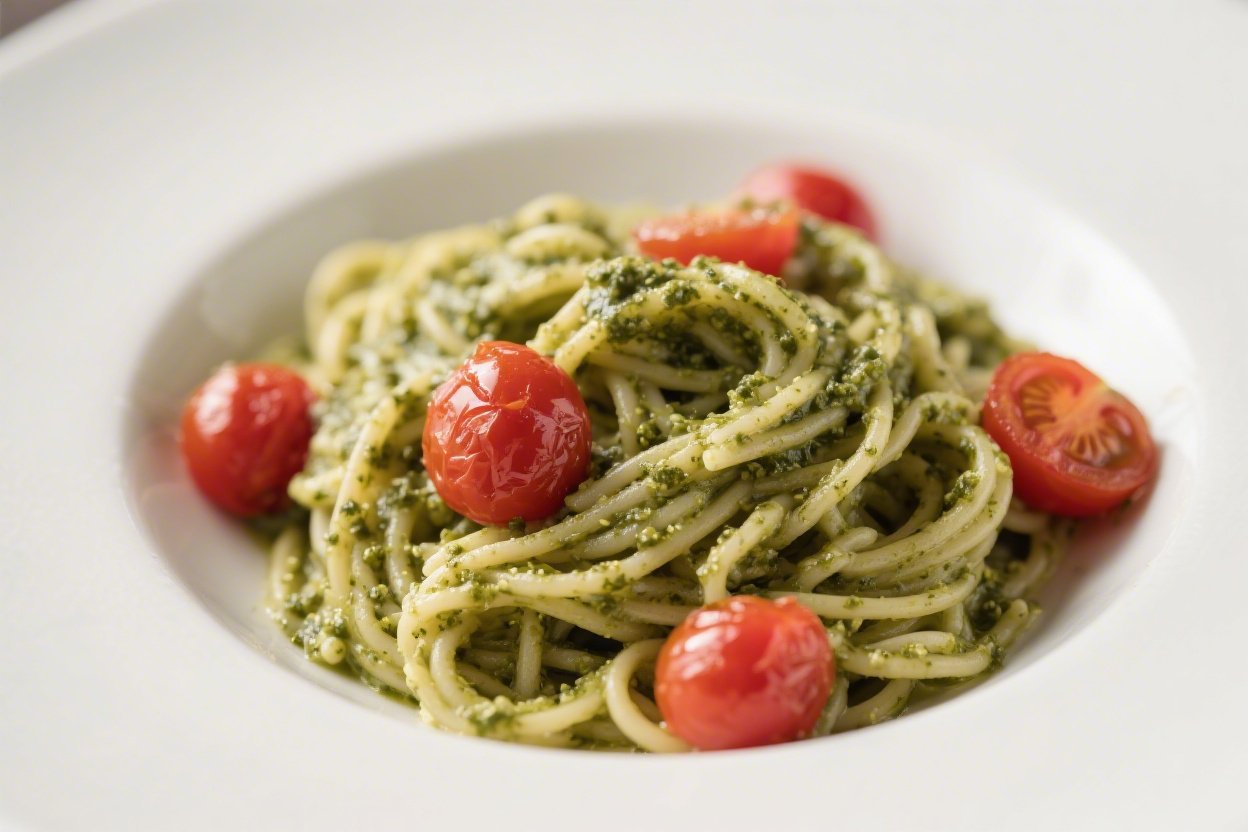
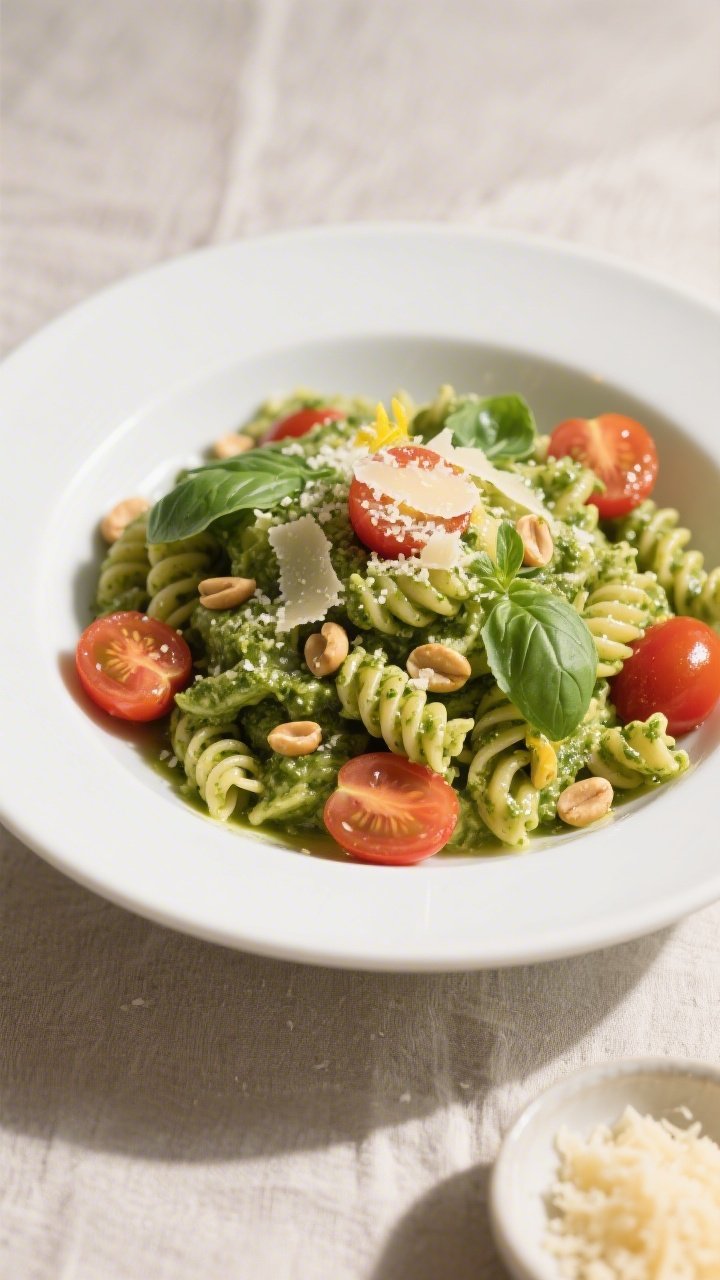
Pesto pasta with cherry tomatoes is one of those meals that feels like summer any time of year. It’s fast, full of flavor, and looks beautiful on the plate without much work. The sweet pop of cherry tomatoes balances the herbal, garlicky pesto and makes each bite feel lively.
This is the kind of recipe you can pull together after a busy day, yet still serve to guests with confidence. It’s simple cooking at its best.
What Makes This Special
This dish shines because it brings together bold flavors with very little effort. Fresh basil pesto coats hot pasta and clings to every curve, while burst cherry tomatoes add natural sweetness and acidity. The whole thing comes together in one pot and one pan, so cleanup stays easy.
It’s also a flexible base: you can add veggies, shrimp, or chicken without changing the heart of the recipe. Best of all, it tastes great warm, room temp, or chilled, which makes it perfect for weeknights and potlucks alike.
What You’ll Need
- Pasta: 12 ounces short pasta (fusilli, penne, or farfalle) or long pasta (spaghetti or linguine).
- Cherry tomatoes: 2 cups, halved (grape tomatoes work too).
- Pesto: 1/2 to 3/4 cup basil pesto (homemade or good-quality store-bought).
- Olive oil: 2 tablespoons for sautéing tomatoes, plus more if needed.
- Garlic: 1–2 cloves, thinly sliced or minced.
- Parmesan cheese: 1/2 cup freshly grated, plus extra for serving.
- Pasta water: 1/2 to 3/4 cup reserved for loosening the sauce.
- Salt and black pepper: To taste.
- Red pepper flakes (optional): A pinch for heat.
- Fresh basil (optional): For garnish.
- Lemon (optional): Zest and/or a squeeze of juice to brighten flavors.
- Pine nuts (optional): A small handful, toasted for crunch.
Step-by-Step Instructions
- Boil the pasta. Bring a large pot of well-salted water to a rolling boil. Add the pasta and cook until just al dente according to package directions. Reserve at least 3/4 cup of the starchy pasta water before draining.
- Sauté the garlic. While the pasta cooks, warm 2 tablespoons olive oil in a large skillet over medium heat. Add the sliced or minced garlic and cook 30–60 seconds until fragrant. Don’t let it brown.
- Cook the tomatoes. Add the halved cherry tomatoes and a pinch of salt. Cook 3–5 minutes, stirring occasionally, until they start to soften and release some juices. They should be saucy but still hold their shape.
- Season the base. Add black pepper and a pinch of red pepper flakes if using. If the pan looks dry, splash in a tablespoon of pasta water to keep things silky, not oily.
- Combine pasta and tomatoes. Add the drained pasta to the skillet with the tomatoes. Toss to coat, letting the pasta soak up some of the tomato juices, about 30 seconds.
- Stir in the pesto. Off the heat or over very low heat, add 1/2 cup pesto. Loosen with splashes of hot pasta water, tossing until every piece is lightly coated. Add more pesto if you prefer a richer coating.
- Add Parmesan and adjust. Sprinkle in the grated Parmesan and toss. Add a little more pasta water as needed to keep the sauce creamy and glossy. Taste and adjust salt, pepper, and heat.
- Finish with brightness. If you like, add a small squeeze of lemon juice or a little zest to lift the flavors. Toss in fresh basil leaves and toasted pine nuts for aroma and crunch.
- Serve. Plate the pasta and top with extra Parmesan and a drizzle of good olive oil. Serve immediately while warm and fragrant.
How to Store
Let the pasta cool to room temperature, then store it in an airtight container in the fridge for up to 3 days. For reheating, add a splash of water or olive oil to loosen the sauce, then warm gently on the stove over low heat or in short bursts in the microwave. If the pesto flavor dulls after chilling, brighten it with a squeeze of lemon and a pinch of salt before serving.
This pasta also works well as a cold lunch—just add a bit more pesto or olive oil to refresh it.
Benefits of This Recipe
- Fast and reliable: From start to finish, it usually takes under 30 minutes.
- Flavor-packed: Pesto brings garlic, basil, and nuts together, while tomatoes add sweetness and acidity.
- Flexible: Works with many pasta shapes, add-ins, and dietary needs.
- Great for meal prep: Tastes good warm or cold, so leftovers are welcome.
- Minimal cleanup: One pot and one pan, plus a cutting board.
What Not to Do
- Don’t overcook the pasta. Mushy pasta won’t hold the sauce well. Aim for al dente.
- Don’t skip the pasta water. That starchy liquid helps emulsify the pesto and cheese into a smooth sauce.
- Don’t cook pesto over high heat. High heat can dull basil’s fresh flavor and darken the sauce. Stir it in off the heat or over very low heat.
- Don’t skimp on salt in the boiling water. Properly seasoned water is key for flavorful pasta.
- Don’t drown the pasta in oil. Use just enough oil and pasta water to keep things silky, not greasy.
Variations You Can Try
- Protein boost: Add grilled chicken, sautéed shrimp, or sliced Italian sausage for a heartier meal.
- Veggie-forward: Toss in sautéed zucchini, spinach, or roasted asparagus. Blistered green beans are great, too.
- Nut-free pesto: Make pesto with sunflower seeds or pumpkin seeds instead of pine nuts.
- Cheese swap: Try Pecorino Romano for a saltier, sharper bite. A dollop of ricotta on top adds creaminess.
- Creamy twist: Stir in a splash of heavy cream or a spoonful of mascarpone for a luxe, velvety finish.
- Lemon-basil vibe: Add extra lemon zest and a bit more basil at the end for a brighter profile.
- Gluten-free: Use your favorite gluten-free pasta. Be gentle with stirring to avoid breakage.
- Whole-wheat or chickpea pasta: For more fiber and protein, swap the pasta type and increase the pasta water slightly, as these can soak up more sauce.
FAQ
Can I use store-bought pesto?
Yes.
Choose a refrigerated brand with simple ingredients like basil, olive oil, nuts, garlic, and cheese. If it tastes flat, brighten it with lemon juice and extra Parmesan.
What pasta shape works best?
Short shapes like fusilli, rotini, or penne hold the pesto well. Long strands like spaghetti or linguine are also great—just be sure to toss thoroughly so the sauce coats evenly.
Do I have to cook the tomatoes?
No.
If you prefer a fresher bite, keep them raw. Halve the cherry tomatoes, salt them lightly, and fold them into the hot, pesto-coated pasta right before serving.
How can I make this dairy-free?
Use dairy-free pesto or make your own with nutritional yeast instead of Parmesan. Skip the cheese in the pasta, and finish with toasted nuts for extra flavor.
Why is my pesto turning dark?
Excess heat and prolonged air exposure can cause discoloration.
Stir the pesto in off heat, and serve soon after mixing. A thin film of olive oil on top of leftover pesto also helps prevent browning.
What if my sauce is too thick?
Add warm pasta water a tablespoon at a time, tossing until creamy. The starch in the water helps the sauce cling without getting oily.
Can I make it ahead?
You can cook the pasta and tomatoes in advance, then toss with pesto just before serving.
If reheating, add a splash of water and fresh pesto to revive the flavor.
How much salt should I add to the pasta water?
A good rule is 1–1.5 tablespoons of kosher salt per 4 quarts of water. It should taste like the sea. Properly salted water means better-tasting pasta.
What proteins pair best?
Grilled chicken, shrimp, and flaky white fish work beautifully.
For vegetarian options, add white beans or pan-fried halloumi.
In Conclusion
Pesto pasta with cherry tomatoes is a simple, vibrant dish that delivers big flavor with minimal effort. With a handful of quality ingredients and a few small techniques—like saving pasta water and adding pesto off the heat—you’ll get a silky, balanced sauce every time. It’s fast enough for busy nights and special enough for company.
Keep this one in your back pocket, and you’ll never be far from a fresh, satisfying meal.
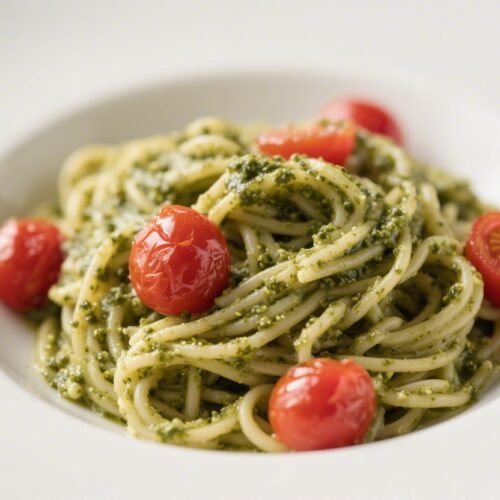
Pesto Pasta With Cherry Tomatoes – Fresh, Bright, And Weeknight-Friendly
Ingredients
- Pasta: 12 ounces short pasta (fusilli, penne, or farfalle) or long pasta (spaghetti or linguine).
- Cherry tomatoes: 2 cups, halved (grape tomatoes work too).
- Pesto: 1/2 to 3/4 cup basil pesto (homemade or good-quality store-bought).
- Olive oil: 2 tablespoons for sautéing tomatoes, plus more if needed.
- Garlic: 1–2 cloves, thinly sliced or minced.
- Parmesan cheese: 1/2 cup freshly grated, plus extra for serving.
- Pasta water: 1/2 to 3/4 cup reserved for loosening the sauce.
- Salt and black pepper: To taste.
- Red pepper flakes (optional): A pinch for heat.
- Fresh basil (optional): For garnish.
- Lemon (optional): Zest and/or a squeeze of juice to brighten flavors.
- Pine nuts (optional): A small handful, toasted for crunch.
Instructions
- Boil the pasta. Bring a large pot of well-salted water to a rolling boil. Add the pasta and cook until just al dente according to package directions. Reserve at least 3/4 cup of the starchy pasta water before draining.
- Sauté the garlic. While the pasta cooks, warm 2 tablespoons olive oil in a large skillet over medium heat. Add the sliced or minced garlic and cook 30–60 seconds until fragrant. Don’t let it brown.
- Cook the tomatoes. Add the halved cherry tomatoes and a pinch of salt. Cook 3–5 minutes, stirring occasionally, until they start to soften and release some juices. They should be saucy but still hold their shape.
- Season the base. Add black pepper and a pinch of red pepper flakes if using. If the pan looks dry, splash in a tablespoon of pasta water to keep things silky, not oily.
- Combine pasta and tomatoes. Add the drained pasta to the skillet with the tomatoes. Toss to coat, letting the pasta soak up some of the tomato juices, about 30 seconds.
- Stir in the pesto. Off the heat or over very low heat, add 1/2 cup pesto. Loosen with splashes of hot pasta water, tossing until every piece is lightly coated. Add more pesto if you prefer a richer coating.
- Add Parmesan and adjust. Sprinkle in the grated Parmesan and toss. Add a little more pasta water as needed to keep the sauce creamy and glossy. Taste and adjust salt, pepper, and heat.
- Finish with brightness. If you like, add a small squeeze of lemon juice or a little zest to lift the flavors. Toss in fresh basil leaves and toasted pine nuts for aroma and crunch.
- Serve. Plate the pasta and top with extra Parmesan and a drizzle of good olive oil. Serve immediately while warm and fragrant.