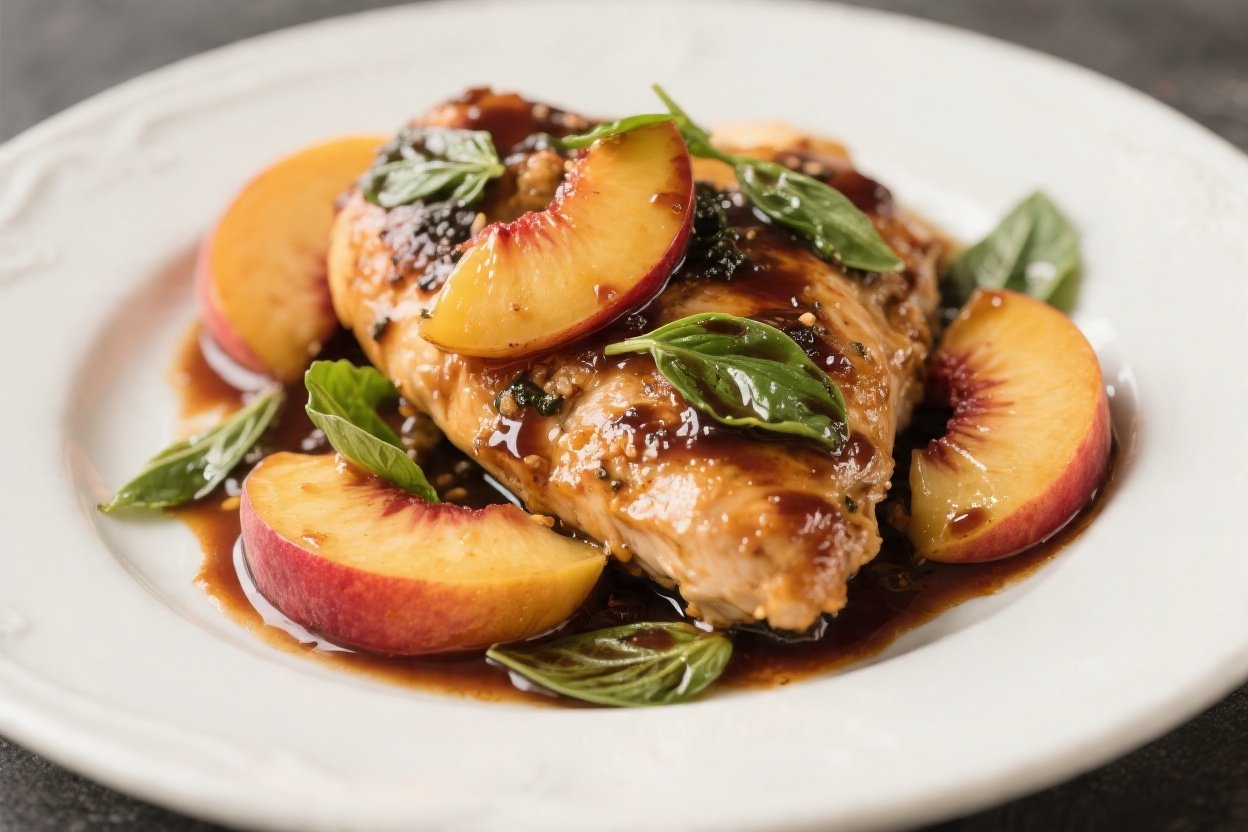
Juicy peaches, fresh basil, and tangy balsamic glaze turn simple chicken into a dinner that feels special without extra fuss. This is one of those dishes that tastes like summer, even if you make it in the middle of winter. The flavors are bright, balanced, and comforting, and the whole thing comes together in under 40 minutes.
If you’re craving something fresh but hearty, this checks every box. It’s great for busy nights, easy to scale for guests, and beautiful on the plate.
Why This Recipe Works
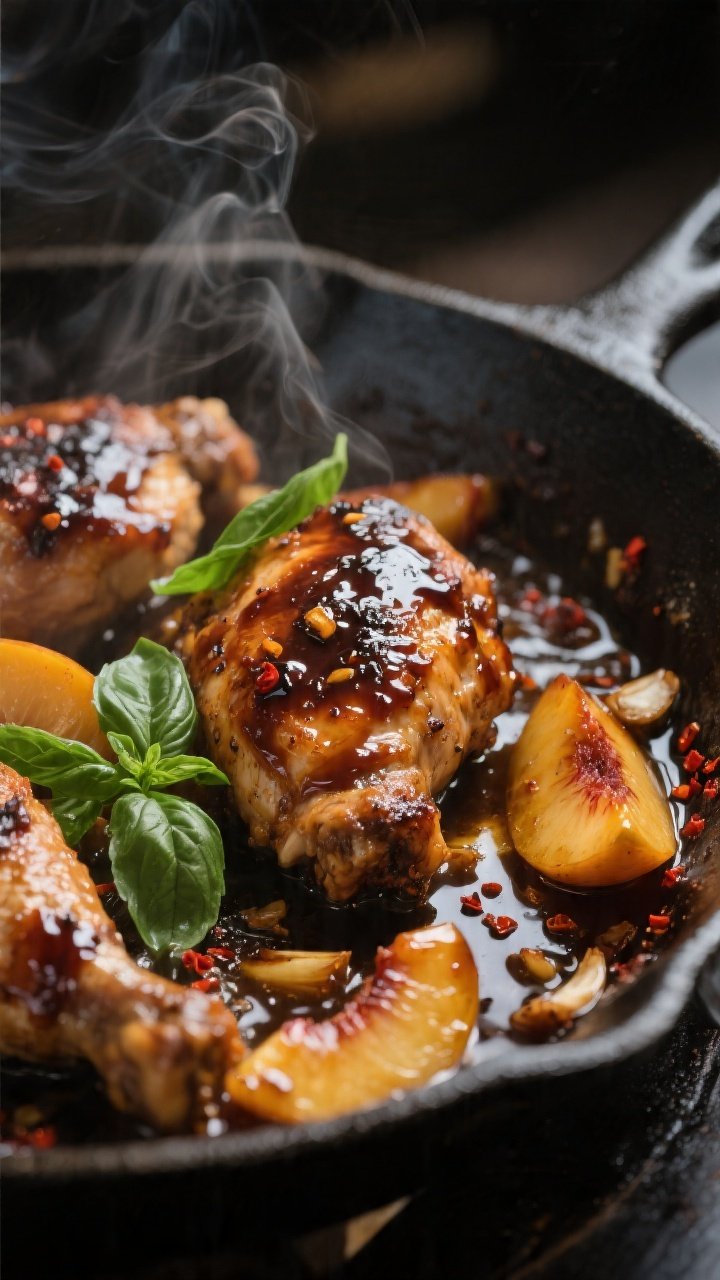
Peaches bring natural sweetness that caramelizes in the pan, creating a jammy sauce that clings to the chicken. Balsamic vinegar cuts through that sweetness with a gentle tang, while a touch of honey (or maple) rounds it out.
Fresh basil adds a clean, peppery lift that keeps the dish from feeling heavy. Pan-searing the chicken first gives you flavorful browning, and a quick glaze at the end keeps the meat tender and juicy. It’s a simple set of techniques that deliver big flavor with minimal effort.
Shopping List
- Chicken breasts or thighs (boneless, skinless; about 1.5 to 2 pounds)
- Ripe peaches (3–4 medium, sliced; can sub frozen or canned in juice)
- Fresh basil (1 small bunch)
- Balsamic vinegar (high quality for best flavor)
- Honey or maple syrup (1–2 tablespoons)
- Garlic (2–3 cloves, minced)
- Olive oil
- Butter (optional, for richness)
- Chicken broth or water (1/4 cup)
- Salt and black pepper
- Red pepper flakes (optional, for a little heat)
- Lemon (optional, for a bright finish)
Step-by-Step Instructions
- Prep the chicken. Pat the chicken dry and season both sides with salt and pepper. If using breasts, you can pound them to an even thickness for faster, more even cooking.
- Slice the peaches and mince the garlic. Leave the peach skins on for color and texture. Tear or thinly slice the basil and set aside.
- Heat the pan. Warm a large skillet over medium-high heat with 1–2 tablespoons olive oil. When it shimmers, add the chicken in a single layer.
- Sear the chicken. Cook without moving for 4–6 minutes per side, depending on thickness, until deeply browned and just cooked through. Transfer to a plate and tent loosely with foil.
- Build flavor in the pan. Lower the heat to medium. Add a small knob of butter (optional) and the garlic. Stir for 30 seconds until fragrant, scraping up browned bits.
- Add peaches. Toss in the sliced peaches. Cook for 2–3 minutes, stirring occasionally, until they soften and start to caramelize at the edges.
- Make the glaze. Pour in 2–3 tablespoons balsamic vinegar, 1–2 tablespoons honey, and the broth. Stir and simmer for 2–3 minutes until slightly thickened and glossy. Season with salt, pepper, and a pinch of red pepper flakes if you like heat.
- Return the chicken. Nestle the chicken back into the pan with any juices. Spoon the peach-balsamic sauce over the top. Simmer 2 minutes to warm through and coat.
- Finish with basil. Remove from heat. Stir in most of the basil and a squeeze of lemon if you want extra brightness. Taste and adjust seasoning.
- Serve. Plate the chicken and peaches with plenty of sauce. Scatter remaining basil on top. Great over rice, couscous, quinoa, or creamy polenta.
Keeping It Fresh
Leftovers keep well for up to 3 days in an airtight container in the fridge.
Store the chicken and sauce together to keep the meat moist. Reheat gently on the stove over low heat or in the microwave at 50% power, adding a splash of water if the sauce thickens too much. If you’re making this ahead for guests, cook the chicken and sauce separately, then combine and warm just before serving for the best texture.
Why This is Good for You
This dish leans on whole ingredients and balanced flavors, not heavy cream or sugar. Chicken provides lean protein to keep you full and steady. Peaches add vitamins A and C plus fiber, while offering natural sweetness so you don’t need much added sugar. Basil brings antioxidants and a fresh herbal boost. Olive oil offers heart-healthy fats, and a modest amount of balsamic vinegar adds flavor without many calories.
It’s a feel-good meal that doesn’t taste like compromise.
Common Mistakes to Avoid
- Overcrowding the pan. Too much chicken at once prevents browning. Sear in batches if needed.
- Underripe peaches. Hard peaches won’t soften or sweeten well. If they’re firm, slice thinner and cook a bit longer, or use frozen.
- Burning the garlic. Add it after lowering the heat and stir quickly. Burnt garlic turns bitter and will dominate the sauce.
- Over-reducing the glaze. Balsamic thickens fast. Pull it off the heat once it coats a spoon; it will continue to thicken as it cools.
- Skipping acid and salt checks. Taste at the end. A pinch of salt or a squeeze of lemon can transform the dish.
Recipe Variations
- Grilled version: Grill seasoned chicken over medium-high heat, then warm the peach-balsamic mixture in a skillet and spoon over the grilled chicken.
- Thighs for extra juiciness: Use boneless, skinless thighs. They’re more forgiving and stay tender.
- Add-ins: Toss in a handful of cherry tomatoes or a few thinly sliced shallots when sautéing the peaches.
- Dairy-free: Skip the butter and use all olive oil. The sauce will still be silky.
- Gluten-free: Naturally gluten-free as written. Check labels on broth and vinegar to be safe.
- Herb swaps: Try mint or a bit of thyme if basil isn’t available. Use less thyme—it’s stronger.
- Spicy twist: Add a minced Fresno chili or increase red pepper flakes for more heat.
- Sheet pan shortcut: Roast seasoned chicken at 425°F (220°C) for 18–22 minutes. Meanwhile, simmer the peach-balsamic sauce on the stove and pour over to serve.
FAQ
Can I use canned or frozen peaches?
Yes. Use frozen peaches straight from the freezer and cook a minute or two longer.
If using canned, choose peaches in juice, drain well, and reduce the honey so the sauce doesn’t get too sweet.
What cut of chicken works best?
Breasts are lean and cook quickly, but thighs are more forgiving and stay juicy. Use whichever you prefer. Keep pieces similar in size for even cooking.
How do I know when the chicken is done?
Use an instant-read thermometer.
The center should reach 165°F (74°C). If you don’t have one, slice into the thickest part; the juices should run clear and the meat should be opaque.
What can I serve this with?
It’s great over rice, quinoa, or couscous to catch the sauce. For veggies, try roasted green beans, asparagus, or a simple arugula salad with lemon and olive oil.
Is balsamic glaze the same as balsamic vinegar?
Not quite.
Balsamic glaze is a reduced, sweetened vinegar that’s thicker. You can use it, but reduce or skip the honey so the dish doesn’t become overly sweet.
Can I make it ahead?
You can prep the peaches, basil, and seasoned chicken up to a day ahead. Cook just before serving, or cook the chicken and sauce separately and combine to rewarm gently.
How do I keep the peaches from turning mushy?
Use ripe but not overly soft peaches and avoid over-stirring.
Sauté just until they start to caramelize and hold their shape.
What if my sauce is too tangy?
Whisk in a bit more honey or a small knob of butter to mellow it. A pinch of salt can also balance acidity.
In Conclusion
Peach Basil Balsamic Chicken brings together sweet fruit, fresh herbs, and a glossy, tangy-sweet sauce in a way that feels restaurant-worthy but totally doable on a weeknight. With a handful of simple ingredients and a few smart steps, you get flavor that pops and a plate that looks gorgeous.
Keep this in your rotation for when you want something bright, balanced, and unabashedly satisfying. It’s a crowd-pleaser you’ll come back to again and again.
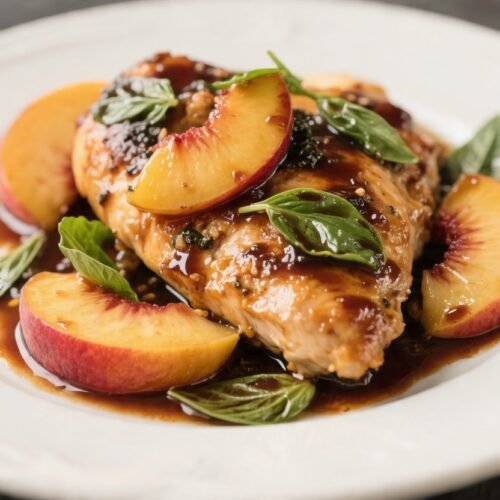
Peach Basil Balsamic Chicken - Sweet, Savory, and Weeknight-Friendly
Ingredients
- Chicken breasts or thighs (boneless, skinless; about 1.5 to 2 pounds)
- Ripe peaches (3–4 medium, sliced; can sub frozen or canned in juice)
- Fresh basil (1 small bunch)
- Balsamic vinegar (high quality for best flavor)
- Honey or maple syrup (1–2 tablespoons)
- Garlic (2–3 cloves, minced)
- Olive oil
- Butter (optional, for richness)
- Chicken broth or water (1/4 cup)
- Salt and black pepper
- Red pepper flakes (optional, for a little heat)
- Lemon (optional, for a bright finish)
Instructions
- Prep the chicken. Pat the chicken dry and season both sides with salt and pepper. If using breasts, you can pound them to an even thickness for faster, more even cooking.
- Slice the peaches and mince the garlic. Leave the peach skins on for color and texture. Tear or thinly slice the basil and set aside.
- Heat the pan. Warm a large skillet over medium-high heat with 1–2 tablespoons olive oil. When it shimmers, add the chicken in a single layer.
- Sear the chicken. Cook without moving for 4–6 minutes per side, depending on thickness, until deeply browned and just cooked through. Transfer to a plate and tent loosely with foil.
- Build flavor in the pan. Lower the heat to medium. Add a small knob of butter (optional) and the garlic. Stir for 30 seconds until fragrant, scraping up browned bits.
- Add peaches. Toss in the sliced peaches. Cook for 2–3 minutes, stirring occasionally, until they soften and start to caramelize at the edges.
- Make the glaze. Pour in 2–3 tablespoons balsamic vinegar, 1–2 tablespoons honey, and the broth. Stir and simmer for 2–3 minutes until slightly thickened and glossy. Season with salt, pepper, and a pinch of red pepper flakes if you like heat.
- Return the chicken. Nestle the chicken back into the pan with any juices. Spoon the peach-balsamic sauce over the top. Simmer 2 minutes to warm through and coat.
- Finish with basil. Remove from heat. Stir in most of the basil and a squeeze of lemon if you want extra brightness. Taste and adjust seasoning.
- Serve. Plate the chicken and peaches with plenty of sauce. Scatter remaining basil on top. Great over rice, couscous, quinoa, or creamy polenta.