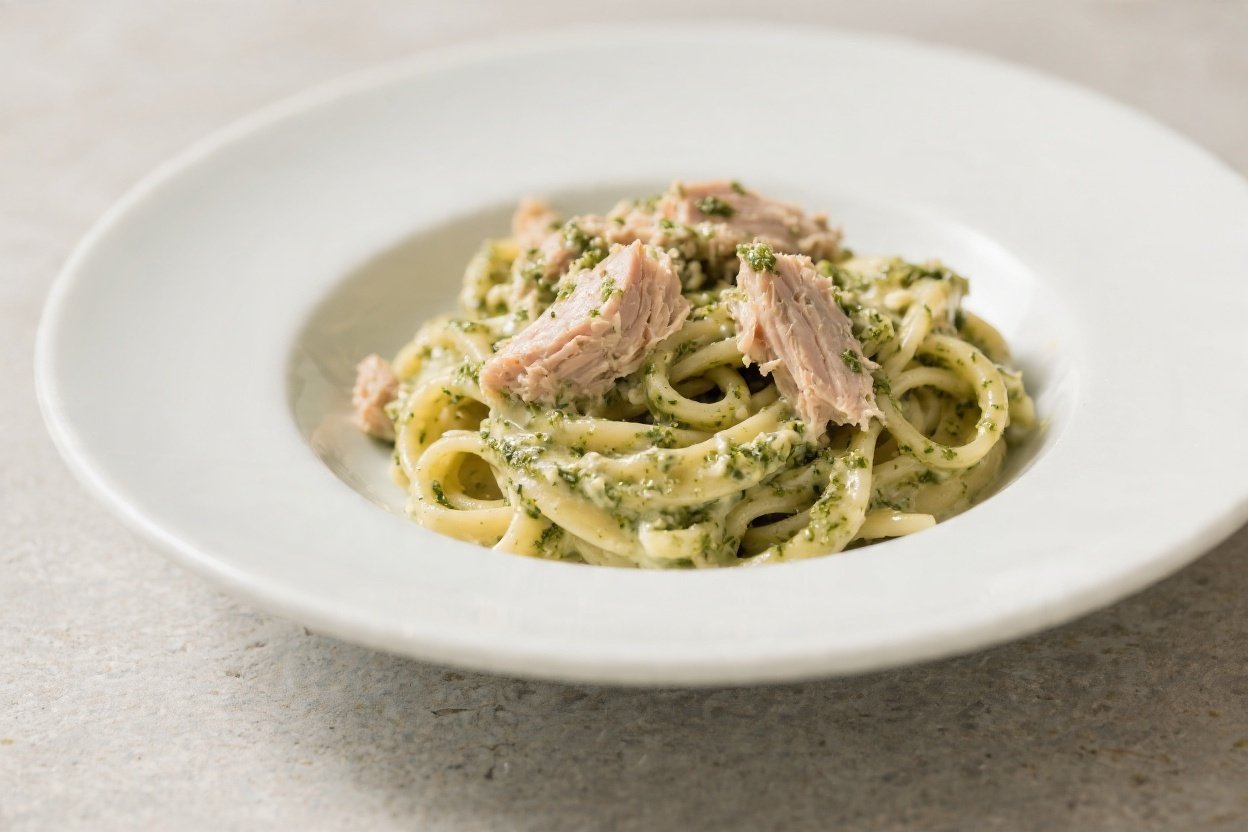
This Creamy Tuna Pesto Pasta checks all the boxes: quick, satisfying, and loaded with flavor. You get the richness of a creamy sauce, the brightness of basil pesto, and the savory depth of tuna—all in one pan. It’s the kind of dinner you can pull together on a busy weeknight without sacrificing taste.
Plus, it’s budget-friendly and uses pantry staples. If you’re craving comfort with minimal effort, this one’s a keeper.
What Makes This Recipe So Good
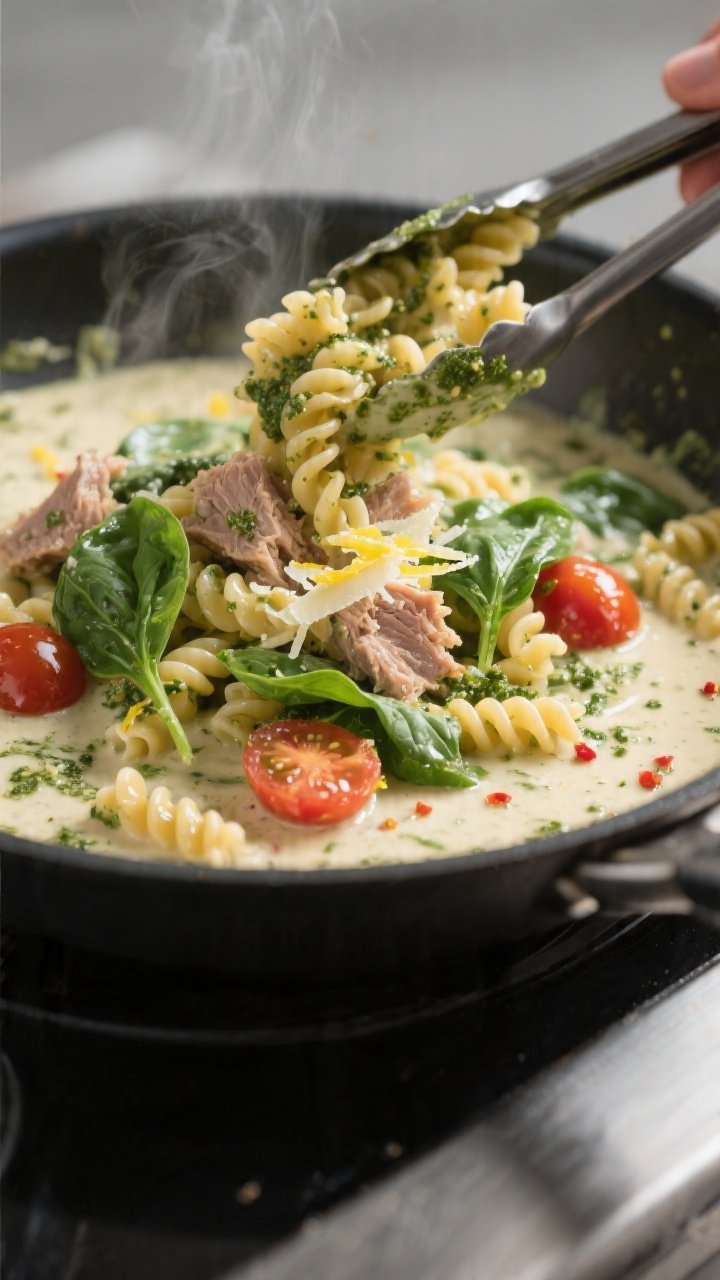
- Fast and fuss-free: From start to finish, you’re looking at about 20–25 minutes.
- Packed with flavor: Pesto brings herbs, garlic, and nuttiness; tuna adds protein and umami; cream ties it all together.
- Pantry-friendly: Canned tuna, pasta, and jarred pesto are easy to keep on hand.
- Flexible: Works with different pasta shapes, dairy options, and add-ins like spinach or cherry tomatoes.
- Comfort without heaviness: The sauce is silky and rich but not overpowering, especially with a squeeze of lemon.
Shopping List
- Pasta: 12 oz (340 g) short or long pasta (penne, fusilli, or spaghetti)
- Canned tuna: 2 cans (5–6 oz each), preferably tuna in olive oil, drained
- Pesto: 1/3–1/2 cup good-quality basil pesto (store-bought or homemade)
- Cream: 3/4 cup heavy cream or half-and-half
- Garlic: 2 cloves, minced
- Lemon: Zest and juice of 1/2 lemon
- Parmesan: 1/2 cup finely grated, plus extra for serving
- Olive oil: 1–2 tablespoons (especially if using tuna in water)
- Spinach (optional): 2 cups baby spinach
- Cherry tomatoes (optional): 1 cup, halved
- Red pepper flakes (optional): A pinch for heat
- Salt and black pepper: To taste
Step-by-Step Instructions
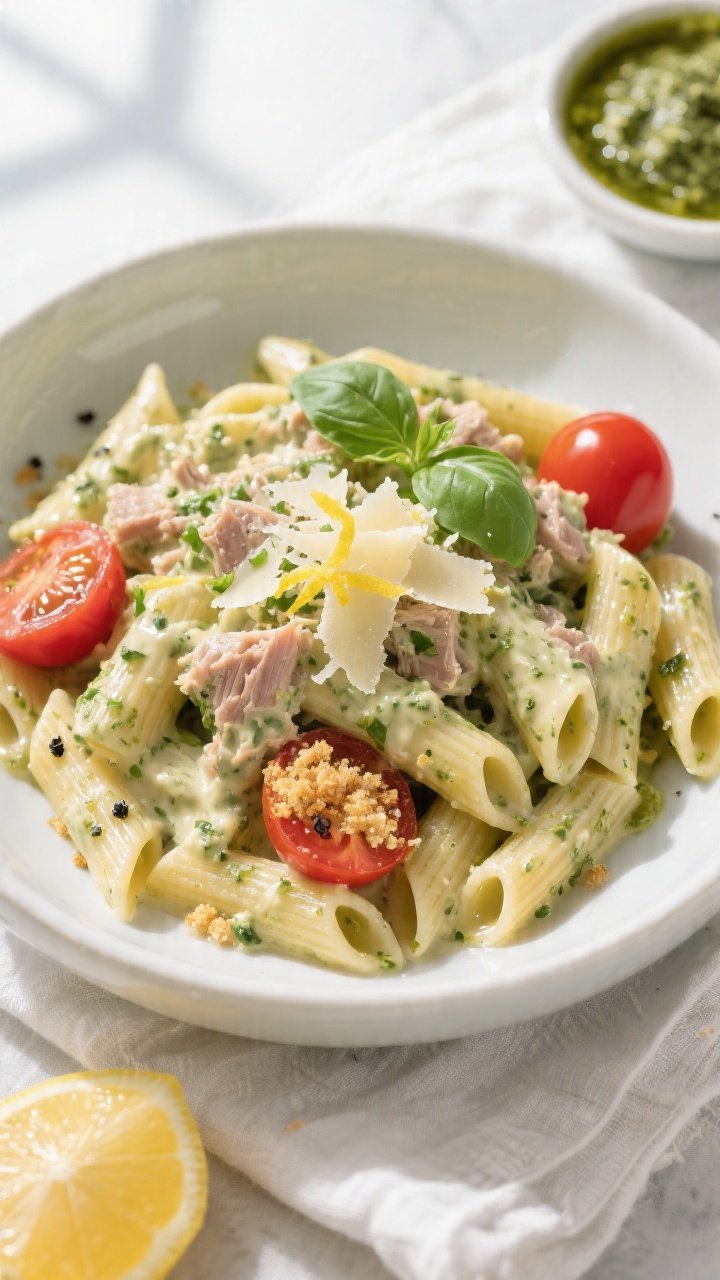
- Boil the pasta: Bring a large pot of salted water to a boil. Cook the pasta until just al dente. Reserve 1 cup of pasta water, then drain.
- Prep your aromatics: While the pasta cooks, mince the garlic and zest half a lemon. Halve the cherry tomatoes if using.
- Build the base: In a large skillet, warm 1 tablespoon olive oil over medium heat. Add garlic and cook 30–45 seconds until fragrant. Don’t brown it.
- Add tuna: Flake in the drained tuna. Stir gently to warm it through. If it looks dry, add another drizzle of oil.
- Creamy sauce time: Pour in the cream and bring to a gentle simmer. Add 1/4 cup pasta water and the lemon zest. Stir in the pesto (start with 1/3 cup). Simmer 1–2 minutes until slightly thickened.
- Season: Add a pinch of salt, a few grinds of black pepper, and red pepper flakes if you like heat. Stir in the Parmesan until melted and smooth.
- Toss with pasta: Add the drained pasta to the skillet. Toss to coat, adding more pasta water as needed for a glossy, silky sauce that clings to the noodles.
- Finish and brighten: Stir in a squeeze of lemon juice to taste. If using spinach, fold it in now until just wilted. Add cherry tomatoes for a fresh pop.
- Adjust and serve: Taste and adjust salt, pepper, and pesto. Top with extra Parmesan and a drizzle of olive oil. Serve hot.
Keeping It Fresh
- Storage: Refrigerate leftovers in an airtight container for up to 3 days. The sauce will thicken slightly as it chills.
- Reheating: Reheat gently on the stovetop over low heat with a splash of water, milk, or cream to loosen. Stir often to keep it creamy.
- Make-ahead tips: Cook the pasta 1–2 minutes shy of al dente if prepping ahead. Store sauce and pasta separately and combine when reheating for the best texture.
- Freshness boosters: Add a quick squeeze of lemon and a spoon of pesto after reheating to revive flavors.
Benefits of This Recipe
- High in protein: Tuna brings a solid protein boost without extra cooking time.
- Balanced flavors: Cream softens the pesto’s bite; lemon keeps it bright.
- Customizable: Easy to adapt for different diets—gluten-free pasta, lighter dairy, or dairy-free swaps.
- Weeknight-friendly: Minimal chopping, one skillet for the sauce, and fast cleanup.
- Budget-conscious: Uses accessible ingredients with restaurant-level payoff.
Pitfalls to Watch Out For
- Overcooking pasta: It should be just tender, since it finishes in the sauce. Overcooked pasta turns mushy.
- Boiling the cream: Keep the sauce at a gentle simmer. A hard boil can split the sauce and make it greasy.
- Skipping pasta water: Starchy water is key to a silky, clingy sauce. Don’t forget to reserve it.
- Over-salting: Pesto, tuna, and Parmesan are salty. Season at the end after tasting.
- Using low-quality pesto: The pesto drives flavor. Choose a good one or make your own for the best result.
Variations You Can Try
- Lighter cream: Swap heavy cream for half-and-half or evaporated milk. Simmer gently and add a touch more Parmesan for body.
- Dairy-free: Use coconut cream or a barista-style oat cream. Choose a dairy-free pesto and vegan Parmesan.
- Herby upgrade: Stir in chopped fresh basil or parsley at the end for a burst of freshness.
- Veg-loaded: Add peas, sautéed zucchini, or roasted red peppers. Fold them in with the pasta.
- Spice it up: Add Calabrian chili paste or a pinch of cayenne for a gentle kick.
- Crunch factor: Top with toasted breadcrumbs or crushed walnuts for texture.
- Lemon-forward: Double the zest and finish with extra lemon juice for a brighter profile.
- Pasta shape swap: Try shells, orecchiette, or farfalle to catch the tuna and sauce in every bite.
FAQ
Can I use tuna in water instead of oil?
Yes. Drain it well and add 1–2 teaspoons of olive oil to the pan with the garlic to replace the lost richness. Taste and add a little more oil at the end if needed.
What kind of pesto works best?
A classic basil pesto with good olive oil, Parmesan, and pine nuts (or cashews) is ideal.
Look for a bright green color and a short ingredient list. Refrigerated versions often taste fresher than shelf-stable jars.
How can I make it gluten-free?
Use a gluten-free pasta you like, and cook it just shy of the package time to avoid mushiness. Reserve pasta water as usual; it still helps bring the sauce together.
Can I substitute the cream?
You can use half-and-half for a lighter sauce or evaporated milk for a creamy-but-lean option.
For dairy-free, try coconut cream or oat cream and a dairy-free pesto.
Will Greek yogurt work instead of cream?
It can, but temper it to prevent curdling: remove the pan from heat, whisk some hot pasta water into the yogurt, then stir it into the sauce off the heat. The flavor will be tangier and less silky.
What’s the best pasta shape for this?
Short shapes like penne, fusilli, and shells hold the tuna and pesto well. Long strands like spaghetti also work—just toss thoroughly so the sauce coats evenly.
How do I avoid a greasy sauce?
Keep the heat moderate, don’t over-reduce the cream, and balance with pasta water.
Add Parmesan gradually and stir until smooth. If the sauce separates, whisk in a splash of hot pasta water to bring it back.
Can I add cheese on top?
Absolutely. Extra Parmesan or Pecorino adds a salty finish.
A light dusting goes a long way since the sauce is already rich.
Is this good for meal prep?
Yes, with a tweak: cook the pasta slightly under al dente and store sauce and pasta separately. Combine while reheating with a splash of water or milk to keep it creamy.
What if my sauce is too thick?
Stir in warm pasta water a little at a time until it’s glossy and loose enough to coat the pasta. Adjust salt and lemon at the end.
Final Thoughts
Creamy Tuna Pesto Pasta is proof that comfort food doesn’t have to be complicated.
With a few pantry staples and a smart technique, you get a velvety, flavorful bowl of pasta in minutes. Keep good pesto on hand, season thoughtfully, and don’t skip the pasta water—that’s the secret to a silky finish. Whether it’s a weeknight dinner or a cozy lunch, this recipe delivers every time.
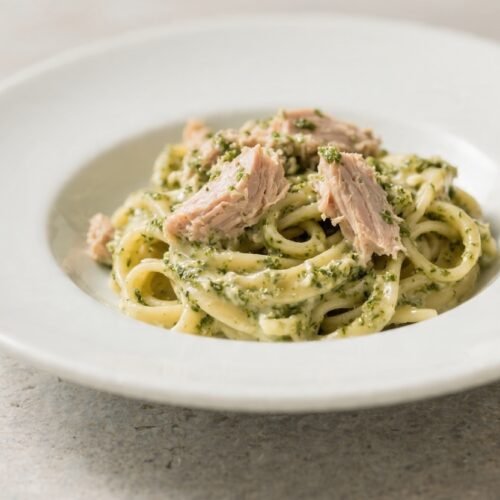
Creamy Tuna Pesto Pasta – Fast, Comforting, and Flavor-Packed
Ingredients
- Pasta: 12 oz (340 g) short or long pasta (penne, fusilli, or spaghetti)
- Canned tuna: 2 cans (5–6 oz each), preferably tuna in olive oil, drained
- Pesto: 1/3–1/2 cup good-quality basil pesto (store-bought or homemade)
- Cream: 3/4 cup heavy cream or half-and-half
- Garlic: 2 cloves, minced
- Lemon: Zest and juice of 1/2 lemon
- Parmesan: 1/2 cup finely grated, plus extra for serving
- Olive oil: 1–2 tablespoons (especially if using tuna in water)
- Spinach (optional): 2 cups baby spinach
- Cherry tomatoes (optional): 1 cup, halved
- Red pepper flakes (optional): A pinch for heat
- Salt and black pepper: To taste
Instructions
- Boil the pasta: Bring a large pot of salted water to a boil. Cook the pasta until just al dente. Reserve 1 cup of pasta water, then drain.
- Prep your aromatics: While the pasta cooks, mince the garlic and zest half a lemon. Halve the cherry tomatoes if using.
- Build the base: In a large skillet, warm 1 tablespoon olive oil over medium heat. Add garlic and cook 30–45 seconds until fragrant. Don’t brown it.
- Add tuna: Flake in the drained tuna. Stir gently to warm it through. If it looks dry, add another drizzle of oil.
- Creamy sauce time: Pour in the cream and bring to a gentle simmer. Add 1/4 cup pasta water and the lemon zest. Stir in the pesto (start with 1/3 cup). Simmer 1–2 minutes until slightly thickened.
- Season: Add a pinch of salt, a few grinds of black pepper, and red pepper flakes if you like heat. Stir in the Parmesan until melted and smooth.
- Toss with pasta: Add the drained pasta to the skillet. Toss to coat, adding more pasta water as needed for a glossy, silky sauce that clings to the noodles.
- Finish and brighten: Stir in a squeeze of lemon juice to taste. If using spinach, fold it in now until just wilted. Add cherry tomatoes for a fresh pop.
- Adjust and serve: Taste and adjust salt, pepper, and pesto. Top with extra Parmesan and a drizzle of olive oil. Serve hot.