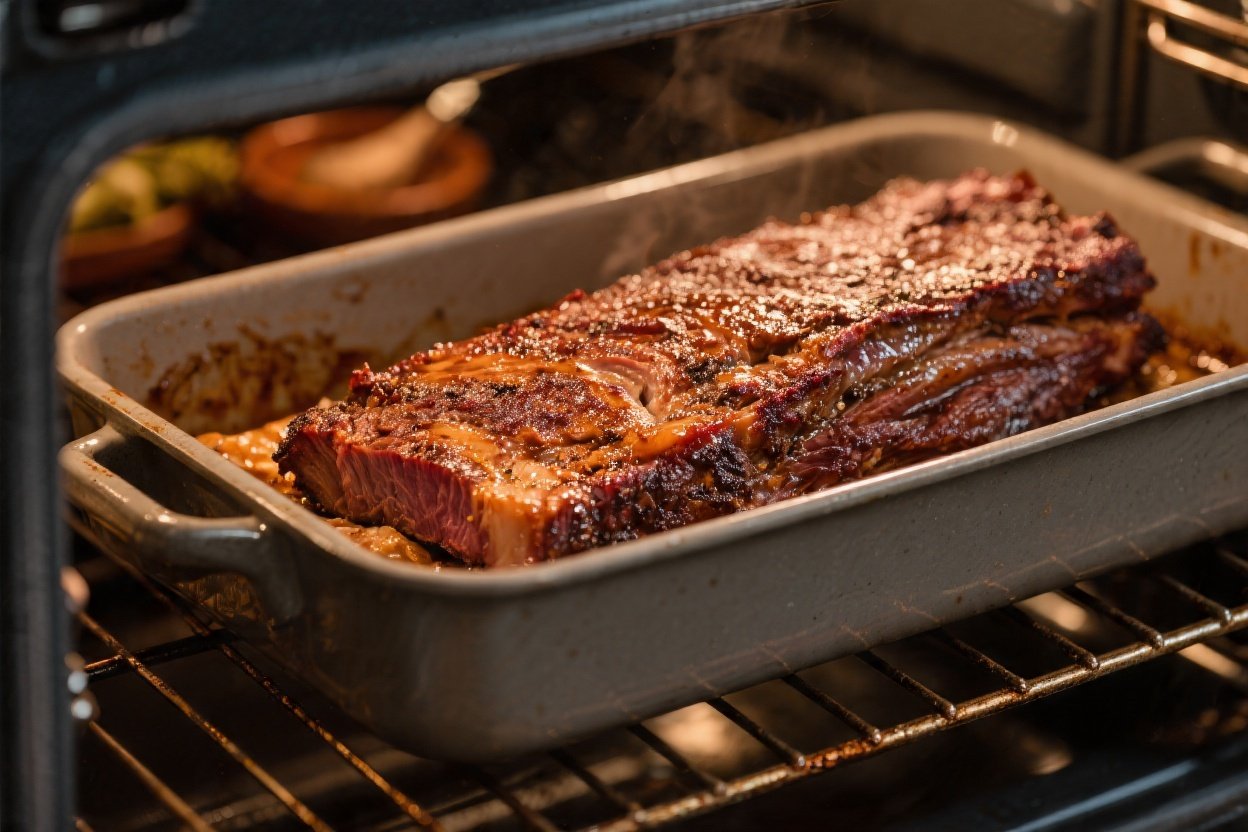
Texas brisket doesn’t have to be a backyard, all-day, smoke-filled affair. You can make a deeply flavorful, fork-tender brisket right in your oven with simple techniques and a solid spice rub. This recipe leans on big Texas flavor—salt, pepper, garlic—plus low-and-slow heat to get that signature bark and juicy slices.
No fancy gear, no guesswork. Just a dependable method that works in any kitchen and delivers crowd-pleasing results.
Why This Recipe Works
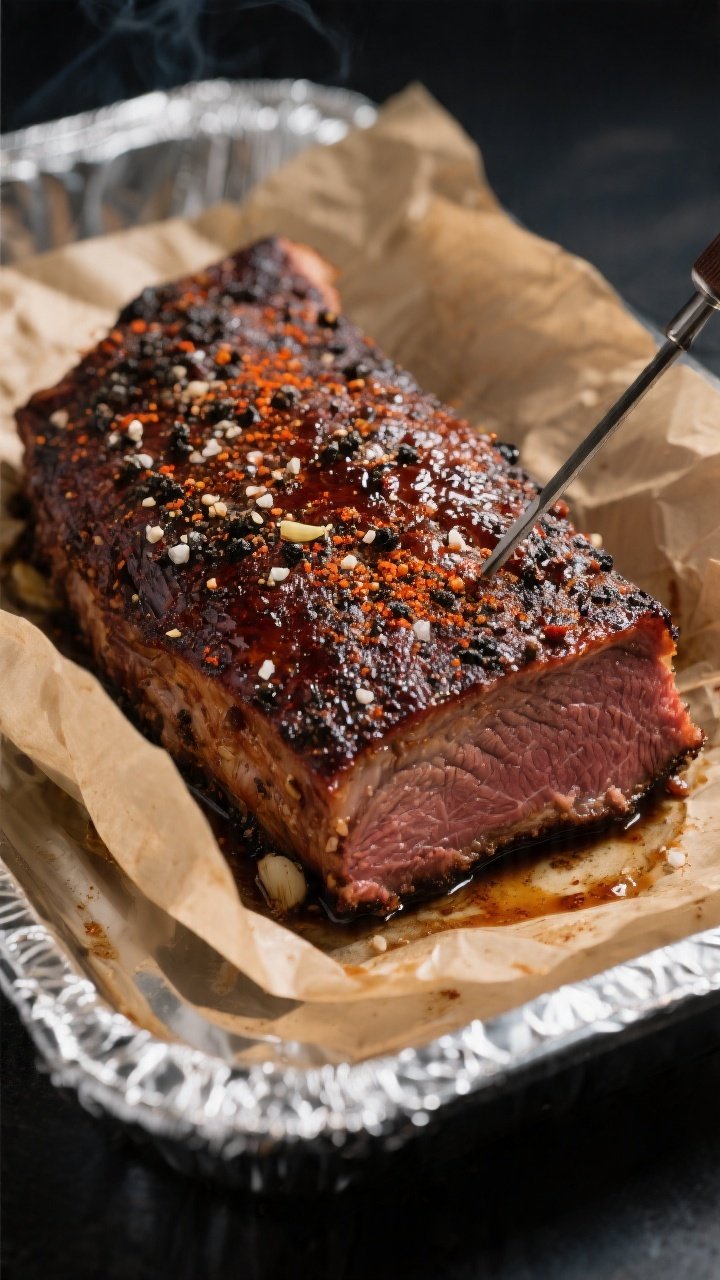
This oven method honors classic Texas simplicity: a bold rub and steady heat. The brisket cooks low and slow, allowing tough connective tissue to melt into tender, juicy meat.
- Simple rub, big flavor: Coarse salt and black pepper build a savory crust that tastes like real Texas barbecue.
- Low temperature: Cooking at 275°F gives you time to render fat and achieve a tender bite without drying out the meat.
- Covered finish: Wrapping the brisket traps moisture for a perfect texture and easier slicing.
- Resting period: A long rest keeps juices in the meat, not on your cutting board.
Shopping List
- Whole beef brisket (packer cut), 8–12 pounds with a good fat cap
- Kosher salt (coarse)
- Freshly cracked black pepper (medium-coarse)
- Garlic powder
- Onion powder
- Paprika (optional for color)
- Brown sugar (optional, for a hint of caramelization)
- Apple cider vinegar (for spritzing)
- Beef broth or water (a splash for the pan)
- Neutral oil (like canola or avocado)
- Heavy-duty foil or unwaxed butcher paper
How to Make It
- Trim the brisket: Place the brisket fat-side up. Trim the fat cap to about 1/4 inch and remove any hard, waxy fat. Square off thin edges so they don’t dry out.
- Mix the rub: In a bowl, combine 2 tablespoons kosher salt, 2 tablespoons coarse black pepper, 1 tablespoon garlic powder, 1 teaspoon onion powder, and 1 teaspoon paprika. Add 1 teaspoon brown sugar if you like a subtle sweetness.
- Season generously: Rub a thin coat of oil on all sides. Apply the seasoning mix evenly, pressing it into the meat. The brisket should be fully coated but not caked.
- Rest before cooking: Let the seasoned brisket sit at room temperature for 45–60 minutes. This helps the rub adhere and takes the chill off.
- Preheat the oven: Set to 275°F (135°C). Place a rack in the lower third of the oven.
- Prepare the pan: Line a large roasting pan or rimmed baking sheet with foil for easy cleanup. Place a wire rack inside if you have one. Pour 1/2 cup beef broth or water into the pan to add gentle moisture.
- Start the cook: Place the brisket on the rack, fat-side up. Roast uncovered for 3–4 hours. Mix 1/2 cup water with 1 tablespoon apple cider vinegar in a spray bottle and lightly spritz the brisket every hour after the first.
- Wrap at the stall: When the internal temperature reaches about 160–165°F and the bark looks set and dark, wrap tightly in heavy-duty foil or butcher paper. Add a small splash of broth if the surface looks dry.
- Continue low and slow: Return to the oven and cook until the internal temperature reaches 200–205°F and a probe slides in with little resistance. Expect another 3–4 hours, depending on size and thickness.
- Rest properly: Remove the wrapped brisket from the oven and place it in an empty cooler or on the counter, still wrapped, for at least 1 hour (up to 2). This step is crucial for juicy slices.
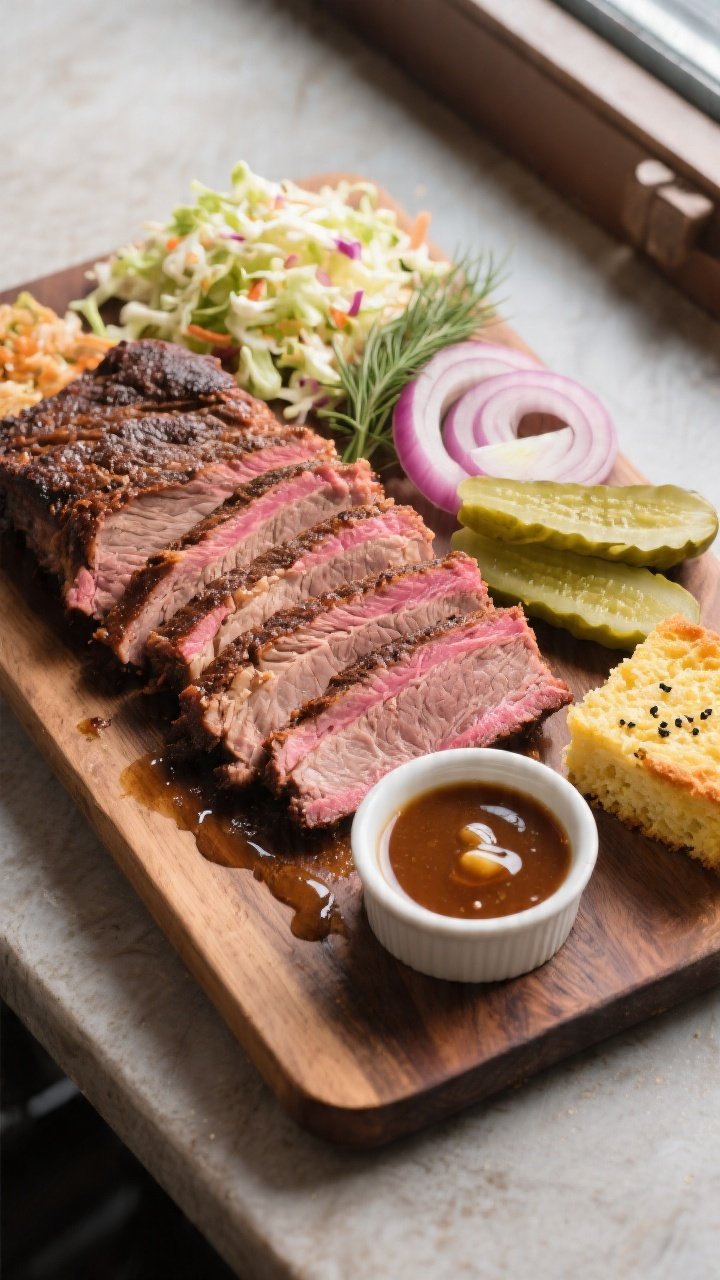
- Slice against the grain: Unwrap and separate the flat and the point if you like. Slice the flat into 1/4-inch slices against the grain. For the point, turn the meat 90 degrees and slice slightly thicker. Serve with the collected juices.
How to Store
- Refrigerator: Store cooled brisket slices in an airtight container with a little cooking juice for up to 4 days.
- Freezer: Wrap in foil, then place in a freezer bag. Freeze up to 3 months. Thaw overnight in the fridge.
- Reheating: Warm gently in a 300°F oven, covered with foil and a splash of broth until heated through. Avoid high heat, which dries it out.
Health Benefits
- High-quality protein: Brisket provides essential amino acids that support muscle repair and satiety.
- Iron and B vitamins: Beef is rich in iron, B12, and niacin, which support energy and brain function.
- Controlled ingredients: You choose the salt level and seasonings, and there’s no added sugar unless you want it.
- Balanced portions: Pair with fiber-rich sides like slaw, beans, or roasted veggies to build a well-rounded meal.
Common Mistakes to Avoid
- Rushing the cook: Brisket needs time. If you pull it early, it will be tough. Trust the temperature and the feel.
- Skipping the wrap: Without wrapping, the bark can get too hard and the meat can dry out in the oven.
- Not resting long enough: Cutting too soon drains the juices. Rest at least an hour.
- Slicing the wrong way: Always slice against the grain for tender bites. The grain changes direction between the flat and point.
- Too little seasoning: Big cuts need bold seasoning.m Don’t skimp on salt and pepper.
Recipe Variations
- Classic Texas (salt and pepper only): Use a 50/50 blend of kosher salt and coarse black pepper. Simple and authentic.
- Smoky oven twist: Add 1 teaspoon smoked paprika and a pinch of chipotle powder to mimic a smoker’s flavor.
- Coffee rub: Mix 1 tablespoon finely ground coffee into the rub for a subtle, roasty bitterness and deeper bark color.
- Mustard binder: Swap oil for a thin coat of yellow mustard before seasoning. It won’t taste like mustard; it just helps the rub stick.
- Au jus finish: Deglaze the pan with a cup of beef broth and a splash of vinegar. Simmer to create a light dipping jus.
FAQ
Can I use a smaller brisket?
Yes. A 3–5 pound brisket flat works well, but it will cook faster and can dry out more easily. Wrap earlier and monitor temperature closely.
What if I don’t have a wire rack?
Place the brisket directly on a foil-lined pan and add a bit more liquid.
Flip once during the first half of cooking to encourage even heat and bark formation.
Is it okay to cook at 250°F instead?
Absolutely. It will take longer, but 250°F can produce an even more tender result. Plan for extra time and rely on internal temperature and probe feel.
How do I know it’s done besides temperature?
Use the probe test.
A thermometer or skewer should slide into the thickest part with very little resistance, like warm butter. That’s your green light.
Should I separate the point and flat before cooking?
You can, but it’s not necessary. Cooking them together keeps things simple and helps the lean flat stay moist.
Can I make this ahead for a party?
Yes.
Cook a day ahead, chill, and reheat gently with juices. Slice just before serving for the best texture.
What sides go best with oven brisket?
Try potato salad, coleslaw, pickles, baked beans, or cornbread. Tangy and crunchy sides balance the rich meat.
Do I need liquid smoke?
No.
The rub and slow cooking build plenty of flavor. If you like a smoky note, add a small amount of smoked paprika or chipotle powder to the rub.
Wrapping Up
Texas Style Brisket in the Oven proves you don’t need a smoker to get big, bold flavor. With a sturdy rub, patient cooking, and a proper rest, you’ll slice into tender, juicy brisket with a beautiful bark.
Keep it simple, watch your temps, and let time do the heavy lifting. Serve it up with your favorite sides and enjoy a true backyard classic—made right in your kitchen.
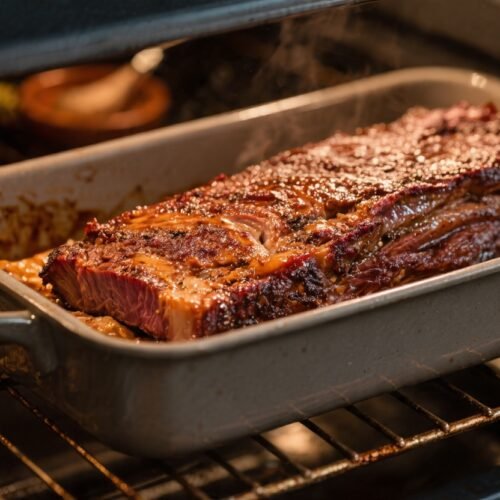
Texas Style Brisket in the Oven - Slow-Cooked, Tender, and Smoky-Seasoned
Ingredients
- Whole beef brisket (packer cut), 8–12 pounds with a good fat cap
- Kosher salt (coarse)
- Freshly cracked black pepper (medium-coarse)
- Garlic powder
- Onion powder
- Paprika (optional for color)
- Brown sugar (optional, for a hint of caramelization)
- Apple cider vinegar (for spritzing)
- Beef broth or water (a splash for the pan)
- Neutral oil (like canola or avocado)
- Heavy-duty foil or unwaxed butcher paper
Instructions
- Trim the brisket: Place the brisket fat-side up. Trim the fat cap to about 1/4 inch and remove any hard, waxy fat. Square off thin edges so they don’t dry out.
- Mix the rub: In a bowl, combine 2 tablespoons kosher salt, 2 tablespoons coarse black pepper, 1 tablespoon garlic powder, 1 teaspoon onion powder, and 1 teaspoon paprika. Add 1 teaspoon brown sugar if you like a subtle sweetness.
- Season generously: Rub a thin coat of oil on all sides. Apply the seasoning mix evenly, pressing it into the meat. The brisket should be fully coated but not caked.
- Rest before cooking: Let the seasoned brisket sit at room temperature for 45–60 minutes. This helps the rub adhere and takes the chill off.
- Preheat the oven: Set to 275°F (135°C). Place a rack in the lower third of the oven.
- Prepare the pan: Line a large roasting pan or rimmed baking sheet with foil for easy cleanup. Place a wire rack inside if you have one. Pour 1/2 cup beef broth or water into the pan to add gentle moisture.
- Start the cook: Place the brisket on the rack, fat-side up. Roast uncovered for 3–4 hours. Mix 1/2 cup water with 1 tablespoon apple cider vinegar in a spray bottle and lightly spritz the brisket every hour after the first.
- Wrap at the stall: When the internal temperature reaches about 160–165°F and the bark looks set and dark, wrap tightly in heavy-duty foil or butcher paper. Add a small splash of broth if the surface looks dry.
- Continue low and slow: Return to the oven and cook until the internal temperature reaches 200–205°F and a probe slides in with little resistance. Expect another 3–4 hours, depending on size and thickness.
- Rest properly: Remove the wrapped brisket from the oven and place it in an empty cooler or on the counter, still wrapped, for at least 1 hour (up to 2). This step is crucial for juicy slices.
- Slice against the grain: Unwrap and separate the flat and the point if you like. Slice the flat into 1/4-inch slices against the grain. For the point, turn the meat 90 degrees and slice slightly thicker. Serve with the collected juices.