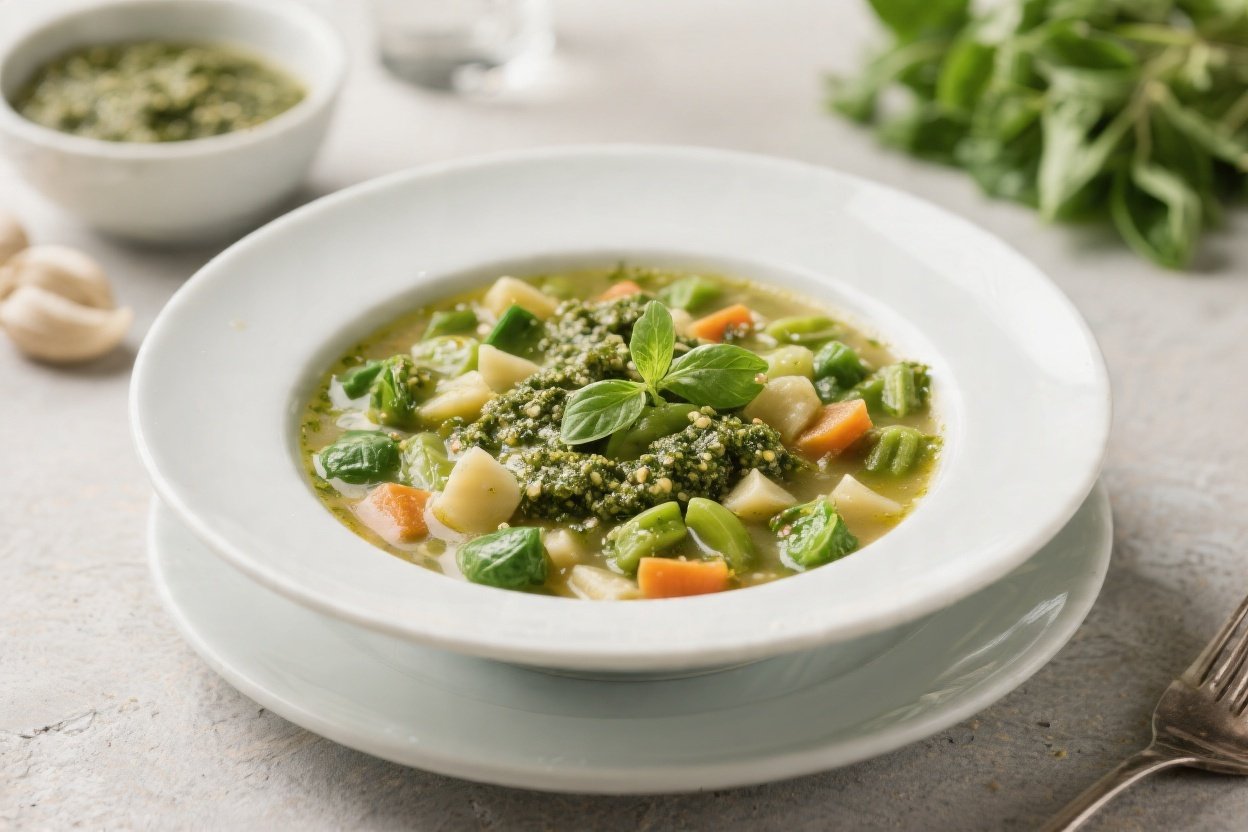
Spring hits and suddenly a bowl of soup sounds exciting again—lighter, greener, and full of snap. This Spring Green Minestrone with Pesto is exactly that: a brothy, vibrant soup packed with tender vegetables, beans, and pasta, all finished with a swirl of fragrant basil pesto. It’s cozy without being heavy and comes together with simple ingredients you can find at any store.
The pesto lifts the whole pot with brightness. Serve it for a weeknight dinner or as a relaxed weekend lunch with crusty bread.
Why This Recipe Works
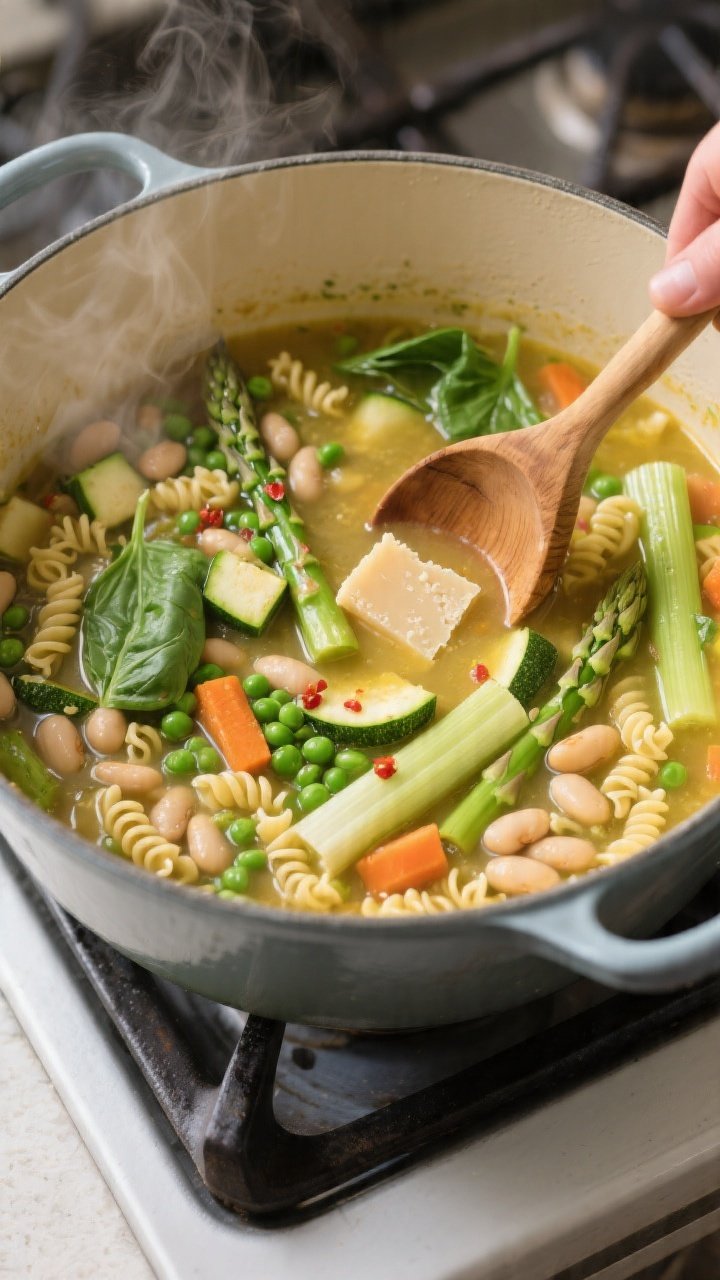
This soup leans into spring produce—leeks, peas, asparagus, and baby spinach—so every spoonful tastes fresh and lively. The base is simple: sautéed aromatics, broth, and a small shape of pasta that cooks right in the pot, which thickens the soup without extra cream.
Cannelini beans add gentle richness and protein, while a finishing spoonful of pesto brings acidity, fat, and herbs to balance the greens. A squeeze of lemon at the end sharpens the flavors, making the soup feel clean and bright. It’s comfort food that won’t weigh you down.
Shopping List
- Olive oil: For sautéing and drizzling.
- Leek: White and light green parts, thinly sliced. Substitute with a sweet onion if needed.
- Garlic: Fresh cloves, minced.
- Celery: Diced for aromatic backbone.
- Carrot: Diced for sweetness and color.
- Asparagus: Trimmed and cut into 1-inch pieces.
- Zucchini: Diced small so it cooks evenly.
- Baby spinach or baby kale: A few generous handfuls.
- Frozen peas: Sweet pop and quick to cook.
- Cannelini beans: One 15-ounce can, drained and rinsed.
- Small pasta: Ditalini, small shells, or orzo (about 3/4 cup).
- Vegetable or chicken broth: About 6 cups, low-sodium preferred.
- Dry white wine (optional): 1/2 cup for deglazing.
- Lemon: Zest and juice for brightness.
- Parmesan rind (optional): Adds depth as the soup simmers.
- Prepared basil pesto: Store-bought or homemade.
- Fresh herbs (optional): Parsley, basil, or chives for garnish.
- Salt and black pepper: To season.
- Red pepper flakes (optional): For a gentle kick.
How to Make It
- Prep your produce: Slice the leek and rinse well to remove grit. Dice the celery, carrot, and zucchini. Cut asparagus into 1-inch pieces. Mince the garlic. Rinse and drain the beans.
- Sweat the aromatics: Warm 2 tablespoons olive oil in a large pot over medium heat. Add leek, celery, and carrot with a pinch of salt. Cook 5–7 minutes, stirring, until soft and glossy, not browned.
- Build flavor: Stir in garlic and a pinch of red pepper flakes. Cook 30 seconds until fragrant. If using, pour in the white wine and simmer 1–2 minutes to reduce slightly, scraping the pot.
- Add broth and optional rind: Pour in 6 cups broth and add the Parmesan rind if you have one. Bring to a gentle boil.
- Cook the pasta: Add the small pasta and cook until just shy of al dente, 1–2 minutes less than package directions. Keep the soup at a lively simmer, not a rolling boil.
- Add beans and tender veg: Stir in cannellini beans, zucchini, and asparagus. Simmer 3–4 minutes until the asparagus is bright and just tender.
- Finish with greens: Add peas and baby spinach. Cook 1–2 minutes until the greens wilt and peas are warm.
- Season and brighten: Remove the Parmesan rind. Add lemon zest and a squeeze of juice. Taste and season with salt and pepper. The broth should taste savory and lively.
- Swirl in pesto: Off the heat, stir 2–3 tablespoons pesto into the pot for a subtle herbal note, or spoon pesto into bowls and ladle the soup over it for a more pronounced hit. Either way, don’t boil after adding pesto.
- Serve: Ladle into warm bowls. Top with extra pesto, chopped herbs, a drizzle of olive oil, and grated Parmesan if you like. Add more lemon at the table.
Storage Instructions
Let the soup cool until just warm, then refrigerate in airtight containers for up to 4 days. The pasta will continue to absorb liquid, so keep a little extra broth on hand to loosen when reheating. For best texture, store the cooked pasta separately and add to bowls as you reheat the broth and vegetables.
To freeze, skip the pasta and greens.
Freeze the aromatic base with beans and broth for up to 3 months. Thaw, reheat to a simmer, then add pasta to cook, followed by peas and greens at the end. Reheat gently on the stovetop to avoid overcooking the vegetables.
Benefits of This Recipe
- Fresh, seasonal flavor: Spring vegetables keep the soup bright, crisp, and colorful.
- Nutrient-dense: Packed with fiber, plant protein, and micronutrients from a variety of greens.
- Flexible and weeknight-friendly: Use what you have; the method stays the same.
- Light but satisfying: Beans and pasta make it filling without heaviness or cream.
- Budget-conscious: Leans on pantry staples like beans, pasta, and broth.
Pitfalls to Watch Out For
- Overcooking the pasta: It should be slightly underdone when you add the last vegetables to avoid mushy texture.
- Boiling after pesto: Heat dulls basil’s flavor and can split the oil. Stir pesto in off heat or at the table.
- Skipping salt at each stage: Season aromatics, then the broth, and finally to taste. Layered seasoning keeps flavors bright.
- Adding greens too early: Spinach and peas cook fast. Add them at the very end so they stay vibrant.
- Not rinsing leeks: Grit hides between layers. Slice, then wash well in a bowl of water and drain.
Recipe Variations
- Grain swap: Use farro, barley, or brown rice instead of pasta. Cook grains separately and add to bowls to keep the broth clear.
- Protein boost: Add shredded rotisserie chicken or sautéed shrimp at the end. Warm through gently.
- Dairy-free: Use a vegan pesto or make one with basil, toasted almonds, lemon, garlic, and olive oil. Skip Parmesan rind.
- Extra-green: Blend 1 cup of the soup (without pasta) with a handful of spinach, then stir back in for a deeper green color.
- Herb twist: Swap basil pesto for mint-parsley pesto to lean into spring herbs.
- Legume change: Try chickpeas or butter beans for a different texture.
- No-leek option: Use a sweet onion or 2–3 shallots for a milder base.
FAQ
Can I make this gluten-free?
Yes. Use gluten-free small pasta or swap in cooked rice or quinoa. If using gluten-free pasta, cook it separately and add to bowls to prevent it from breaking down in the broth.
What if I don’t have pesto?
Stir in chopped fresh herbs, lemon zest, and a splash of good olive oil.
A spoonful of green olive tapenade or a dollop of herbed ricotta can also add richness and lift.
How can I make it ahead?
Cook the soup without pasta and greens, then cool and refrigerate. When you’re ready to serve, bring to a simmer, cook the pasta in the pot, and finish with peas and spinach. Add pesto right before serving.
Which pasta shape works best?
Choose small shapes that fit onto a spoon, like ditalini, elbow macaroni, small shells, or orzo.
They cook quickly and distribute evenly through the soup.
How do I keep the vegetables bright?
Cut them evenly, simmer gently, and add the most delicate ones—peas and greens—at the end. Finish with lemon and pesto off the heat to keep flavors fresh.
Can I use water instead of broth?
You can, but add more seasoning and consider a Parmesan rind to deepen the flavor. Taste and adjust with salt, lemon, and a splash of olive oil for body.
Is this good for meal prep?
Absolutely.
Store the soup and pasta separately so the pasta doesn’t soak up all the broth. Reheat gently and add fresh lemon and pesto before serving.
What bread pairs well?
Crusty sourdough, ciabatta, or a warm baguette are great choices. Garlic toast is excellent if you want an extra hit of aromatics.
Wrapping Up
Spring Green Minestrone with Pesto is a simple way to bring the season to your table.
It’s flexible, fast enough for a weeknight, and special enough for guests. Keep the technique in your back pocket, swap in whatever greens you’ve got, and don’t forget the final swirl of pesto and lemon. That last touch makes the whole pot sing.
Enjoy it with good bread and good company.
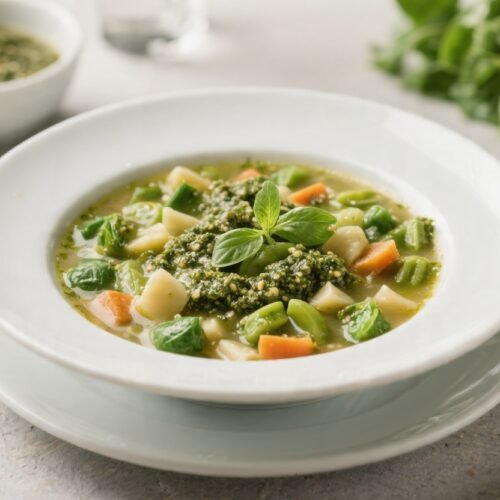
Spring Green Minestrone with Pesto - A Bright, Fresh, and Comforting Soup
Ingredients
- Olive oil: For sautéing and drizzling.
- Leek: White and light green parts, thinly sliced. Substitute with a sweet onion if needed.
- Garlic: Fresh cloves, minced.
- Celery: Diced for aromatic backbone.
- Carrot: Diced for sweetness and color.
- Asparagus: Trimmed and cut into 1-inch pieces.
- Zucchini: Diced small so it cooks evenly.
- Baby spinach or baby kale: A few generous handfuls.
- Frozen peas: Sweet pop and quick to cook.
- Cannelini beans: One 15-ounce can, drained and rinsed.
- Small pasta: Ditalini, small shells, or orzo (about 3/4 cup).
- Vegetable or chicken broth: About 6 cups, low-sodium preferred.
- Dry white wine (optional): 1/2 cup for deglazing.
- Lemon: Zest and juice for brightness.
- Parmesan rind (optional): Adds depth as the soup simmers.
- Prepared basil pesto: Store-bought or homemade.
- Fresh herbs (optional): Parsley, basil, or chives for garnish.
- Salt and black pepper: To season.
- Red pepper flakes (optional): For a gentle kick.
Instructions
- Prep your produce: Slice the leek and rinse well to remove grit. Dice the celery, carrot, and zucchini. Cut asparagus into 1-inch pieces. Mince the garlic. Rinse and drain the beans.
- Sweat the aromatics: Warm 2 tablespoons olive oil in a large pot over medium heat. Add leek, celery, and carrot with a pinch of salt. Cook 5–7 minutes, stirring, until soft and glossy, not browned.
- Build flavor: Stir in garlic and a pinch of red pepper flakes. Cook 30 seconds until fragrant. If using, pour in the white wine and simmer 1–2 minutes to reduce slightly, scraping the pot.
- Add broth and optional rind: Pour in 6 cups broth and add the Parmesan rind if you have one. Bring to a gentle boil.
- Cook the pasta: Add the small pasta and cook until just shy of al dente, 1–2 minutes less than package directions. Keep the soup at a lively simmer, not a rolling boil.
- Add beans and tender veg: Stir in cannellini beans, zucchini, and asparagus. Simmer 3–4 minutes until the asparagus is bright and just tender.
- Finish with greens: Add peas and baby spinach. Cook 1–2 minutes until the greens wilt and peas are warm.
- Season and brighten: Remove the Parmesan rind. Add lemon zest and a squeeze of juice. Taste and season with salt and pepper. The broth should taste savory and lively.
- Swirl in pesto: Off the heat, stir 2–3 tablespoons pesto into the pot for a subtle herbal note, or spoon pesto into bowls and ladle the soup over it for a more pronounced hit. Either way, don’t boil after adding pesto.
- Serve: Ladle into warm bowls. Top with extra pesto, chopped herbs, a drizzle of olive oil, and grated Parmesan if you like. Add more lemon at the table.