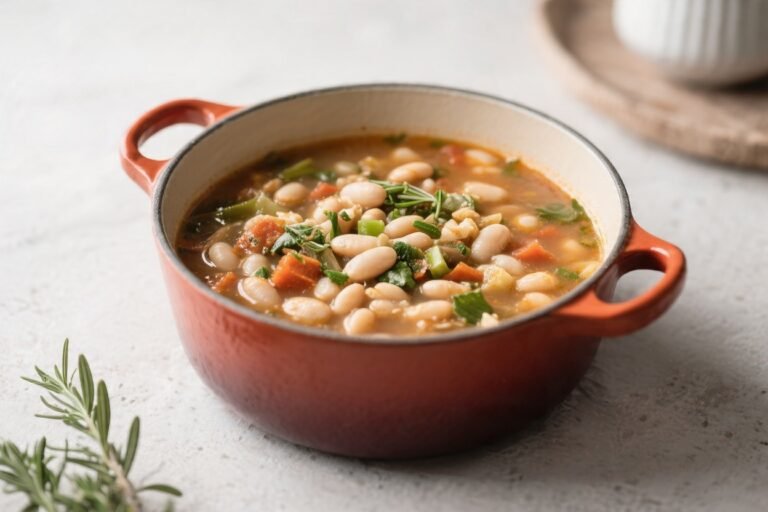
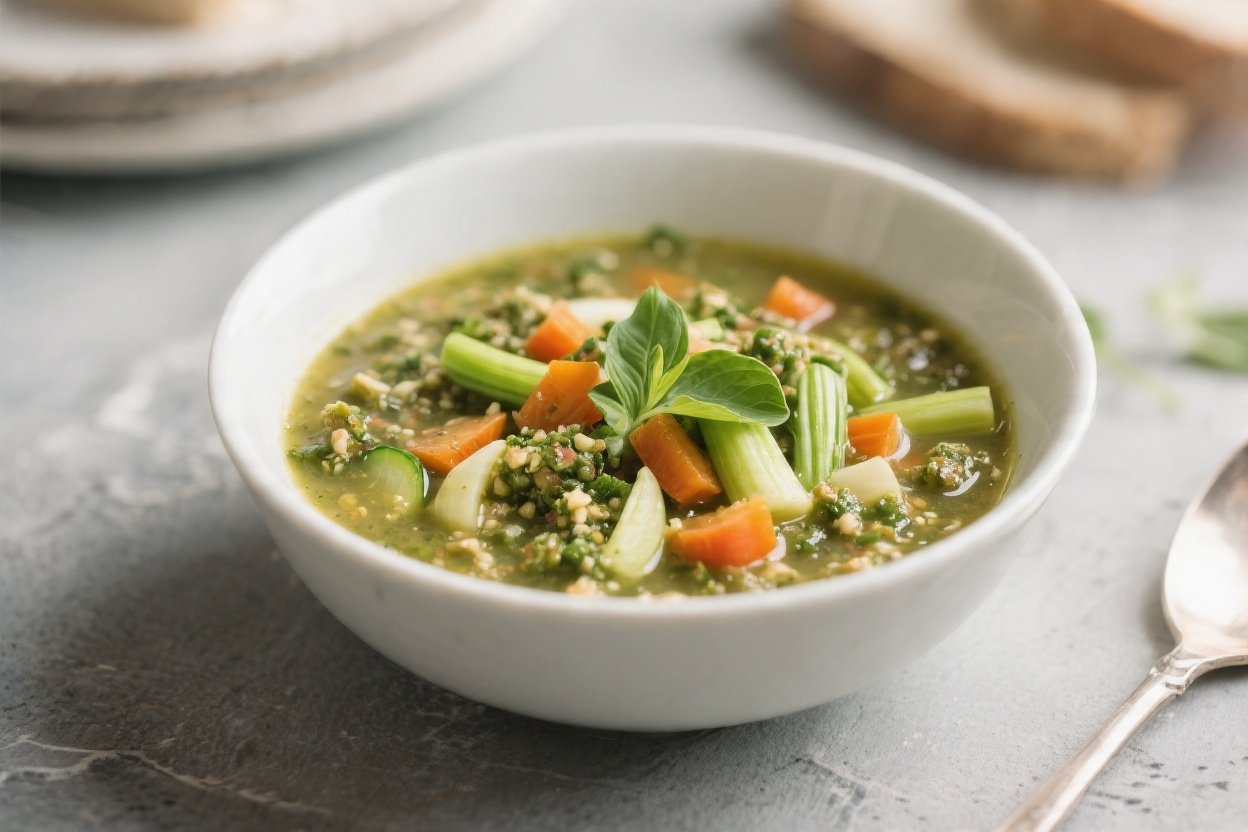
Pistou soup is a humble French classic that tastes like sunshine in a bowl. It’s brothy yet hearty, packed with tender spring vegetables, and finished with a garlicky basil paste that wakes up every spoonful. Think of it as Provence’s answer to minestrone—simple, bright, and comforting without being heavy.
This version keeps things straightforward, weeknight-friendly, and endlessly adaptable. If you love clean flavors and seasonal produce, this is the kind of recipe you’ll make on repeat.
Why This Recipe Works
- Simple base, big flavor: A gentle sauté of onions and leeks builds a sweet, savory foundation without needing hours of simmering.
- Layered cooking: Adding vegetables in stages keeps them crisp-tender, so nothing turns mushy.
- Fresh pistou at the end: Stirring in basil, garlic, and olive oil at the finish preserves their bright, fresh taste.
- Flexible ingredients: You can swap in whatever spring vegetables you have—peas, asparagus, or zucchini all work.
- Hearty but light: Beans add body and protein, while the broth keeps things fresh and not too rich.
Ingredients
- Olive oil: 3 tablespoons, divided
- Yellow onion: 1 medium, finely chopped
- Leek: 1 large, white and light green parts only, sliced and rinsed
- Carrots: 2 medium, diced
- Celery: 2 ribs, diced
- New potatoes or baby Yukon Golds: 8–10 small, quartered
- Zucchini: 1 medium, diced
- Asparagus: 1 bunch, trimmed and cut into 1-inch pieces
- Fresh or frozen peas: 1 cup
- Green beans (optional): 1 cup, trimmed and cut into 1-inch pieces
- Cannellini or Great Northern beans: 1 can (15 oz), drained and rinsed
- Vegetable broth: 6 cups (low-sodium)
- Bay leaf: 1
- Fresh thyme: 3–4 sprigs (or 1 teaspoon dried)
- Kosher salt and freshly ground black pepper
- Parmesan rind (optional): 1 piece, for umami
For the Pistou:
- Fresh basil leaves: 2 packed cups
- Garlic: 2–3 cloves
- Extra-virgin olive oil: 1/3 cup (plus more as needed)
- Grated Parmesan or Pecorino: 1/3 cup (optional but traditional)
- Lemon zest: 1/2 teaspoon (optional, not classic but brightens)
- Salt and pepper: to taste
To Serve (Optional): Crusty bread, extra basil, lemon wedges, and more grated cheese.
Step-by-Step Instructions
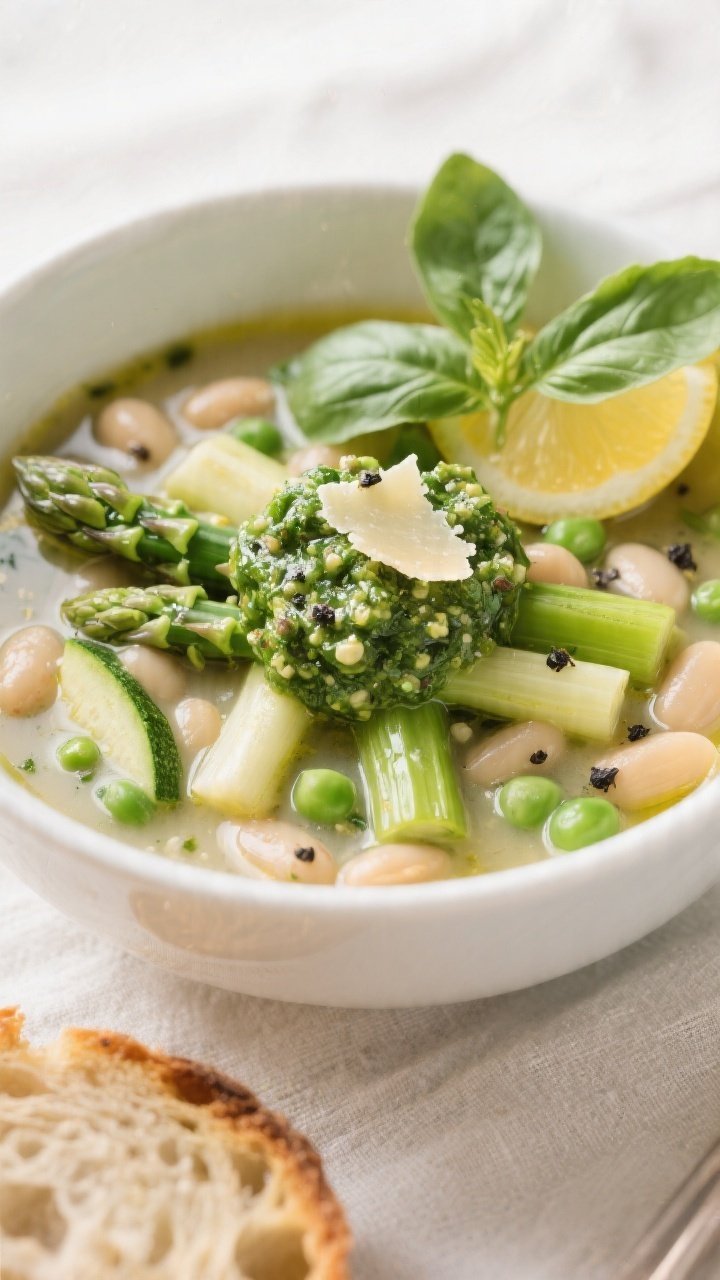
- Warm the pot: In a large soup pot, heat 2 tablespoons olive oil over medium heat. Add onion, leek, carrots, and celery with a pinch of salt. Cook 5–7 minutes, stirring, until softened and glossy.
- Build the base: Stir in potatoes, bay leaf, thyme, and the Parmesan rind if using. Pour in the vegetable broth. Bring to a gentle boil, then reduce to a simmer. Cook 10–12 minutes, until potatoes are almost tender.
- Add green vegetables: Add zucchini and green beans. Simmer 5 minutes. Then add asparagus and peas, and cook 3–4 minutes more, until crisp-tender and vibrant.
- Stir in beans: Add the cannellini beans and warm through for 2–3 minutes. Taste and season with salt and pepper. Remove bay leaf, thyme sprigs, and Parmesan rind.
- Make the pistou: While the soup simmers, combine basil, garlic, cheese (if using), lemon zest, and a pinch of salt in a food processor. Pulse to chop. With the motor running, stream in 1/3 cup olive oil until you have a loose, spoonable paste. Adjust with more oil, salt, or pepper to taste.
- Finish the soup: Off the heat, stir in 2–3 tablespoons of pistou to the pot to perfume the broth. Ladle soup into bowls and top each with another spoonful of pistou for a bright finish.
- Serve: Add a squeeze of lemon if you like, more cheese, and a drizzle of olive oil. Serve with warm crusty bread.
Storage Instructions
- Refrigerator: Cool completely, then store soup and pistou separately in airtight containers for up to 4 days. Add pistou when reheating, not before.
- Freezer: Freeze the soup (without pistou) for up to 3 months. Thaw overnight in the fridge, reheat gently, and finish with fresh pistou.
- Reheating: Warm over low heat to keep vegetables tender. If soup thickens, add a splash of broth or water.
Why This Is Good for You
- Vegetable-rich: A rainbow of spring produce delivers fiber, vitamins A, C, and K, and lots of antioxidants.
- Balanced and light: Beans bring plant-based protein and steady energy, while olive oil offers heart-healthy fats.
- Low in heavy cream or butter: The soup gets flavor from herbs and aromatics, not richness from dairy.
- Fresh herbs, real benefits: Basil and garlic may support immune health and add anti-inflammatory compounds.
Common Mistakes to Avoid
- Overcooking vegetables: Add tender veggies later so they stay bright and slightly crisp, not dull and mushy.
- Skipping salt layers: Lightly season at each step to build flavor. Trying to fix it all at the end can make it taste flat or too salty.
- Boiling after pistou: High heat dulls fresh basil and garlic. Stir in pistou off the heat for best flavor and color.
- Using bitter basil: Older or flowering basil can be sharp. Taste your leaves and balance with a pinch of salt or a little cheese.
- Too little liquid: Pistou soup should be brothy. Keep extra stock or water nearby and adjust as needed.
Recipe Variations
- Tomato touch: Add 1 cup diced ripe tomatoes to the pot with the potatoes for gentle sweetness and acidity.
- Hearty grains: Stir in 1/2 cup small pasta, farro, or barley. Cook until tender, then thin the soup with more broth if needed.
- No-dairy pistou: Skip the cheese and add a few toasted pine nuts or almonds for body. Season well.
- Different herbs: Swap in half parsley or a handful of mint with the basil for a fresh twist.
- Protein boost: Add shredded rotisserie chicken or diced cooked ham. Warm through gently at the end.
- Spicy edge: A pinch of red pepper flakes in the base or a tiny dab of harissa perks things up.
FAQ
What is the difference between pistou and pesto?
Pistou is the Provençal cousin of pesto. It’s typically made with basil, garlic, and olive oil, and sometimes cheese.
It does not usually include nuts, which are common in Italian pesto.
Can I make the pistou without a food processor?
Yes. Use a mortar and pestle for a traditional texture, or finely mince the basil and garlic with a knife, then stir in olive oil and cheese. It takes a bit longer, but the flavor is excellent.
How do I keep the vegetables from turning mushy?
Cut them evenly and add them in stages based on how long they take to cook.
Potatoes go in first, then medium-firm veggies, and delicate ones like peas and asparagus go in last.
Is this soup good for meal prep?
Absolutely. Store the soup and pistou separately. Reheat the soup gently and stir in pistou right before serving to keep flavors bright.
Can I use dried herbs instead of fresh?
For the soup base, dried thyme is fine.
For the pistou, fresh basil is essential. Dried basil won’t deliver the same aroma or color.
What if I don’t have vegetable broth?
Use water and add an extra Parmesan rind, more aromatics, and a bit more salt to taste. The pistou will still bring plenty of flavor.
Can I make it gluten-free and dairy-free?
The soup itself is naturally gluten-free if you skip pasta.
For dairy-free, omit the cheese in the pistou or use a vegan hard cheese alternative.
Final Thoughts
This Simple French Pistou Soup with Spring Vegetables proves that a handful of fresh ingredients can deliver real comfort. It’s light enough for a weekday lunch, satisfying enough for dinner, and flexible enough to match whatever’s in your crisper. Keep basil, good olive oil, and a few vegetables on hand, and you’re always close to a cheerful, nourishing meal.
A warm bowl, a spoonful of pistou, and some crusty bread—that’s a small, everyday kind of joy.
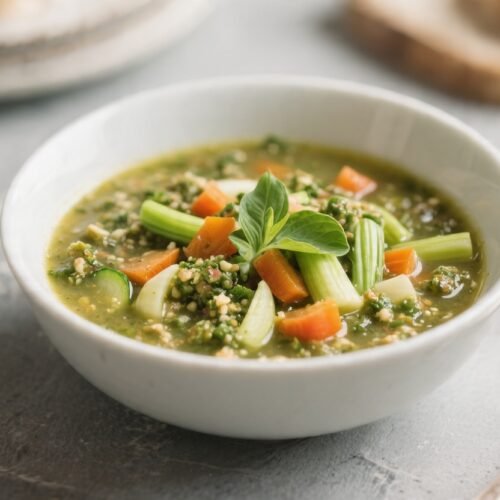
Simple French Pistou Soup With Spring Vegetables - Fresh, Light, and Satisfying
Ingredients
- Olive oil: 3 tablespoons, divided
- Yellow onion: 1 medium, finely chopped
- Leek: 1 large, white and light green parts only, sliced and rinsed
- Carrots: 2 medium, diced
- Celery: 2 ribs, diced
- New potatoes or baby Yukon Golds: 8–10 small, quartered
- Zucchini: 1 medium, diced
- Asparagus: 1 bunch, trimmed and cut into 1-inch pieces
- Fresh or frozen peas: 1 cup
- Green beans (optional): 1 cup, trimmed and cut into 1-inch pieces
- Cannellini or Great Northern beans: 1 can (15 oz), drained and rinsed
- Vegetable broth: 6 cups (low-sodium)
- Bay leaf: 1
- Fresh thyme: 3–4 sprigs (or 1 teaspoon dried)
- Kosher salt and freshly ground black pepper
- Parmesan rind (optional): 1 piece, for umami
- Fresh basil leaves: 2 packed cups
- Garlic: 2–3 cloves
- Extra-virgin olive oil: 1/3 cup (plus more as needed)
- Grated Parmesan or Pecorino: 1/3 cup (optional but traditional)
- Lemon zest: 1/2 teaspoon (optional, not classic but brightens)
- Salt and pepper: to taste
Instructions
- Warm the pot: In a large soup pot, heat 2 tablespoons olive oil over medium heat. Add onion, leek, carrots, and celery with a pinch of salt. Cook 5–7 minutes, stirring, until softened and glossy.
- Build the base: Stir in potatoes, bay leaf, thyme, and the Parmesan rind if using. Pour in the vegetable broth. Bring to a gentle boil, then reduce to a simmer. Cook 10–12 minutes, until potatoes are almost tender.
- Add green vegetables: Add zucchini and green beans. Simmer 5 minutes. Then add asparagus and peas, and cook 3–4 minutes more, until crisp-tender and vibrant.
- Stir in beans: Add the cannellini beans and warm through for 2–3 minutes. Taste and season with salt and pepper. Remove bay leaf, thyme sprigs, and Parmesan rind.
- Make the pistou: While the soup simmers, combine basil, garlic, cheese (if using), lemon zest, and a pinch of salt in a food processor. Pulse to chop. With the motor running, stream in 1/3 cup olive oil until you have a loose, spoonable paste. Adjust with more oil, salt, or pepper to taste.
- Finish the soup: Off the heat, stir in 2–3 tablespoons of pistou to the pot to perfume the broth. Ladle soup into bowls and top each with another spoonful of pistou for a bright finish.
- Serve: Add a squeeze of lemon if you like, more cheese, and a drizzle of olive oil. Serve with warm crusty bread.