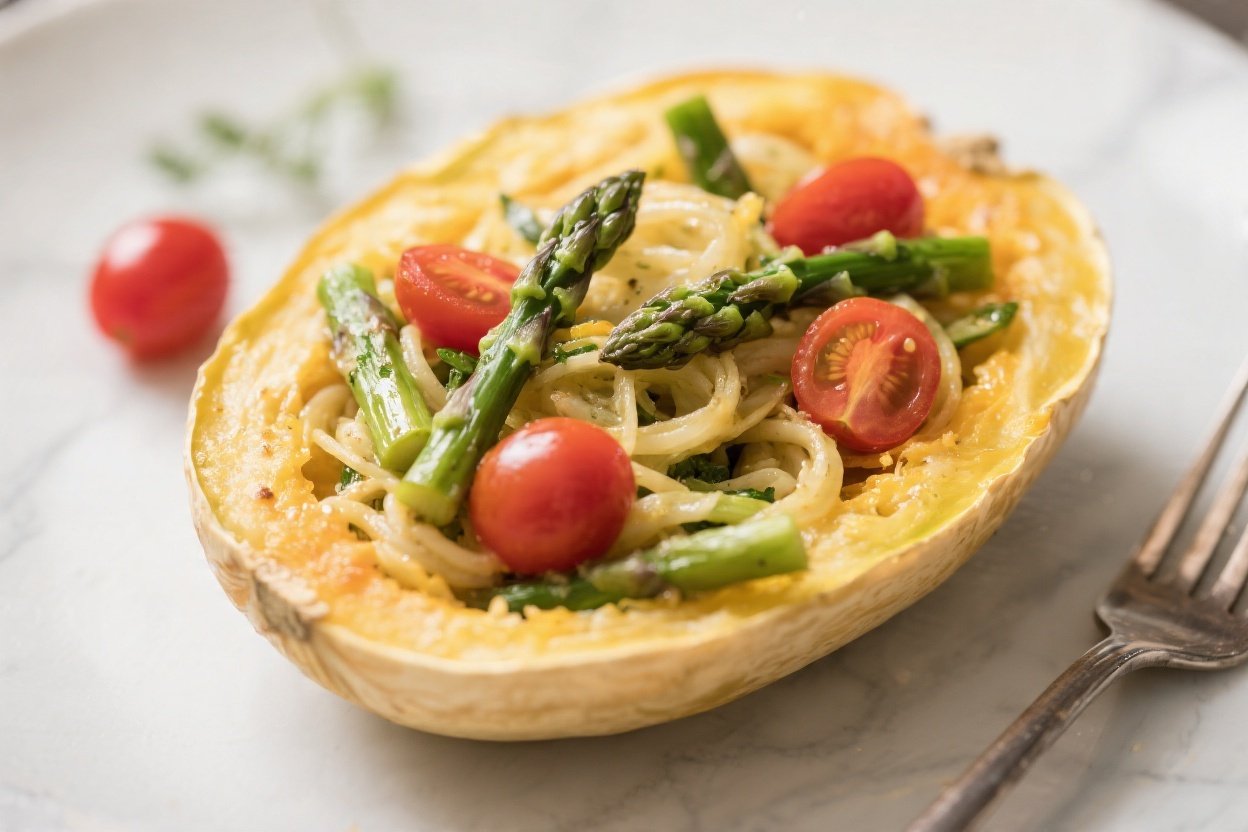
Spaghetti Squash Primavera is the kind of weeknight dinner that feels special without being fussy. It’s bright with lemon, full of crisp-tender veggies, and naturally light. Asparagus and cherry tomatoes make it taste like spring, but it works year-round with a few swaps.
You get all the twirlable fun of pasta, minus the heaviness. If you’re looking for a colorful, veggie-forward main that still feels cozy, this is it.
What Makes This Special
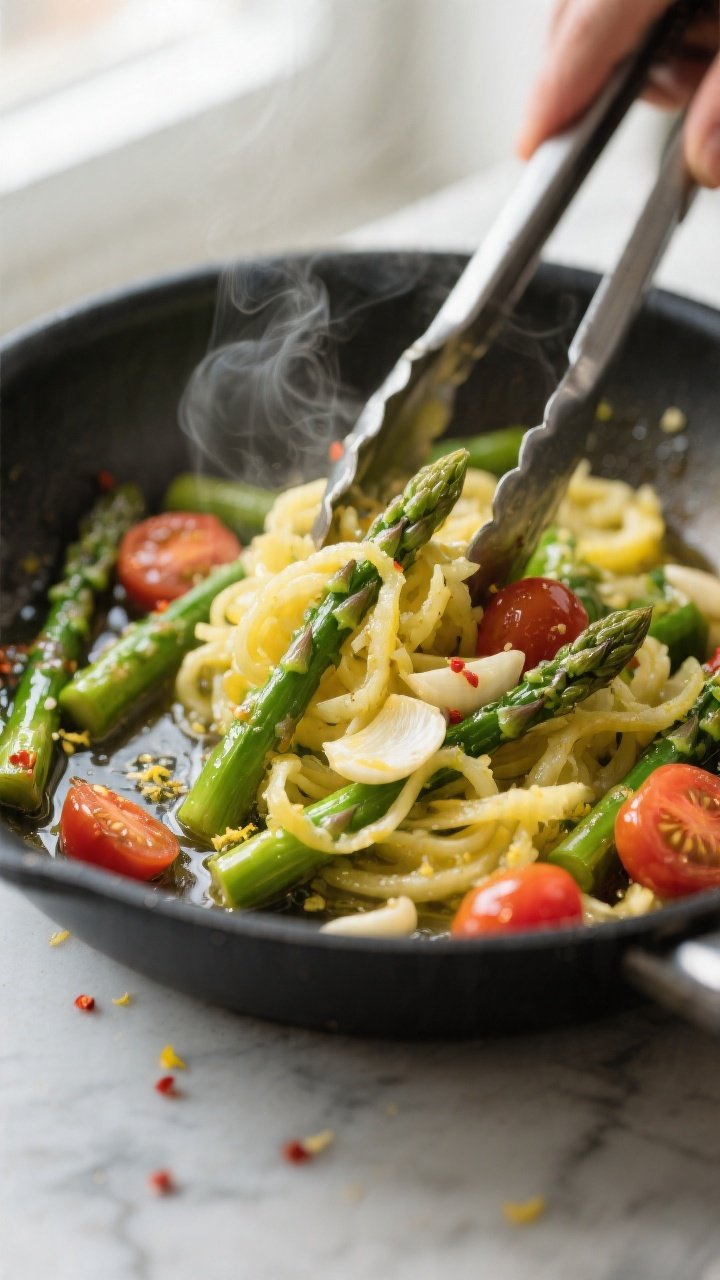
This recipe balances comfort and freshness in one bowl. The spaghetti squash strands soak up garlicky olive oil and lemon like pasta, while still keeping things light.
Asparagus brings snap and sweetness; cherry tomatoes burst with juice and color. It’s simple enough for a Tuesday but pretty enough for guests. Plus, it’s naturally gluten-free and easy to customize.
- Big flavor, light feel: Lemon, garlic, and herbs brighten every bite.
- One pan for the veggies: Minimal dishes, maximum payoff.
- Flexible base: Add protein, swap veggies, or keep it plant-based.
- Meal-prep friendly: Cook the squash ahead and assemble later.
Shopping List
- 1 medium spaghetti squash (about 2.5–3 pounds)
- 1 bunch asparagus, trimmed and cut into 1–2 inch pieces
- 2 cups cherry or grape tomatoes, halved
- 3–4 tablespoons extra-virgin olive oil
- 3 garlic cloves, thinly sliced or minced
- 1 lemon (zest and juice)
- 1/4 cup grated Parmesan (plus more for serving; use vegan Parmesan if desired)
- Fresh basil or parsley, chopped (about 1/4 cup)
- Red pepper flakes (optional)
- Salt and black pepper
- Optional add-ins: 1/4 cup toasted pine nuts or sliced almonds; 1 cup peas; 1 cup baby spinach; cooked chicken, shrimp, or chickpeas
How to Make It
- Prep the squash: Heat oven to 400°F (200°C). Halve the spaghetti squash lengthwise and scoop out the seeds. Brush cut sides with 1 tablespoon olive oil and season with salt and pepper.
- Roast: Place cut-side down on a parchment-lined sheet. Roast 35–45 minutes, until the skin gives slightly when pressed and strands pull easily with a fork.
- Fluff the strands: Let cool a few minutes. Use a fork to scrape long strands into a bowl. Taste and season with a pinch of salt.
- Cook the veggies: Warm 2 tablespoons olive oil in a large skillet over medium heat. Add asparagus and a pinch of salt. Cook 3–4 minutes until bright green and crisp-tender.
- Add aromatics: Stir in garlic and a pinch of red pepper flakes. Cook 30–60 seconds until fragrant, not browned.
- Tomatoes time: Add cherry tomatoes. Cook 2–3 minutes, just until they start to soften and release a little juice.
- Combine: Add spaghetti squash strands to the skillet. Toss with tongs to coat in the garlicky oil and veggie juices.
- Brighten: Add lemon zest and 1–2 tablespoons lemon juice. Sprinkle in half the Parmesan and most of the basil or parsley. Toss again, taste, and adjust salt, pepper, and lemon.
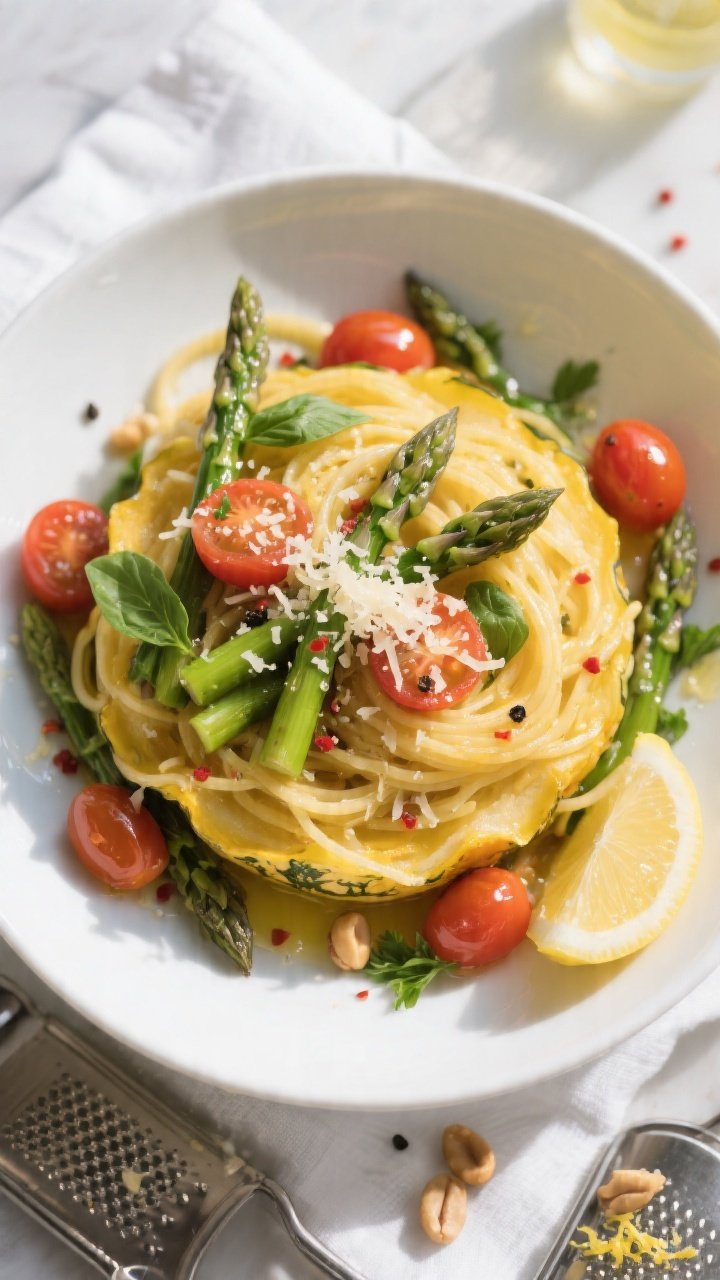
- Finish: Drizzle with another teaspoon of olive oil if needed. Top with remaining Parmesan, extra herbs, and nuts if using. Serve warm.
How to Store
- Refrigerate: Store leftovers in an airtight container for up to 4 days.
- Reheat: Warm gently in a skillet with a splash of water or broth, or microwave in short bursts. Add a squeeze of lemon to refresh the flavor.
- Freezing: Not ideal. Spaghetti squash can get watery after thawing. If you must, freeze in portions and reheat in a skillet to cook off extra moisture.
Health Benefits
- Lighter than pasta: Spaghetti squash is low in calories and carbs, yet satisfying thanks to fiber.
- Veggie variety: Asparagus and tomatoes deliver vitamins A, C, K, and folate, along with antioxidants like lycopene.
- Heart-healthy fats: Olive oil provides monounsaturated fats that support heart health.
- Protein friendly: Add beans, chickpeas, chicken, or shrimp for a balanced plate without weighing it down.
Common Mistakes to Avoid
- Overcooking the squash: Mushy strands won’t twirl. Check at 35 minutes; stop when strands pull but still have a bit of bite.
- Skipping the seasoning: Salt each layer—squash, asparagus, and tomatoes—so the final dish isn’t bland.
- Burning the garlic: Add it after the asparagus has started to soften and lower the heat if needed.
- Too little acid: Lemon wakes everything up. Taste and add more if the flavors feel flat.
- Overcrowding the pan: If your skillet is small, cook veggies in batches so they sauté instead of steam.
Alternatives
- Veggie swaps: Broccoli, zucchini, peas, bell peppers, or baby spinach work well. Keep cook times short so veggies stay crisp.
- Cheese options: Try Pecorino Romano for a saltier bite, or crumble goat cheese or feta on top for creaminess.
- Herbs: Basil is classic, but parsley, chives, or mint add a fresh twist.
- Protein boosts: Toss in sautéed shrimp, shredded rotisserie chicken, white beans, or crispy chickpeas.
- Make it vegan: Use vegan Parmesan or nutritional yeast and add toasted nuts for richness.
- Add a sauce: A spoonful of pesto or a drizzle of balsamic glaze changes the vibe fast.
FAQ
How do I cut spaghetti squash safely?
Microwave the whole squash for 3–4 minutes to soften the skin, then slice lengthwise with a sharp chef’s knife. Keep your non-cutting hand on top of the squash, fingers lifted, and work slowly.
Can I cook the squash in the microwave or Instant Pot?
Yes.
For the microwave, halve, seed, place cut-side down in a dish with 1/2 inch water, and cook 10–12 minutes. For the Instant Pot, place halved squash on the rack with 1 cup water, cook on High for 7 minutes, quick release, then shred.
How do I keep the squash from being watery?
Roast cut-side down for better caramelization, then let it rest 5 minutes before shredding. If it still seems wet, toss strands in a hot, dry skillet for 1–2 minutes to evaporate excess moisture.
What can I use instead of asparagus?
Broccoli florets, snap peas, or zucchini are great.
Keep pieces small and cook just until crisp-tender so the dish stays vibrant.
Is this good for meal prep?
Absolutely. Roast the squash and prep the veggies ahead. Sauté the veggies and combine right before serving, or reheat gently with a splash of water and fresh lemon.
Can I make it spicy?
Yes.
Add red pepper flakes with the garlic, or finish with a drizzle of chili oil.
What wine pairs well with this?
A crisp Sauvignon Blanc or Pinot Grigio complements the lemon and herbs. For red, try a light Pinot Noir served slightly chilled.
In Conclusion
Spaghetti Squash Primavera with Asparagus & Cherry Tomatoes is bright, simple, and endlessly adaptable. You get a bowl full of color and flavor that still feels light and clean.
Keep the method the same, swap in whatever veggies you have, and finish with lemon and herbs. It’s an easy win for busy nights and a cheerful centerpiece for casual dinners with friends.
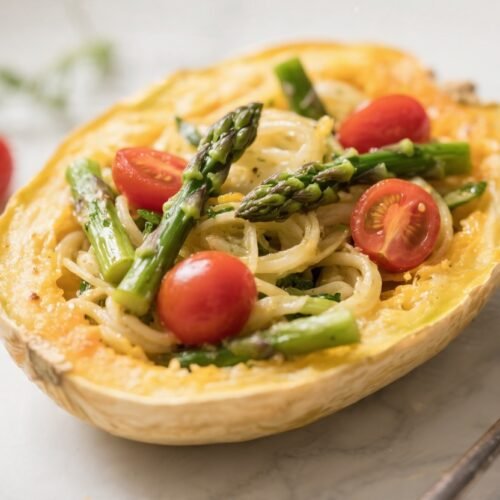
Spaghetti Squash Primavera With Asparagus & Cherry Tomatoes – Light, Fresh, and Satisfying
Ingredients
- 1 medium spaghetti squash (about 2.5–3 pounds)
- 1 bunch asparagus, trimmed and cut into 1–2 inch pieces
- 2 cups cherry or grape tomatoes, halved
- 3–4 tablespoons extra-virgin olive oil
- 3 garlic cloves, thinly sliced or minced
- 1 lemon (zest and juice)
- 1/4 cup grated Parmesan (plus more for serving; use vegan Parmesan if desired)
- Fresh basil or parsley, chopped (about 1/4 cup)
- Red pepper flakes (optional)
- Salt and black pepper
- Optional add-ins: 1/4 cup toasted pine nuts or sliced almonds; 1 cup peas; 1 cup baby spinach; cooked chicken, shrimp, or chickpeas
Instructions
- Prep the squash: Heat oven to 400°F (200°C). Halve the spaghetti squash lengthwise and scoop out the seeds. Brush cut sides with 1 tablespoon olive oil and season with salt and pepper.
- Roast: Place cut-side down on a parchment-lined sheet. Roast 35–45 minutes, until the skin gives slightly when pressed and strands pull easily with a fork.
- Fluff the strands: Let cool a few minutes. Use a fork to scrape long strands into a bowl. Taste and season with a pinch of salt.
- Cook the veggies: Warm 2 tablespoons olive oil in a large skillet over medium heat. Add asparagus and a pinch of salt. Cook 3–4 minutes until bright green and crisp-tender.
- Add aromatics: Stir in garlic and a pinch of red pepper flakes. Cook 30–60 seconds until fragrant, not browned.
- Tomatoes time: Add cherry tomatoes. Cook 2–3 minutes, just until they start to soften and release a little juice.
- Combine: Add spaghetti squash strands to the skillet. Toss with tongs to coat in the garlicky oil and veggie juices.
- Brighten: Add lemon zest and 1–2 tablespoons lemon juice. Sprinkle in half the Parmesan and most of the basil or parsley. Toss again, taste, and adjust salt, pepper, and lemon.
- Finish: Drizzle with another teaspoon of olive oil if needed. Top with remaining Parmesan, extra herbs, and nuts if using. Serve warm.