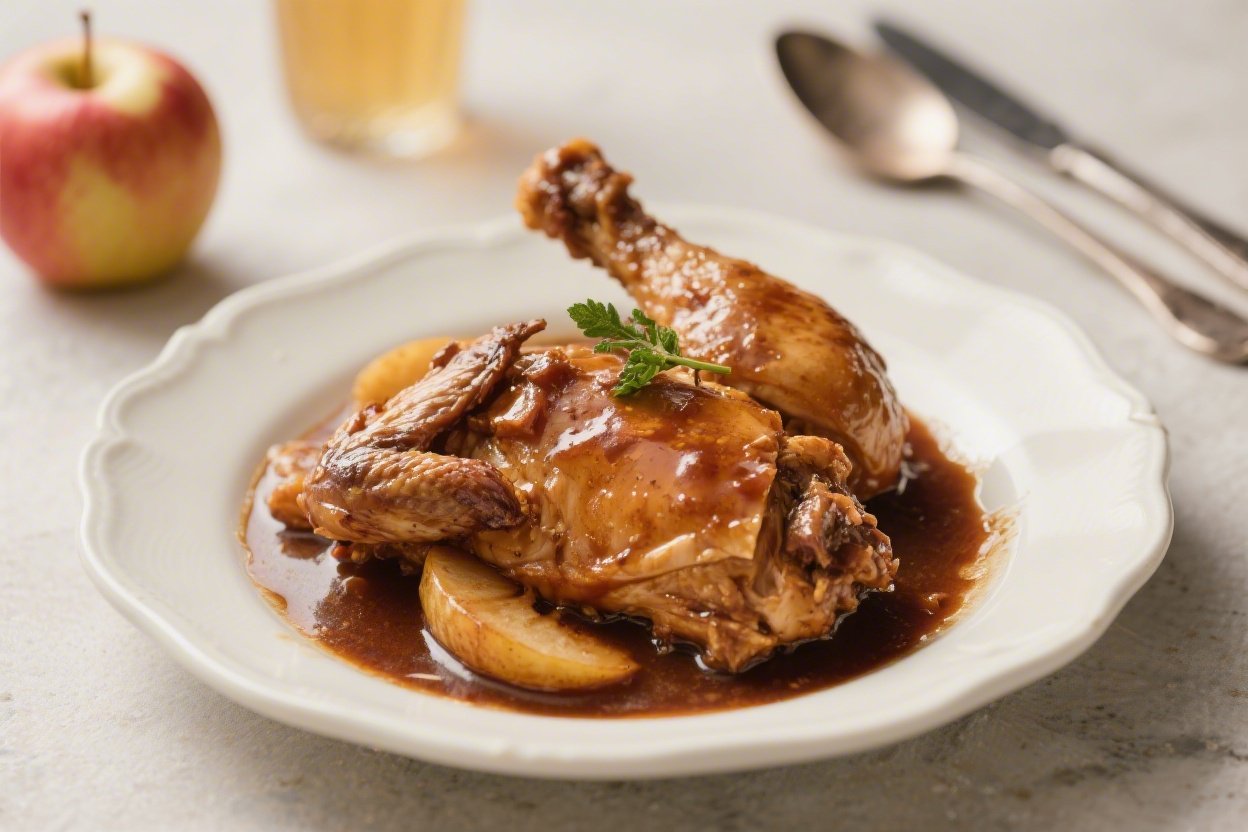
This is the kind of dinner that feels like a hug after a long day. Apple cider vinegar braised chicken is savory, tangy, and deeply satisfying, with fall-friendly flavors that taste great any time of year. The vinegar tenderizes the chicken while onions, garlic, and herbs build a rich, cozy sauce.
It’s a simple, one-pan meal that delivers big results. Serve it with mashed potatoes, rice, or crusty bread to catch every drop.
Why This Recipe Works

Apple cider vinegar does more than add tang. It gently breaks down the chicken, making it tender without turning it mushy.
A quick sear locks in juices, and then a slow braise in a mix of vinegar, stock, and aromatics develops deep flavor.
Onions, garlic, and a touch of mustard bring body and warmth, while a bit of apple or a splash of apple cider (not the vinegar) adds subtle sweetness. Fresh herbs like thyme or rosemary keep it bright and balanced. The result is tender chicken in a glossy, spoonable sauce that tastes like it simmered all day.
Shopping List
- Chicken thighs, bone-in, skin-on (6–8 pieces)
- Apple cider vinegar (unfiltered if possible)
- Low-sodium chicken stock or broth
- Yellow onions
- Garlic
- Dijon mustard
- Fresh thyme or rosemary
- Bay leaves (optional)
- Apple (Honeycrisp or Granny Smith), sliced thin (optional but lovely)
- Olive oil or neutral cooking oil
- Butter (optional, for finishing)
- Salt and black pepper
How to Make It

- Prep the chicken. Pat the chicken thighs dry with paper towels. Season both sides generously with salt and black pepper. Dry skin helps you get good browning.
- Brown for flavor. Heat a large, heavy skillet or Dutch oven over medium-high heat. Add a splash of oil. Place chicken skin-side down and cook until the skin is deeply golden and crisp, about 6–8 minutes. Flip and brown the other side for 3–4 minutes. Transfer to a plate.
- Soften the aromatics. Pour off excess fat, leaving about 1 tablespoon in the pan. Add sliced onions and a pinch of salt. Cook over medium heat until softened and lightly caramelized, 6–8 minutes. Stir in minced garlic and cook 30 seconds until fragrant.
- Deglaze with vinegar. Add 1/2 cup apple cider vinegar to the hot pan. Scrape up the brown bits with a wooden spoon. Let it bubble for 1–2 minutes to soften the acidity.
- Build the braising liquid. Stir in 1 cup chicken stock, 1 teaspoon Dijon mustard, a few sprigs of thyme or rosemary, and 1 bay leaf. If using, add thin apple slices. Taste and adjust with a pinch of salt.
- Nestle the chicken back in. Return the thighs to the pan, skin-side up. The liquid should come about halfway up the sides of the chicken. If not, add a splash more stock or water.
- Braise gently. Bring to a low simmer, then cover and cook over low heat for 25–30 minutes, or until the chicken is very tender and cooked through. Aim for a gentle bubble, not a hard boil.
- Reduce the sauce. Remove the lid and let the sauce simmer for another 5–10 minutes to thicken slightly. For a richer finish, stir in 1 tablespoon of butter. Taste and adjust seasoning, adding a small splash of vinegar if you want more brightness.
- Serve. Spoon onions and sauce over the chicken. Garnish with fresh herbs. Serve with mashed potatoes, polenta, rice, roasted vegetables, or crusty bread.
How to Store
- Refrigerate: Cool completely, then store in an airtight container for up to 4 days. The flavor improves by day two.
- Freeze: Freeze in a well-sealed container for up to 3 months. Thaw overnight in the fridge before reheating.
- Reheat: Warm gently on the stove over low heat, adding a splash of water or stock to loosen the sauce. Avoid high heat to keep the chicken tender.
Why This is Good for You
This dish brings together protein-rich chicken and a light, flavorful sauce without heavy cream. Using bone-in thighs means more iron and deeper flavor, while moderate fat keeps the meat juicy.
Apple cider vinegar adds tang without extra calories and may support digestion for some people.
Onions and garlic contribute antioxidants and natural sweetness. You control the salt, and you can keep the sauce relatively light by skipping the butter or skimming fat. Pair it with vegetables or whole grains for a balanced plate.
Common Mistakes to Avoid
- Skipping the browning step. Searing builds the base flavor. Pale chicken leads to a flat-tasting sauce.
- Using too much vinegar. More is not better. Stick to about 1/2 cup and balance with stock. You can always add a small splash at the end.
- Boiling instead of simmering. A hard boil toughens meat. Keep the heat low so the liquid barely bubbles.
- Overcrowding the pan. If the chicken is packed in tight, it steams and won’t brown well. Sear in batches if needed.
- Underseasoning. Taste the sauce at the end. A pinch of salt or a touch of mustard can make flavors pop.
Variations You Can Try
- Creamy finish: Stir in 2–3 tablespoons of heavy cream or crème fraîche at the end for a silkier sauce.
- Smoky bacon: Cook 2–3 slices of chopped bacon first. Use the fat to sear the chicken and add the crisp bits back in later.
- Autumn veggies: Add chunks of parsnips, carrots, or fennel to braise with the chicken.
- Spice it up: Add crushed red pepper flakes or a pinch of smoked paprika with the onions.
- Herb swap: Use sage instead of thyme for a cozy, earthy note.
- White wine boost: Replace 1/4 cup of the stock with dry white wine when deglazing for extra depth.
- Skinless option: For a leaner dish, use skinless thighs and add 1 extra tablespoon of oil to sauté the onions.
FAQ
Can I use chicken breasts instead of thighs?
Yes, but watch the timing. Breasts cook faster and can dry out. Braise gently and start checking for doneness around 15–20 minutes.
Consider using split breasts on the bone for juicier results.
What kind of apple cider vinegar should I use?
Use good-quality apple cider vinegar, ideally unfiltered and raw if you like a rounder flavor. Regular filtered vinegar also works and will taste a bit sharper. Avoid distilled white vinegar—it’s too harsh for this recipe.
Can I make this in the oven?
Absolutely.
After assembling the braise, cover and bake at 325°F (165°C) for about 30–35 minutes, then uncover and reduce the sauce for 5–10 minutes. Oven heat is gentle and very consistent.
How do I thicken the sauce without cream?
Let it simmer uncovered for a few extra minutes to reduce naturally. You can also mash a few of the cooked apple slices or whisk in 1 teaspoon of cornstarch mixed with 1 tablespoon cold water, then simmer briefly.
What should I serve with it?
Mashed potatoes, buttered egg noodles, rice, creamy polenta, or crusty bread are perfect.
For veggies, try roasted Brussels sprouts, green beans, or a crisp salad with a mustard vinaigrette.
Is it very sour?
No. The vinegar mellows during cooking and balances with the onions, stock, and herbs. You end up with a bright, savory sauce rather than a sour one.
Can I make it ahead?
Yes, this dish tastes even better the next day.
Cool, refrigerate, and reheat gently on the stove. Skim any chilled fat for a lighter sauce.
Final Thoughts
Apple cider vinegar braised chicken is simple cooking at its best: a few affordable ingredients, one pan, and a comforting, flavorful meal. It’s flexible enough for weeknights yet special enough for guests.
Once you try it, you’ll likely add it to your regular rotation. Keep the technique, switch up the herbs, and make it your own—just don’t skip the sear or that final taste-and-adjust moment. Enjoy every tangy, savory bite.
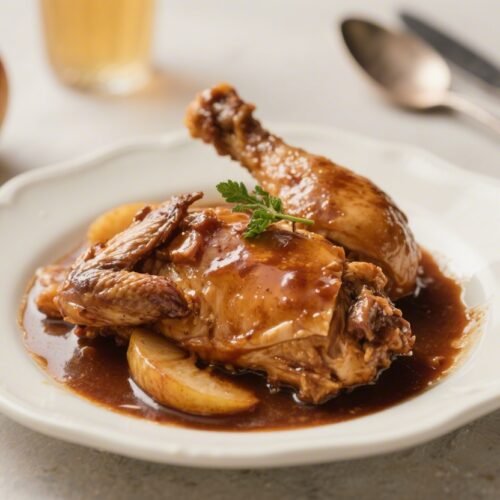
Apple Cider Vinegar Braised Chicken - Tender, Tangy, and Comforting
Ingredients
- Chicken thighs, bone-in, skin-on (6–8 pieces)
- Apple cider vinegar (unfiltered if possible)
- Low-sodium chicken stock or broth
- Yellow onions
- Garlic
- Dijon mustard
- Fresh thyme or rosemary
- Bay leaves (optional)
- Apple (Honeycrisp or Granny Smith), sliced thin (optional but lovely)
- Olive oil or neutral cooking oil
- Butter (optional, for finishing)
- Salt and black pepper
Instructions
- Prep the chicken. Pat the chicken thighs dry with paper towels. Season both sides generously with salt and black pepper. Dry skin helps you get good browning.
- Brown for flavor. Heat a large, heavy skillet or Dutch oven over medium-high heat. Add a splash of oil. Place chicken skin-side down and cook until the skin is deeply golden and crisp, about 6–8 minutes. Flip and brown the other side for 3–4 minutes. Transfer to a plate.
- Soften the aromatics. Pour off excess fat, leaving about 1 tablespoon in the pan. Add sliced onions and a pinch of salt. Cook over medium heat until softened and lightly caramelized, 6–8 minutes. Stir in minced garlic and cook 30 seconds until fragrant.
- Deglaze with vinegar. Add 1/2 cup apple cider vinegar to the hot pan. Scrape up the brown bits with a wooden spoon. Let it bubble for 1–2 minutes to soften the acidity.
- Build the braising liquid. Stir in 1 cup chicken stock, 1 teaspoon Dijon mustard, a few sprigs of thyme or rosemary, and 1 bay leaf. If using, add thin apple slices. Taste and adjust with a pinch of salt.
- Nestle the chicken back in. Return the thighs to the pan, skin-side up. The liquid should come about halfway up the sides of the chicken. If not, add a splash more stock or water.
- Braise gently. Bring to a low simmer, then cover and cook over low heat for 25–30 minutes, or until the chicken is very tender and cooked through. Aim for a gentle bubble, not a hard boil.
- Reduce the sauce. Remove the lid and let the sauce simmer for another 5–10 minutes to thicken slightly. For a richer finish, stir in 1 tablespoon of butter. Taste and adjust seasoning, adding a small splash of vinegar if you want more brightness.
- Serve. Spoon onions and sauce over the chicken. Garnish with fresh herbs. Serve with mashed potatoes, polenta, rice, roasted vegetables, or crusty bread.