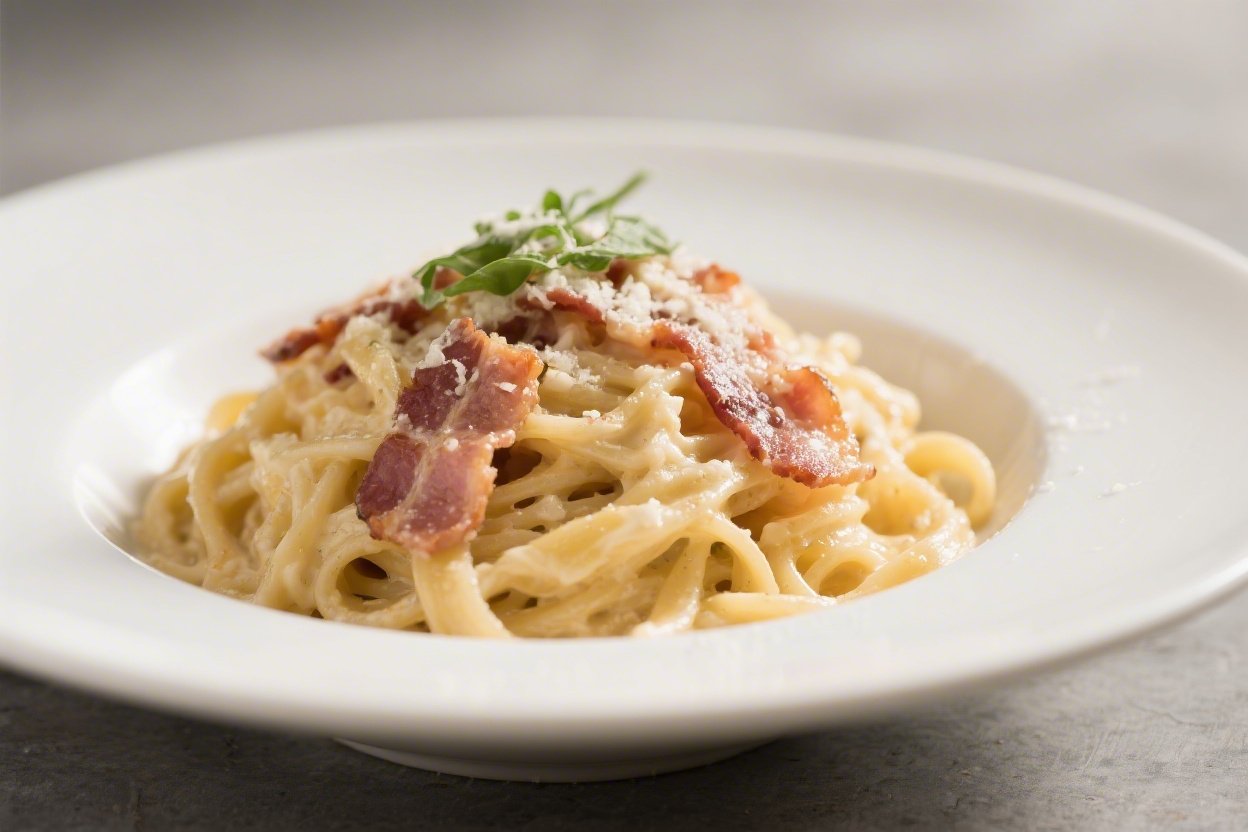
Few dishes feel as comforting as a creamy bowl of carbonara. This version keeps things simple and accessible by using bacon, eggs, Parmesan, and black pepper to create a silky sauce—no cream needed. It’s quick enough for a weeknight but special enough for guests.
The best part? You likely have most of the ingredients in your kitchen already. With a few key tips, you can make a restaurant-quality carbonara at home in under 30 minutes.
What Makes This Special

This bacon carbonara strikes a balance between tradition and practicality.
Classic carbonara uses guanciale, but bacon brings smoky depth and is easier to find. The sauce is made with egg and cheese only, giving it a rich, velvety texture without cream. You’ll get a glossy coating that clings to every strand of pasta and a peppery finish that keeps each bite lively.
It’s cozy, familiar, and surprisingly light.
Ingredients
- 12 ounces (340 g) spaghetti or bucatini
- 8 ounces (225 g) thick-cut bacon, sliced into small strips
- 3 large eggs (room temperature)
- 1 large egg yolk (optional, for extra creaminess)
- 1 cup (90 g) finely grated Parmesan or Pecorino Romano, or a mix
- 1–2 cloves garlic, smashed (optional, for aroma)
- Freshly ground black pepper, generous amount
- Kosher salt, for pasta water
- Reserved pasta water (about 1 cup)
- Fresh parsley, chopped (optional, for garnish)
Instructions

- Prep the pasta water. Bring a large pot of salted water to a boil. It should taste like the sea. This is crucial for well-seasoned pasta and a balanced sauce.
- Whisk the sauce base. In a medium bowl, whisk the eggs, egg yolk (if using), and cheese until smooth and thick. Add a generous amount of freshly ground black pepper. Set aside.
- Cook the pasta. Drop the spaghetti into boiling water and cook until just shy of al dente. Reserve at least 1 cup of pasta water before draining.
- Crisp the bacon. While the pasta cooks, place the bacon in a large, cold skillet. Turn the heat to medium and cook, stirring, until crisp and golden, about 7–9 minutes. If using garlic, add it during the last minute to perfume the fat, then remove and discard the garlic clove.
- Adjust the fat. You want about 2–3 tablespoons of rendered bacon fat in the pan. If there’s more, spoon off the excess. This keeps the sauce luscious but not greasy.
- Combine pasta and bacon. Add the drained pasta to the skillet with the bacon and toss to coat. Turn off the heat and let the pan cool for 30–45 seconds. This step prevents scrambled eggs.
- Create the sauce. Pour the egg-cheese mixture over the pasta, tossing quickly and constantly. Add a splash of reserved pasta water—start with 1/4 cup—until the sauce becomes glossy and silky. The residual heat should thicken the sauce without curdling the eggs.
- Taste and adjust. Add more black pepper and extra cheese to taste. If the sauce thickens too much, loosen it with another splash of pasta water.
- Serve immediately. Top with a sprinkle of parsley (optional), more cheese, and cracked pepper. Eat while it’s hot and creamy.
How to Store
Carbonara is best fresh, but leftovers can be stored in an airtight container in the fridge for up to 2 days.
Reheat gently in a nonstick pan over low heat with a splash of water to loosen the sauce. Stir constantly and remove from heat as soon as it’s warm. Avoid microwaving at full power—it can overcook the eggs and turn the pasta rubbery.
Health Benefits
- Protein and satiety: Eggs and bacon offer protein and fat, which help keep you full and satisfied.
- Calcium and minerals: Parmesan or Pecorino provides calcium, phosphorus, and some vitamin A.
- Portion-friendly carbs: Pasta is a solid source of energy. Pairing it with protein and fat helps moderate blood sugar spikes.
- Better-than-cream option: The traditional egg-and-cheese method gives creaminess without heavy cream, keeping the dish rich but not heavy.
To lighten things up, you can use whole-wheat pasta for extra fiber, add peas or sautéed greens, and trim the bacon slightly to reduce fat. Balance the meal with a simple side salad.
What Not to Do
- Don’t add cream by default. Authentic carbonara gets its creaminess from eggs, cheese, and pasta water. Cream can dull the flavor and texture.
- Don’t pour eggs into a screaming hot pan. High heat will scramble the eggs. Remove the pan from heat before adding the egg mixture.
- Don’t skip the pasta water. That starchy liquid is the key to a glossy, emulsified sauce.
- Don’t overcook the pasta. Slightly under al dente is best, since it finishes in the pan and soaks up the sauce.
- Don’t under-season. Salt the pasta water well and use plenty of black pepper to balance the richness.
Alternatives
- Bacon swaps: Try pancetta for a meaty, less smoky bite, or turkey bacon for a leaner option. If you can find guanciale, it’s a fantastic traditional choice with deep flavor.
- Cheese options: Pecorino Romano is sharper and saltier than Parmesan. A 50/50 blend is a great middle ground.
- Pasta shapes: Spaghetti is classic, but bucatini, fettuccine, or rigatoni also work well. Choose shapes that hold sauce.
- Add-ins: For a pop of freshness, fold in ½ cup of peas at the end. For extra veg, try sautéed asparagus tips or spinach.
- Vegetarian version: Skip bacon and use olive oil with crispy mushrooms and a bit of smoked paprika for depth. The egg-cheese emulsion still delivers creaminess.
- Gluten-free: Use your favorite gluten-free pasta and keep the rest the same.Reserve pasta water as usual—it still contains starch.
FAQ
Can I use cream in carbonara?
You can, but it’s not traditional and often unnecessary. Properly emulsified eggs, cheese, and pasta water create the classic, silky texture. If you prefer a richer feel, add a tiny splash of cream at the end, but go easy.
How do I keep the eggs from scrambling?
Take the pan off the heat before adding the egg-cheese mixture.
Toss quickly and add warm pasta water gradually. The residual heat from the pasta will thicken the sauce without curdling.
Can I make this without pork?
Yes. Use turkey bacon, beef bacon, or skip meat and use sautéed mushrooms with a touch of smoked paprika. Keep the egg and cheese for that signature texture.
Is raw egg safe in carbonara?
The eggs are gently cooked by the heat of the pasta and pan. Use fresh, high-quality eggs. If you’re concerned, look for pasteurized eggs, which are safer for recipes like this.
What’s the best cheese for carbonara?
Pecorino Romano is classic in many Roman versions, offering a sharp, salty edge. Parmesan is milder and nuttier. A 50/50 blend gives a balanced flavor with great melt.
Why is my sauce clumpy?
It’s likely the pan was too hot or the pasta too dry. Remove from heat before adding eggs, and use enough pasta water to loosen and emulsify the sauce while tossing constantly.
Can I make it ahead?
Carbonara doesn’t hold well once sauced. You can prep the bacon and grate the cheese in advance. Cook and assemble right before serving for the best texture.
What pasta shape should I use?
Spaghetti is the classic, but bucatini provides a satisfying chew. Short shapes like rigatoni work too, catching bits of bacon and sauce in the ridges.
How much salt should I add to the pasta water?
A good rule is about 1–1.5 tablespoons of kosher salt per 4 quarts (liter) of water. It should taste like the sea. This seasons the pasta from the inside out.
Can I add vegetables?
Absolutely. Peas, asparagus, or spinach are great options. Add them in the last minute of cooking the pasta or sauté briefly, then toss with the pasta and sauce.
Final Thoughts
Bacon Carbonara Pasta is all about simple ingredients used well. With a little technique—gentle heat, starchy water, and quick tossing—you’ll get a creamy, glossy sauce every time. Keep the flavors focused, finish with plenty of black pepper, and serve it hot.
It’s the kind of dish that turns an ordinary night into something a little special.
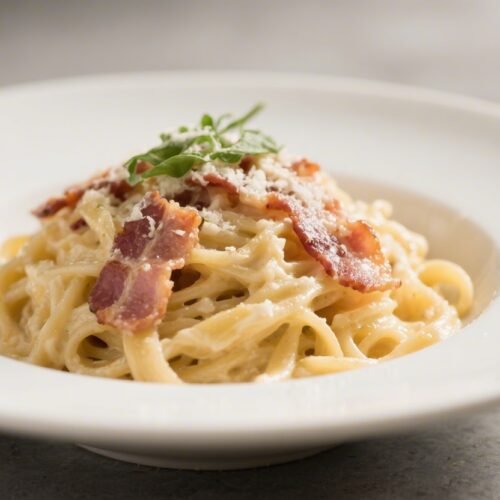
Bacon Carbonara Pasta
Ingredients
- 12 ounces (340 g) spaghetti or bucatini
- 8 ounces (225 g) thick-cut bacon, sliced into small strips
- 3 large eggs (room temperature)
- 1 large egg yolk (optional, for extra creaminess)
- 1 cup (90 g) finely grated Parmesan or Pecorino Romano, or a mix
- 1–2 cloves garlic, smashed (optional, for aroma)
- Freshly ground black pepper, generous amount
- Kosher salt, for pasta water
- Reserved pasta water (about 1 cup)
- Fresh parsley, chopped (optional, for garnish)
Instructions
- Prep the pasta water. Bring a large pot of salted water to a boil. It should taste like the sea. This is crucial for well-seasoned pasta and a balanced sauce.
- Whisk the sauce base. In a medium bowl, whisk the eggs, egg yolk (if using), and cheese until smooth and thick. Add a generous amount of freshly ground black pepper. Set aside.
- Cook the pasta. Drop the spaghetti into boiling water and cook until just shy of al dente. Reserve at least 1 cup of pasta water before draining.
- Crisp the bacon. While the pasta cooks, place the bacon in a large, cold skillet. Turn the heat to medium and cook, stirring, until crisp and golden, about 7–9 minutes. If using garlic, add it during the last minute to perfume the fat, then remove and discard the garlic clove.
- Adjust the fat. You want about 2–3 tablespoons of rendered bacon fat in the pan. If there’s more, spoon off the excess. This keeps the sauce luscious but not greasy.
- Combine pasta and bacon. Add the drained pasta to the skillet with the bacon and toss to coat. Turn off the heat and let the pan cool for 30–45 seconds. This step prevents scrambled eggs.
- Create the sauce. Pour the egg-cheese mixture over the pasta, tossing quickly and constantly. Add a splash of reserved pasta water—start with 1/4 cup—until the sauce becomes glossy and silky. The residual heat should thicken the sauce without curdling the eggs.
- Taste and adjust. Add more black pepper and extra cheese to taste. If the sauce thickens too much, loosen it with another splash of pasta water.
- Serve immediately. Top with a sprinkle of parsley (optional), more cheese, and cracked pepper. Eat while it’s hot and creamy.