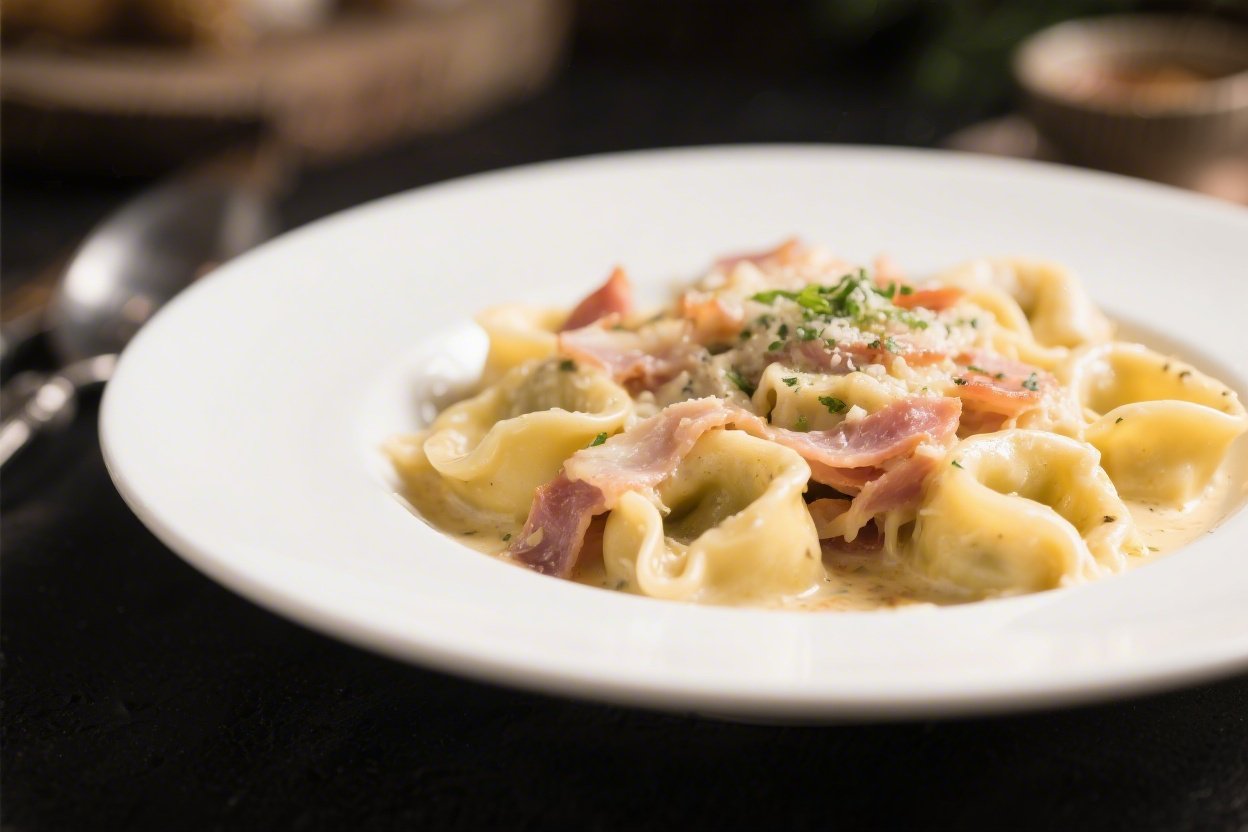
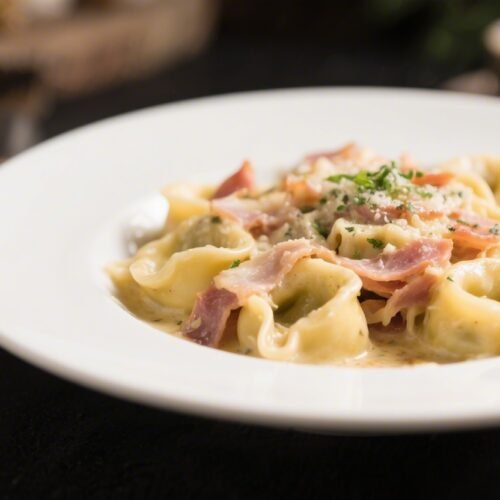
Tortellini carbonara is comfort in a bowl—salty, silky, smoky, and ready fast. It takes the beloved flavors of classic carbonara and pairs them with plump, cheese-filled tortellini for a hearty twist. The sauce is creamy without cream, thanks to eggs, cheese, and a little pasta water.
It feels special enough for company, yet it uses simple pantry staples. If you can crisp bacon and whisk eggs, you can make this dish like a pro.
Why This Recipe Works

This version stays true to the heart of carbonara—eggs, hard cheese, and cured pork—while using store-bought tortellini for extra richness and texture. The starch from the pasta water emulsifies with the egg and cheese, creating a glossy sauce that clings to every fold.
Cooking the pork low and slow renders flavorful fat that seasons the whole dish. And by tempering the egg mixture with hot pasta water, you avoid scrambling and get that signature silky finish.
Shopping List
- Cheese tortellini (fresh or refrigerated, 18–20 oz)
- Pancetta or thick-cut bacon (6–8 oz), diced
- Eggs (3 large) and 1 large egg yolk
- Pecorino Romano, finely grated (1 cup), or a mix with Parmesan
- Freshly cracked black pepper
- Garlic (1 clove), optional
- Fresh parsley (a small handful), optional for garnish
- Kosher salt (for pasta water)
- Olive oil (a splash, only if needed)
How to Make It

- Prep your ingredients. Dice the pancetta or bacon. Finely grate the cheese. Crack the eggs into a bowl, add the extra yolk, and whisk with the grated cheese and a big pinch of black pepper until thick and paste-like.
- Boil the pasta water. Bring a large pot of well-salted water to a boil. You want the water to taste like the sea. Keep a heatproof measuring cup nearby for saving pasta water later.
- Render the pork. In a wide skillet over medium heat, cook pancetta or bacon until crisp and the fat has rendered, 6–8 minutes. If using garlic, add it for the last 30 seconds to perfume the fat, then remove and discard so it doesn’t burn.
- Cook the tortellini. Add tortellini to the boiling water and cook according to package directions, usually 2–4 minutes. Stir gently to prevent sticking. Before draining, reserve at least 1 cup of starchy pasta water.
- Combine pasta and pork. Transfer the drained tortellini directly into the skillet with the pork and its rendered fat. Toss over low heat to coat, about 30 seconds. If the skillet is dry, add a splash of pasta water to loosen.
- Temper the egg mixture. Off the heat, add a small ladle (2–3 tablespoons) of hot pasta water to the egg-cheese mixture while whisking constantly to warm it gently. This prevents scrambling.
- Create the sauce. Pour the tempered egg-cheese mixture into the skillet with the tortellini. Toss continuously, off the heat, adding warm pasta water a splash at a time until the sauce turns glossy and creamy. It should coat the pasta without pooling. This usually takes 1/3 to 1/2 cup of water.
- Season and finish. Taste and add more black pepper and cheese as needed. Salt carefully—pancetta, cheese, and pasta water are already salty. If you like, sprinkle with chopped parsley for freshness.
- Serve immediately. Carbonara waits for no one. Plate it hot and pass extra cheese and pepper at the table.
Keeping It Fresh
Carbonara is at its best the moment it’s made.
If you have leftovers, let them cool, then store in an airtight container in the fridge for up to 2 days. Reheat gently in a nonstick skillet over low heat with a splash of water to loosen the sauce. Avoid the microwave, which can make the eggs seize.
If the sauce tightens, a bit more hot water and a quick toss usually brings it back to life.
Why This is Good for You
- Protein-rich: Eggs, cheese, and tortellini provide satisfying protein that keeps you full.
- Calcium boost: Pecorino and Parmesan are rich in calcium for bone health.
- Smart fats: Rendered pork fat and egg yolks deliver flavor and satiety, so a smaller portion still satisfies.
- Balanced comfort: Add a simple green salad or steamed vegetables and you’ve got a well-rounded meal without fuss.
What Not to Do
- Don’t add cream. The creaminess should come from eggs, cheese, and pasta water. Cream dulls the flavor and texture.
- Don’t scramble the eggs. If the pan is too hot, the eggs will curdle. Take it off the heat before adding the egg mixture, and temper first.
- Don’t skip the pasta water. It’s the secret to a silky, emulsified sauce. Plain water won’t work as well.
- Don’t overcook tortellini. They go from perfect to mushy fast. Pull them the moment they float and feel tender.
- Don’t oversalt. Taste before seasoning. The cheese, pork, and salted water bring plenty of salt.
Variations You Can Try
- Mushroom Carbonara: Sauté sliced cremini or shiitake mushrooms in the rendered pork fat before adding the tortellini. They bring a savory, meaty depth.
- Peas and Mint: Add a handful of thawed peas during the final toss and finish with chopped mint for a spring twist.
- Guanciale Classic: Use guanciale instead of pancetta or bacon for a more traditional flavor and aroma.
- Lemon and Pepper: Add a light grate of lemon zest and extra black pepper for brightness without changing the core profile.
- Spinach Fold-In: Toss in a couple of handfuls of baby spinach with the hot tortellini to wilt. It adds color and a mild green note.
- Parmesan-Only: If Pecorino is too sharp for you, use all Parmesan for a gentler, nutty finish.
FAQ
Can I make this without pork?
Yes. For a vegetarian version, skip the pancetta and use olive oil or a knob of butter to coat the tortellini.
Sauté mushrooms or smoked paprika-dusted breadcrumbs to add savory depth. You’ll miss some of the traditional smokiness, but the cheese and egg still deliver a delicious sauce.
Do I need to use fresh tortellini?
Fresh or refrigerated tortellini are best for texture, but frozen works well too. Cook from frozen and check for doneness a minute before the package suggests.
Avoid dried tortellini for this recipe, as they can be too firm and starchy.
Is it safe to use raw eggs?
The eggs are gently heated by the pasta and hot water, which brings them close to a safe temperature while keeping them silky. If you’re concerned, use pasteurized eggs. They behave the same way and reduce risk.
What cheese is best for carbonara?
Pecorino Romano brings a sharp, salty kick that defines carbonara.
Parmesan softens and rounds the flavor. A 50/50 blend is a great balance—bold but not overpowering.
How do I keep the sauce from turning grainy?
Whisk the eggs and cheese thoroughly so there are no clumps. Temper with hot pasta water before adding to the skillet. Work off the heat and add water gradually while tossing until the sauce looks glossy and smooth.
Can I make it ahead?
This dish is best made right before serving. You can, however, pre-dice the pork and grate the cheese. Have your egg mixture ready to go while the pasta cooks to streamline everything.
What if my sauce is too thin or too thick?
If it’s too thin, add a bit more cheese and toss over low heat briefly. If it’s too thick or sticky, splash in more warm pasta water and toss until it loosens and shines.
How much salt should I add to the pasta water?
Use about 1–1.5 tablespoons of kosher salt per gallon of water. The tortellini should taste seasoned even before the sauce. This helps balance the dish without oversalting at the end.
Can I use regular pasta instead of tortellini?
Absolutely. Spaghetti, bucatini, or rigatoni work great. Reduce the total cheese slightly and add a bit more pasta water, as unfilled pasta won’t be as rich as tortellini.
What wine pairs well?
A crisp white like Pinot Grigio or a light red like Chianti complements the dish’s richness. If you prefer non-alcoholic, sparkling water with lemon cleanses the palate nicely.
In Conclusion
Tortellini carbonara is a simple idea with big results: a creamy, glossy sauce, salty bits of pork, and plush pasta that feels comforting and special.
With a few smart moves—tempering the eggs, saving pasta water, and keeping the heat low—you’ll nail the texture every time. Keep it classic, or add a fresh twist with peas, mushrooms, or herbs. Either way, it’s the kind of dinner that makes a weeknight feel like a celebration.
Tortellini Carbonara
Ingredients
- Cheese tortellini (fresh or refrigerated, 18–20 oz)
- Pancetta or thick-cut bacon (6–8 oz), diced
- Eggs (3 large) and 1 large egg yolk
- Pecorino Romano, finely grated (1 cup), or a mix with Parmesan
- Freshly cracked black pepper
- Garlic (1 clove), optional
- Fresh parsley (a small handful), optional for garnish
- Kosher salt (for pasta water)
- Olive oil (a splash, only if needed)
Instructions
- Prep your ingredients. Dice the pancetta or bacon. Finely grate the cheese. Crack the eggs into a bowl, add the extra yolk, and whisk with the grated cheese and a big pinch of black pepper until thick and paste-like.
- Boil the pasta water. Bring a large pot of well-salted water to a boil. You want the water to taste like the sea. Keep a heatproof measuring cup nearby for saving pasta water later.
- Render the pork. In a wide skillet over medium heat, cook pancetta or bacon until crisp and the fat has rendered, 6–8 minutes. If using garlic, add it for the last 30 seconds to perfume the fat, then remove and discard so it doesn’t burn.
- Cook the tortellini. Add tortellini to the boiling water and cook according to package directions, usually 2–4 minutes. Stir gently to prevent sticking. Before draining, reserve at least 1 cup of starchy pasta water.
- Combine pasta and pork. Transfer the drained tortellini directly into the skillet with the pork and its rendered fat. Toss over low heat to coat, about 30 seconds. If the skillet is dry, add a splash of pasta water to loosen.
- Temper the egg mixture. Off the heat, add a small ladle (2–3 tablespoons) of hot pasta water to the egg-cheese mixture while whisking constantly to warm it gently. This prevents scrambling.
- Create the sauce. Pour the tempered egg-cheese mixture into the skillet with the tortellini. Toss continuously, off the heat, adding warm pasta water a splash at a time until the sauce turns glossy and creamy. It should coat the pasta without pooling. This usually takes 1/3 to 1/2 cup of water.
- Season and finish. Taste and add more black pepper and cheese as needed. Salt carefully—pancetta, cheese, and pasta water are already salty. If you like, sprinkle with chopped parsley for freshness.
- Serve immediately. Carbonara waits for no one. Plate it hot and pass extra cheese and pepper at the table.