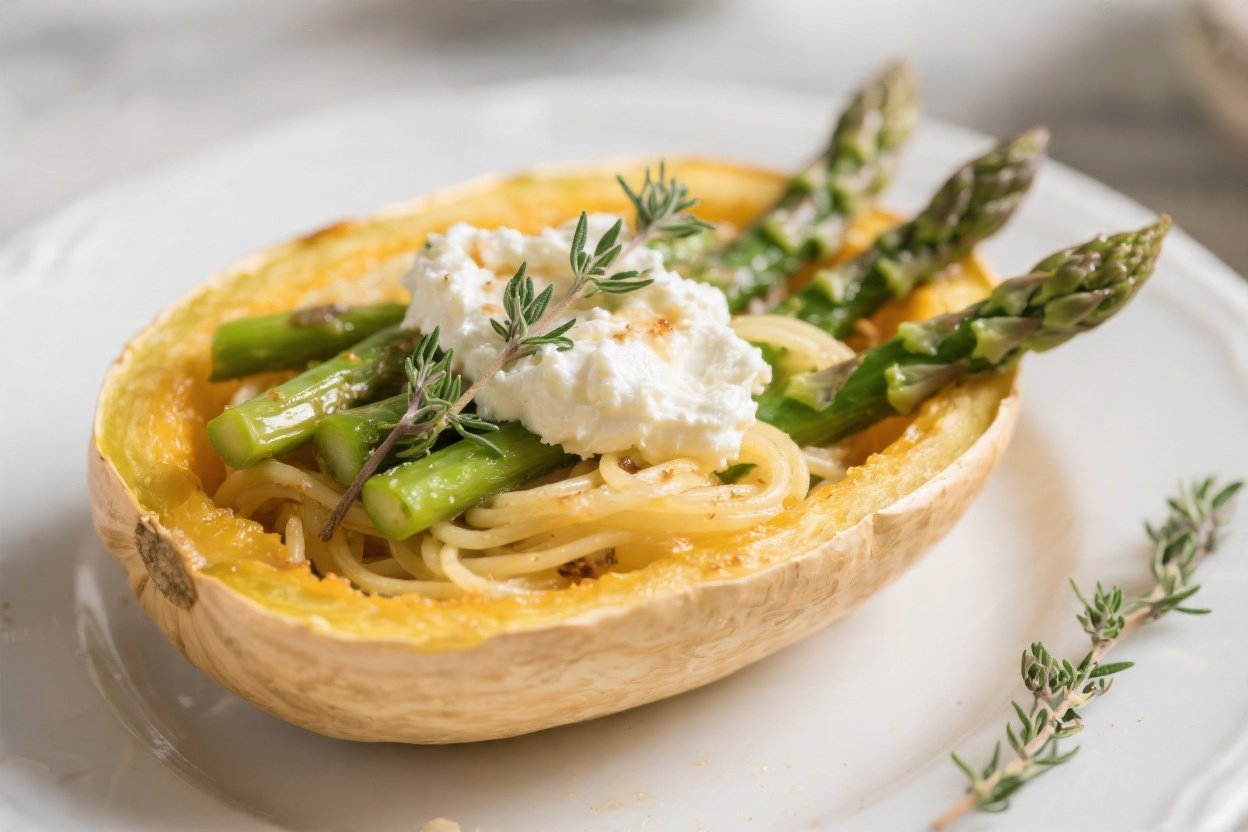
Spaghetti squash has a way of turning a simple weeknight into something special. Roast it until tender, then pull the strands into a tangle of golden “noodles.” Add creamy ricotta, bright asparagus, and fragrant thyme, and you get comfort without the heaviness. It’s a dish that feels elegant but needs no fancy techniques.
Whether you’re cooking for two or meal-prepping for the week, this recipe is easy, fresh, and satisfying.
What Makes This Recipe So Good
- Balanced and bright: Creamy ricotta pairs beautifully with crisp-tender asparagus and lemony thyme.
- Light but filling: Spaghetti squash keeps it lower in carbs while still feeling cozy and complete.
- Simple technique: Most of the work is hands-off roasting, with minimal stovetop time.
- Flexible: Easy to adapt with herbs, proteins, or extra veggies you already have.
- Weeknight-friendly: One squash, one pan, a few pantry staples—done.
Ingredients
- 1 medium spaghetti squash (about 2.5–3 pounds)
- 2 tablespoons olive oil, divided
- 1 bunch asparagus (about 1 pound), woody ends trimmed, cut into 1–2 inch pieces
- 1 shallot, thinly sliced (or 1/2 small red onion)
- 2 cloves garlic, minced
- 1 cup whole-milk ricotta
- 1/3 cup grated Parmesan, plus more for serving
- 1 tablespoon fresh thyme leaves (or 1 teaspoon dried thyme)
- Zest of 1 lemon, plus 1–2 teaspoons lemon juice
- 1/4 teaspoon red pepper flakes (optional)
- Kosher salt and freshly ground black pepper, to taste
- Fresh parsley or extra thyme for garnish (optional)
Instructions
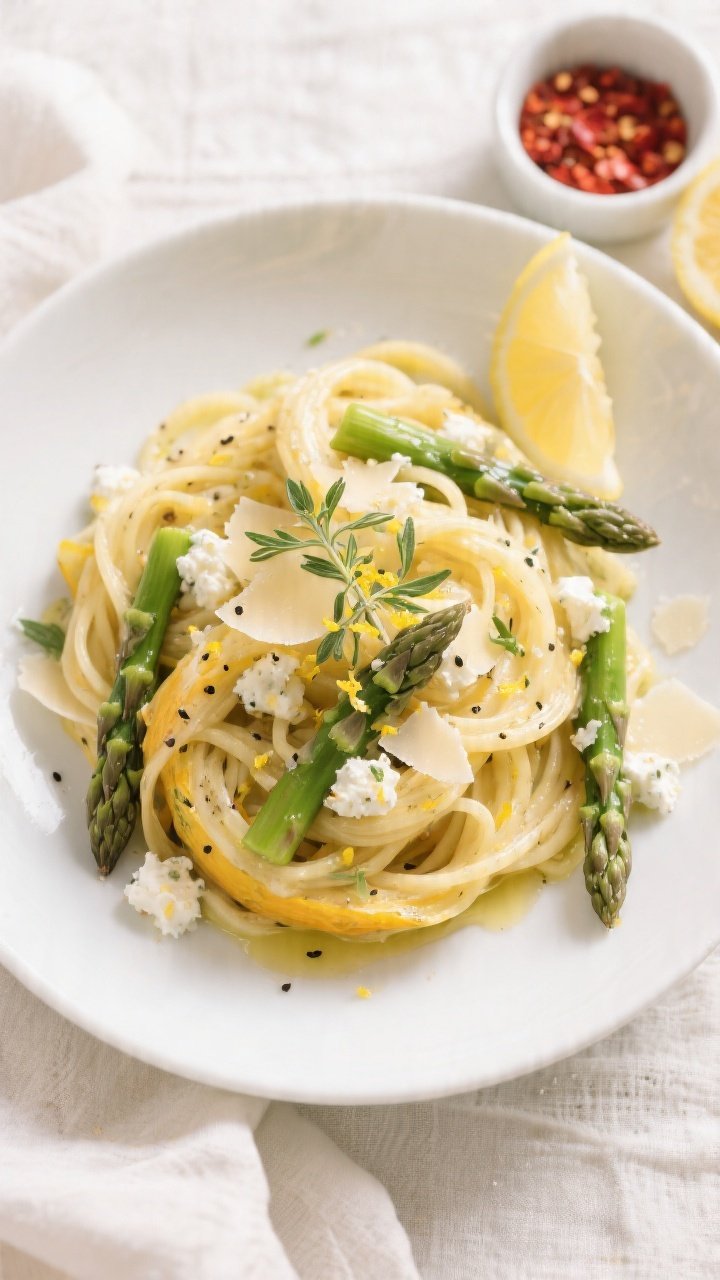
- Preheat and prep the squash: Heat the oven to 400°F (200°C). Halve the spaghetti squash lengthwise and scoop out the seeds. Drizzle the cut sides with 1 tablespoon olive oil and season with salt and pepper.
- Roast the squash: Place cut-side down on a parchment-lined baking sheet. Roast 35–45 minutes, until the skin pierces easily with a knife and the strands pull away with a fork. Larger squash may need a little longer.
- Cook the asparagus: About 10 minutes before the squash is done, heat the remaining 1 tablespoon olive oil in a large skillet over medium heat. Add shallot and cook 2–3 minutes until softened. Add asparagus and a pinch of salt. Sauté 4–6 minutes, until crisp-tender and bright green. Add garlic in the last 30 seconds and cook just until fragrant. Remove from heat.
- Fluff the squash: When the squash is cool enough to handle, use a fork to scrape the flesh into spaghetti-like strands. Transfer the strands to a large bowl. Season with a pinch of salt, black pepper, and the lemon zest.
- Make it creamy: Add ricotta, Parmesan, thyme, and red pepper flakes (if using) to the warm squash. Toss gently until coated and creamy. If it seems too thick, add a splash of warm water or a squeeze of lemon juice to loosen.
- Fold in the asparagus: Add the asparagus and shallot mixture. Toss again, taste, and adjust with more salt, pepper, or lemon juice.
- Serve: Divide into bowls. Top with extra Parmesan and fresh herbs, if you like. Serve warm.
How to Store
- Refrigerator: Store leftovers in an airtight container for 3–4 days. Add a drizzle of olive oil before sealing to keep it moist.
- Reheating: Warm gently on the stovetop over low heat or in the microwave at 50–70% power, stirring halfway. If it looks dry, add a splash of water, broth, or a spoonful of ricotta.
- Freezer: Not ideal. Ricotta can turn grainy and the squash may get watery after thawing.
Health Benefits
- Lower in carbs and calories: Spaghetti squash offers a light alternative to pasta while still providing fiber.
- Rich in vitamins: Asparagus adds folate, vitamin K, and antioxidants that support healthy cells and bones.
- Protein and calcium: Ricotta contributes protein and calcium for satiety and bone health. Choose part-skim if you want to reduce fat.
- Heart-friendly fats: Olive oil delivers monounsaturated fats that support heart health.
Common Mistakes to Avoid
- Over-roasting the squash: If it goes too long, it gets mushy. Start checking at 35 minutes; strands should be tender but still a bit springy.
- Watery squash: Don’t add the ricotta while the squash is steaming hot in the shells. Move the strands to a bowl and let steam escape for a minute before mixing.
- Overcooking asparagus: Keep it crisp-tender. Dull, limp asparagus will mute the dish’s fresh flavor.
- Underseasoning: Squash is mild. Use enough salt, pepper, lemon, and Parmesan to bring everything to life.
- Skipping aromatics: The shallot and garlic are small steps that add big flavor. Don’t skip them.
Recipe Variations
- Add protein: Stir in shredded rotisserie chicken, crispy prosciutto, or sautéed shrimp.
- Make it herby: Swap thyme for basil or dill, or add a handful of chopped parsley.
- Extra veggies: Peas, baby spinach, or cherry tomatoes add color and sweetness.
- More creamy, less creamy: Add a splash of cream for extra richness, or use part-skim ricotta to lighten it up.
- Gluten-free breadcrumb topping: Toast gluten-free breadcrumbs in olive oil with garlic and lemon zest, then sprinkle on top for crunch.
- Spice it up: Increase red pepper flakes or add a pinch of smoked paprika.
- Roasted flavor boost: Toss asparagus with oil, salt, and pepper and roast on a separate sheet pan for 8–10 minutes at 400°F, then combine.
FAQ
Can I cook the spaghetti squash in the microwave?
Yes. Pierce the whole squash several times with a knife, microwave 5 minutes to soften, then halve, seed, and place cut-side down in a microwave-safe dish with a bit of water.
Microwave 7–12 more minutes, until strands pull away. The oven gives better flavor, but the microwave is fast.
What can I use instead of ricotta?
Try cottage cheese blended until smooth, mascarpone for extra richness, or a dollop of Greek yogurt for tang. Adjust salt and lemon to taste, since each option changes the flavor slightly.
How do I know when the asparagus is done?
Look for a bright green color and slight tenderness when pierced with a fork.
It should still have a bit of snap. If it’s mushy, it’s overcooked.
Can I make this dairy-free?
Yes. Use a thick plant-based ricotta or blend firm tofu with lemon juice, olive oil, garlic, salt, and nutritional yeast.
Add a little water to reach a creamy texture.
How do I prevent watery results?
After roasting, let the squash cool a minute and fluff it in a bowl so steam can escape. If needed, blot excess moisture with paper towels before adding ricotta.
Is this dish good for meal prep?
Absolutely. Roast the squash and cook the asparagus ahead, then assemble with ricotta just before serving or reheating.
Add a splash of water or lemon juice when reheating to keep it creamy.
In Conclusion
Spaghetti Squash with Ricotta, Asparagus & Thyme is the kind of meal that feels both fresh and comforting. It’s simple enough for a weeknight, yet special enough for company. With creamy ricotta, tender-crisp asparagus, and bright herbs, each bite is balanced and satisfying.
Keep the base the same, and make it your own with easy add-ins. This one is sure to join your regular rotation.
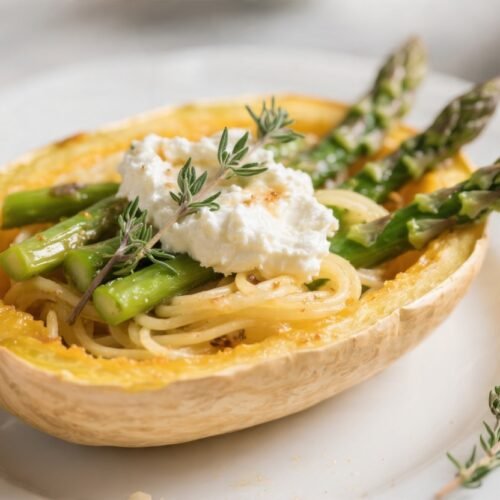
Spaghetti Squash With Ricotta, Asparagus & Thyme - A Light, Comforting Dinner
Ingredients
- 1 medium spaghetti squash (about 2.5–3 pounds)
- 2 tablespoons olive oil, divided
- 1 bunch asparagus (about 1 pound), woody ends trimmed, cut into 1–2 inch pieces
- 1 shallot, thinly sliced (or 1/2 small red onion)
- 2 cloves garlic, minced
- 1 cup whole-milk ricotta
- 1/3 cup grated Parmesan, plus more for serving
- 1 tablespoon fresh thyme leaves (or 1 teaspoon dried thyme)
- Zest of 1 lemon, plus 1–2 teaspoons lemon juice
- 1/4 teaspoon red pepper flakes (optional)
- Kosher salt and freshly ground black pepper, to taste
- Fresh parsley or extra thyme for garnish (optional)
Instructions
- Preheat and prep the squash: Heat the oven to 400°F (200°C). Halve the spaghetti squash lengthwise and scoop out the seeds. Drizzle the cut sides with 1 tablespoon olive oil and season with salt and pepper.
- Roast the squash: Place cut-side down on a parchment-lined baking sheet. Roast 35–45 minutes, until the skin pierces easily with a knife and the strands pull away with a fork. Larger squash may need a little longer.
- Cook the asparagus: About 10 minutes before the squash is done, heat the remaining 1 tablespoon olive oil in a large skillet over medium heat. Add shallot and cook 2–3 minutes until softened. Add asparagus and a pinch of salt. Sauté 4–6 minutes, until crisp-tender and bright green. Add garlic in the last 30 seconds and cook just until fragrant. Remove from heat.
- Fluff the squash: When the squash is cool enough to handle, use a fork to scrape the flesh into spaghetti-like strands. Transfer the strands to a large bowl. Season with a pinch of salt, black pepper, and the lemon zest.
- Make it creamy: Add ricotta, Parmesan, thyme, and red pepper flakes (if using) to the warm squash. Toss gently until coated and creamy. If it seems too thick, add a splash of warm water or a squeeze of lemon juice to loosen.
- Fold in the asparagus: Add the asparagus and shallot mixture. Toss again, taste, and adjust with more salt, pepper, or lemon juice.
- Serve: Divide into bowls. Top with extra Parmesan and fresh herbs, if you like. Serve warm.