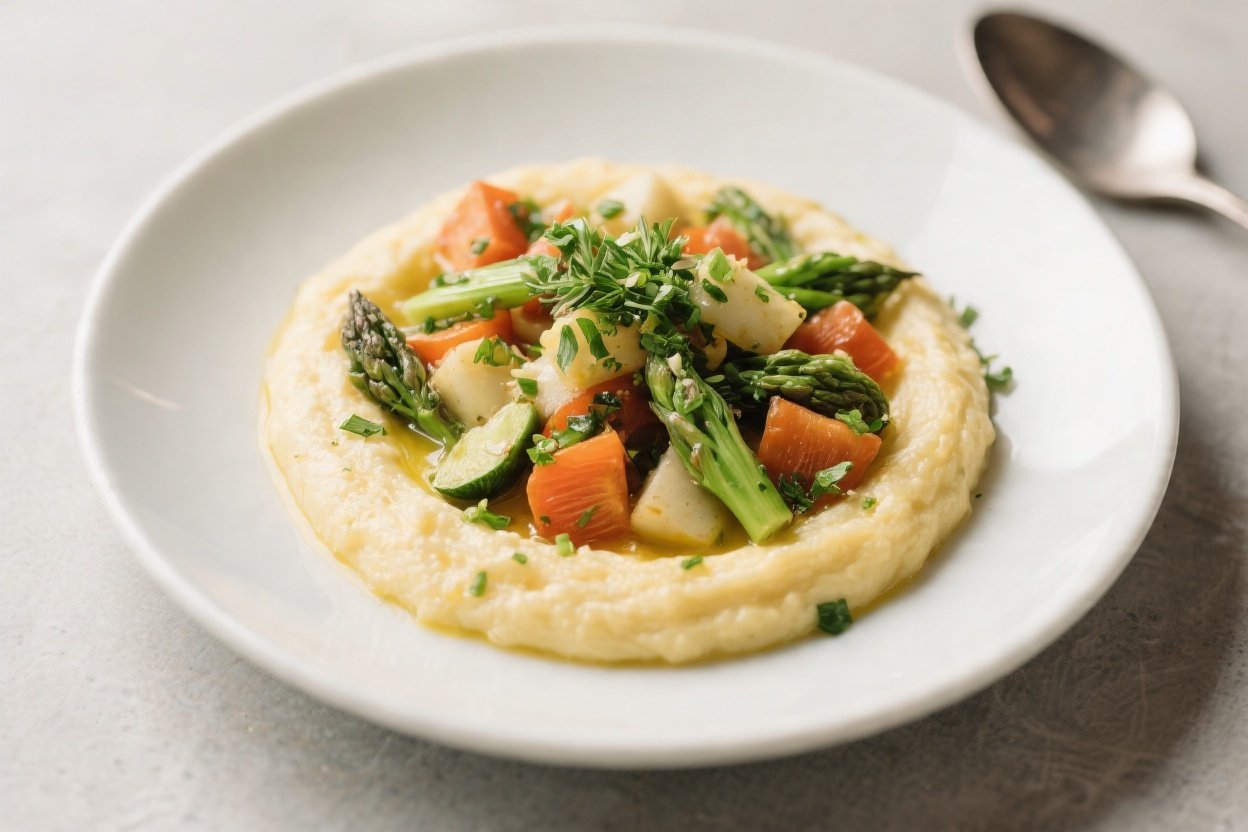
Warm, velvety polenta meets crisp-tender spring vegetables and a bright herb gremolata in this satisfying dish. It’s the kind of meal that tastes like comfort but still feels light and lively. You get creamy, buttery spoonfuls balanced by lemon, garlic, and fresh herbs.
It’s easy enough for a weeknight and pretty enough for company. Make it as a vegetarian main, or pair it with grilled fish or roasted chicken if you want more protein.
What Makes This Special
This recipe is all about balance. The polenta is rich and smooth, while the vegetables bring crunch and color.
The gremolata—parsley, lemon zest, and garlic—adds a clean, zippy finish that keeps each bite bright. It’s also flexible: use whatever spring vegetables you find, from asparagus to peas to baby carrots. And if you love make-ahead meals, polenta reheats beautifully with a splash of water or milk.
Ingredients
- For the polenta:
- 1 cup medium or coarse stone-ground polenta (not instant)
- 4 cups low-sodium vegetable broth (or water), plus more as needed
- 1 cup whole milk (or an extra cup broth for dairy-free)
- 2 tablespoons unsalted butter (or olive oil for dairy-free)
- 1/2 cup grated Parmesan or Pecorino Romano, plus more to taste
- 1/2 teaspoon fine sea salt, more to taste
- Freshly ground black pepper
- For the spring vegetables:
- 1 tablespoon olive oil
- 1 small shallot, thinly sliced
- 1 bunch asparagus, trimmed and cut into 1-inch pieces
- 1 cup fresh or frozen peas
- 1 small zucchini, halved lengthwise and sliced
- 1 cup baby spinach or tender greens
- 1/2 teaspoon kosher salt
- 1/4 teaspoon red pepper flakes (optional)
- 1 teaspoon lemon zest (from the gremolata lemon) or a squeeze of lemon juice
- For the herb gremolata:
- 1/2 cup finely chopped fresh flat-leaf parsley
- Zest of 1 lemon (use the juice for the veggies if you like)
- 1 small garlic clove, very finely minced
- 2 teaspoons extra-virgin olive oil
- Pinch of flaky salt
How to Make It
- Start the polenta base. In a medium pot, bring the broth and milk to a gentle simmer over medium heat. Whisk in the polenta in a slow, steady stream to avoid lumps.
- Simmer low and slow. Reduce heat to low. Cook, whisking often for the first 5 minutes, then stirring every few minutes with a wooden spoon. Keep the mixture at a gentle bubble. Add splashes of hot water or broth if it gets too thick before it softens. Total time: about 30–40 minutes for stone-ground polenta.
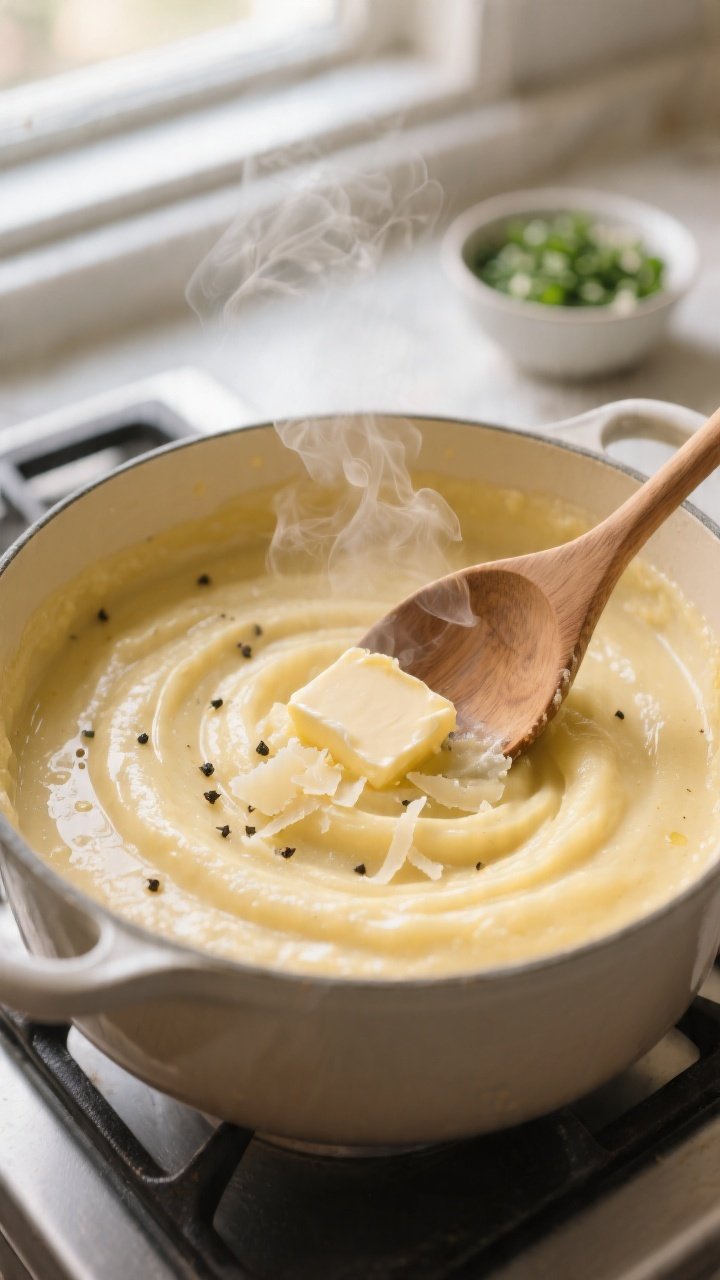
- Finish the polenta. When creamy and tender, stir in the butter and Parmesan. Season with salt and pepper. The texture should be loose and spoonable—add a bit more liquid if needed. Cover and keep warm on the lowest heat.
- Make the gremolata. In a small bowl, combine parsley, lemon zest, garlic, olive oil, and a pinch of salt. Stir and let it sit so the flavors meld. This brightness will lift the whole dish.
- Sauté the vegetables. Warm olive oil in a large skillet over medium heat. Add shallot and cook 1–2 minutes until soft. Add asparagus and zucchini; cook 3–4 minutes until crisp-tender. Stir in peas and spinach, plus salt and red pepper flakes. Cook 1–2 minutes more. Finish with lemon zest or a squeeze of juice.
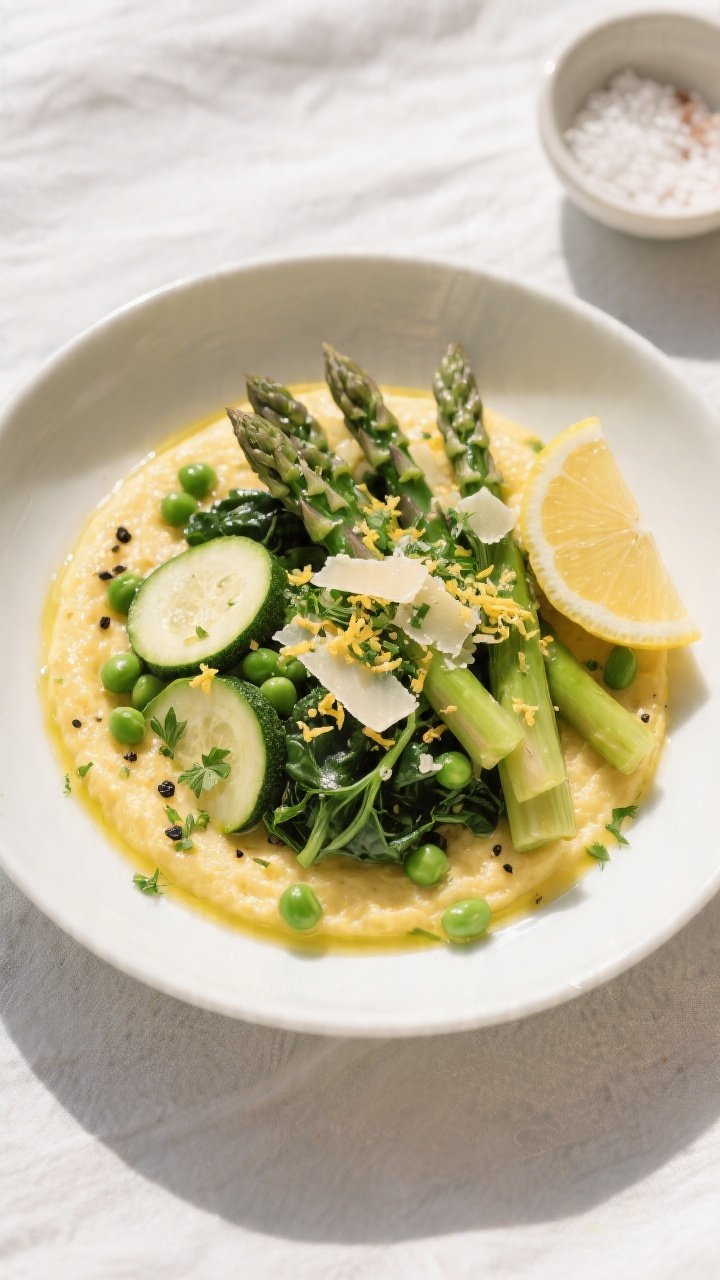
- Assemble. Spoon the creamy polenta into shallow bowls. Top with a generous pile of vegetables. Spoon the gremolata over the top. Finish with extra cheese, black pepper, and a drizzle of olive oil if you like.
How to Store
- Polenta: Refrigerate in an airtight container for up to 4 days. It will firm up as it chills. To reheat, add a splash of milk, broth, or water and warm gently on the stove, stirring until creamy again.
- Vegetables: Store separately in a sealed container for up to 3 days. Reheat quickly in a skillet to keep some bite.
- Gremolata: Best fresh, but can be refrigerated for 1–2 days. Stir and taste before serving; add a little fresh zest or oil if it dulled in the fridge.
- Freezing: Polenta can be frozen in slabs to grill or pan-fry later, but for creamy polenta, freezing changes the texture. The veggies and gremolata are not ideal for freezing.
Why This is Good for You
This bowl blends complex carbs from cornmeal with fiber and micronutrients from spring produce. Asparagus and peas bring folate, vitamin K, and plant-based protein.
Parsley adds vitamin C and antioxidants, while lemon brightens flavor without extra salt. Keeping the polenta creamy with broth and a modest amount of dairy keeps it satisfying without feeling heavy.
Common Mistakes to Avoid
- Using instant polenta for the same method. Instant works, but it needs less liquid and cooks faster. If you use it, adjust the ratios and time on the package.
- Letting polenta scorch. Keep the heat low and stir often, especially early on. A diffuser or heavy-bottomed pot helps prevent sticking.
- Adding cheese too early. Wait until the polenta is fully tender. Cheese binds too soon and can make it clumpy.
- Overcooking vegetables. Aim for crisp-tender. They should stay bright and slightly firm, not mushy.
- Skipping acidity. The gremolata or a squeeze of lemon is key. It cuts richness and wakes up the flavors.
Alternatives
- Dairy-free: Use olive oil instead of butter and skip the cheese, or try a dairy-free Parmesan. Use all broth or unsweetened plant milk.
- Different vegetables: Try snap peas, broccolini, fava beans, mushrooms, or baby carrots. In summer, swap in cherry tomatoes and corn; in fall, try roasted squash.
- Add protein: Top with a soft-boiled egg, seared shrimp, grilled salmon, or crispy chickpeas. Shredded rotisserie chicken works well too.
- Make it baked and set: Spread leftover polenta in a pan to cool, then slice and pan-fry until crisp. Serve with the same veggies and gremolata.
- Herb swaps: Basil, mint, or chives can join or replace the parsley. Keep the lemon and garlic for that clean gremolata snap.
FAQ
Can I make this with instant polenta?
Yes.
Follow the liquid ratio and timing on the package, then finish with butter, cheese, salt, and pepper as directed. The texture won’t be quite as deep as slow-cooked, but it’s tasty and fast.
What’s the best pot for polenta?
A heavy-bottomed saucepan or Dutch oven works best. It distributes heat evenly and helps prevent sticking or scorching as the polenta thickens.
How do I keep polenta smooth without lumps?
Whisk the polenta in gradually while the liquid simmers and keep stirring for the first few minutes.
If lumps form, a vigorous whisk usually fixes it. Adding liquid slowly and cooking gently are key.
Can I make the polenta ahead of time?
Yes. Reheat with extra liquid on low heat until creamy.
Stir patiently and taste for seasoning, since flavors can dull in the fridge.
Is there a gluten-free option?
Polenta is naturally gluten-free, but check labels on broth and cheese to be safe. This recipe is a great option for gluten-free guests.
How do I make it more indulgent?
Stir in a splash of cream or mascarpone at the end and finish with a knob of butter. A drizzle of good olive oil and extra Parmesan on top also adds richness.
What if I don’t like garlic in the gremolata?
Use less or skip it.
You’ll still get lots of brightness from lemon zest and parsley. A pinch of finely grated Parmesan can add depth if you omit the garlic.
Wrapping Up
Creamy Polenta with Spring Vegetables & Herb Gremolata brings comfort and freshness to the same bowl. It’s easy, adaptable, and satisfying without being heavy.
Keep the polenta soft and spoonable, cook the vegetables just until crisp-tender, and finish with a bold hit of lemon and herbs. Once you make it, you’ll want to revisit it through every season with whatever produce you find.
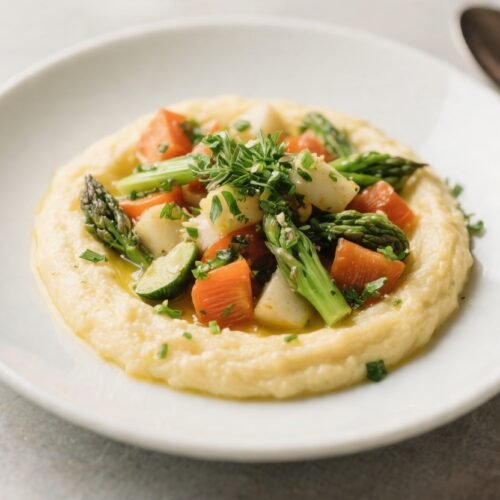
Creamy Polenta with Spring Vegetables & Herb Gremolata - Comforting, Fresh, and Simple
Ingredients
- For the polenta:
- 1 cup medium or coarse stone-ground polenta (not instant)
- 4 cups low-sodium vegetable broth (or water), plus more as needed
- 1 cup whole milk (or an extra cup broth for dairy-free)
- 2 tablespoons unsalted butter (or olive oil for dairy-free)
- 1/2 cup grated Parmesan or Pecorino Romano, plus more to taste
- 1/2 teaspoon fine sea salt, more to taste
- Freshly ground black pepper
- For the spring vegetables:
- 1 tablespoon olive oil
- 1 small shallot, thinly sliced
- 1 bunch asparagus, trimmed and cut into 1-inch pieces
- 1 cup fresh or frozen peas
- 1 small zucchini, halved lengthwise and sliced
- 1 cup baby spinach or tender greens
- 1/2 teaspoon kosher salt
- 1/4 teaspoon red pepper flakes (optional)
- 1 teaspoon lemon zest (from the gremolata lemon) or a squeeze of lemon juice
- For the herb gremolata:
- 1/2 cup finely chopped fresh flat-leaf parsley
- Zest of 1 lemon (use the juice for the veggies if you like)
- 1 small garlic clove, very finely minced
- 2 teaspoons extra-virgin olive oil
- Pinch of flaky salt
Instructions
- Start the polenta base. In a medium pot, bring the broth and milk to a gentle simmer over medium heat. Whisk in the polenta in a slow, steady stream to avoid lumps.
- Simmer low and slow. Reduce heat to low. Cook, whisking often for the first 5 minutes, then stirring every few minutes with a wooden spoon. Keep the mixture at a gentle bubble. Add splashes of hot water or broth if it gets too thick before it softens. Total time: about 30–40 minutes for stone-ground polenta.
- Finish the polenta. When creamy and tender, stir in the butter and Parmesan. Season with salt and pepper. The texture should be loose and spoonable—add a bit more liquid if needed. Cover and keep warm on the lowest heat.
- Make the gremolata. In a small bowl, combine parsley, lemon zest, garlic, olive oil, and a pinch of salt. Stir and let it sit so the flavors meld. This brightness will lift the whole dish.
- Sauté the vegetables. Warm olive oil in a large skillet over medium heat. Add shallot and cook 1–2 minutes until soft. Add asparagus and zucchini; cook 3–4 minutes until crisp-tender. Stir in peas and spinach, plus salt and red pepper flakes. Cook 1–2 minutes more. Finish with lemon zest or a squeeze of juice.
- Assemble. Spoon the creamy polenta into shallow bowls. Top with a generous pile of vegetables. Spoon the gremolata over the top. Finish with extra cheese, black pepper, and a drizzle of olive oil if you like.