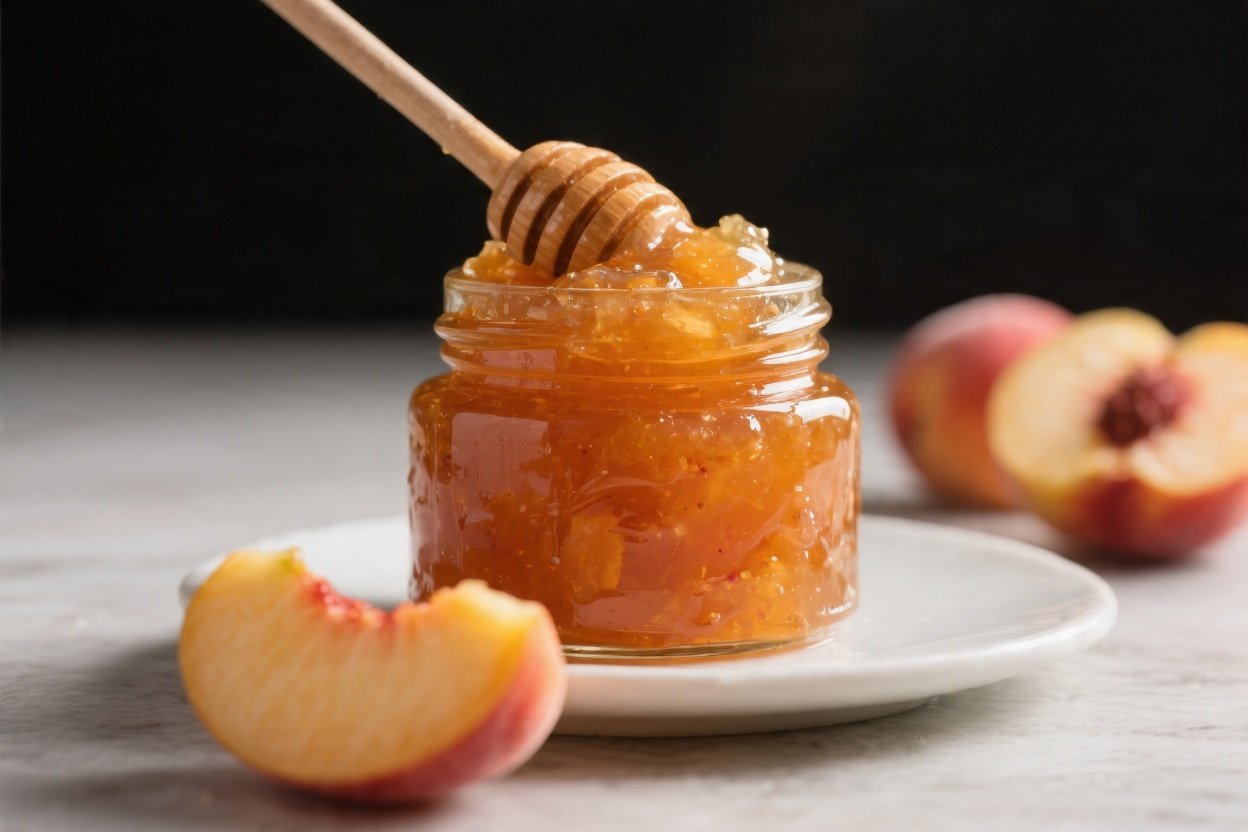
Few things taste more like late summer than a spoonful of peach jam. This version leans on honey for sweetness, which keeps the flavor sunny and clean with no syrupy aftertaste. It’s simple to make on a weeknight and friendly for beginners.
You don’t need fancy gear, just a pot, a spoon, and a bit of patience. Spread it on toast, swirl into yogurt, or warm a little for a quick dessert sauce over vanilla ice cream.
What Makes This Special
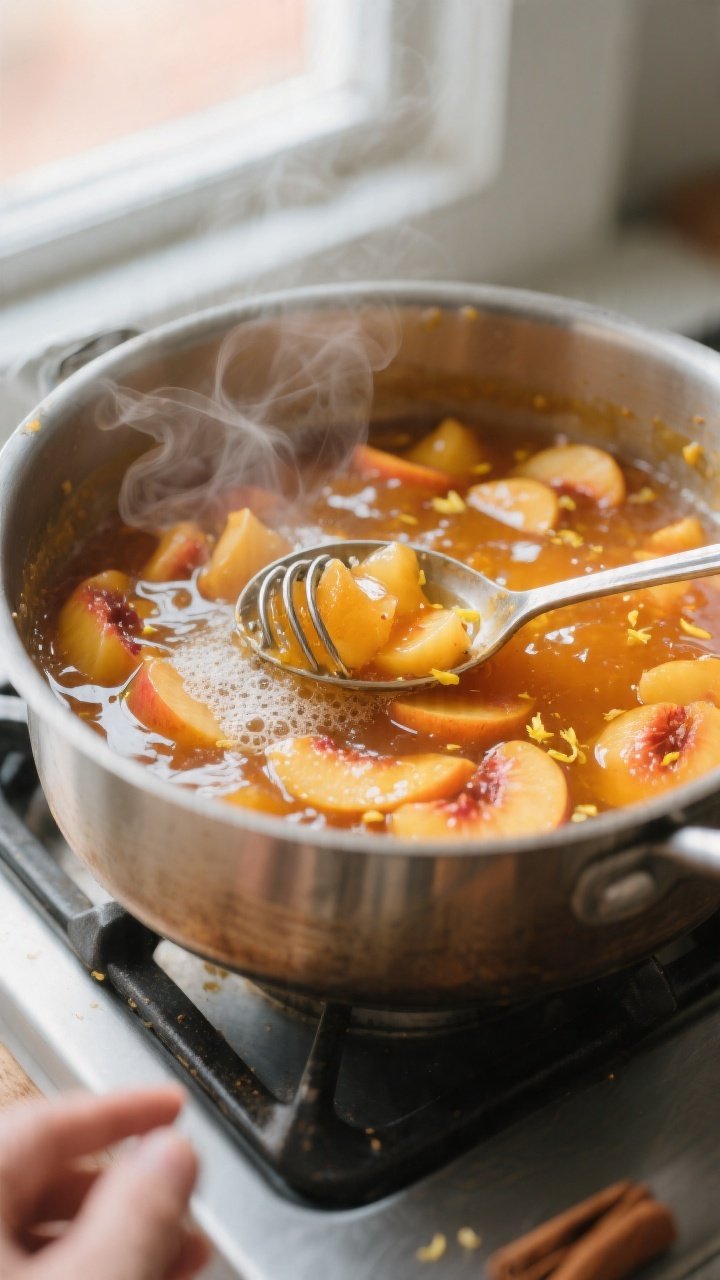
This jam lets peaches taste like peaches. Instead of white sugar, it uses honey, which adds a floral note and soft, rounded sweetness.
The texture is lush but not sticky-sweet, and it sets without commercial pectin thanks to a gentle, steady simmer. You can scale the batch up or down, and it’s just as happy in the fridge as it is in a canning jar. Best of all, the ingredient list stays short and clean.
Shopping List
- Fresh ripe peaches (about 3 pounds, 8–10 medium), peeled, pitted, and chopped
- Honey (3/4 to 1 cup, to taste; a mild wildflower or clover honey works well)
- Lemon juice (2–3 tablespoons, fresh; plus 1 teaspoon lemon zest, optional)
- Pinch of salt (about 1/8 teaspoon)
- Optional flavor boosters: 1/2 teaspoon vanilla extract, a pinch of cinnamon, or a small knob of grated fresh ginger
How to Make It
- Prep the peaches. Bring a pot of water to a boil. Score a shallow X on the bottom of each peach, blanch 30–45 seconds, then move to an ice bath. Slip off the skins, pit, and chop. If you like a smoother jam, chop finely; for chunkier jam, go larger.
- Macerate for juiciness. In a large, wide pot, combine peaches, honey, lemon juice, zest (if using), and salt. Stir and let sit 15–20 minutes until the fruit releases juice. This helps dissolve the honey and prevents scorching.
- Start the simmer. Set the pot over medium heat and bring to a steady simmer, stirring often. Once bubbling, reduce to medium-low so it stays lively but not aggressive. Skim any light foam that gathers on top for a clearer finish.
- Break down the fruit. After 10–15 minutes, use a potato masher to gently smash the peaches to your preferred texture. Keep simmering, stirring frequently so the bottom doesn’t stick.
- Cook to the set you like. Continue simmering 25–35 minutes total, until the jam thickens and a spoon dragged across the bottom leaves a brief line. For a firmer set, cook a touch longer. For a looser, spoonable jam, stop earlier.
- Test for doneness. Chill a small plate in the freezer. Drop a spoonful of jam on the cold plate and wait 30 seconds. Push it with your finger. If it wrinkles and holds a soft mound, it’s done. If it runs, cook 5 more minutes and test again.
- Finish the flavor. Off the heat, stir in vanilla, cinnamon, or ginger if you like. Taste and adjust with a squeeze of lemon for brightness or a drizzle more honey for sweetness.
- Jar it up. Ladle hot jam into clean, warm jars, leaving about 1/4 inch headspace. Wipe rims and seal. For refrigerator jam, cool to room temperature, then chill. For shelf-stable storage, process jars in a boiling water bath for 10 minutes, adjusting for altitude as needed.
How to Store
- Refrigerator: In a clean, sealed jar, the jam keeps 2–3 weeks. Always use a clean spoon to avoid contamination.
- Freezer: Pack into freezer-safe containers, leaving headspace for expansion. Freeze up to 6 months. Thaw overnight in the fridge.
- Canning: If water-bath processed and sealed properly, the jam keeps up to 1 year in a cool, dark place. Refrigerate after opening and use within 2–3 weeks.
Why This is Good for You
Peaches bring fiber, vitamin C, and antioxidants that support skin and immune health. Using honey instead of refined sugar keeps sweetness gentle and brings trace minerals and polyphenols. Lemon juice brightens flavor and helps preserve color.
You’re getting a fruit-forward spread with fewer added sweeteners than standard jam, without losing that classic, sunny taste.
Pitfalls to Watch Out For
- Underripe fruit: Hard peaches won’t break down or taste as sweet. Choose fragrant, slightly soft fruit for best flavor and texture.
- Cranking the heat: High heat can scorch honey and dull the peach flavor. Keep a steady, moderate simmer and stir often.
- Skipping the acid: Lemon juice keeps color bright and helps the jam set. Without it, the jam can taste flat and look dull.
- Overcooking: If cooked too long, jam can turn gummy or taste caramelized. Use the plate test and pull it when it hits your preferred set.
- Guessing on sweetness: Honey intensity varies. Taste near the end and adjust, remembering it tastes less sweet once chilled.
- Loose set panic: Warm jam looks looser. It will thicken as it cools, so let it rest before deciding to keep cooking.
Variations You Can Try
- Ginger-Peach: Add 1–2 teaspoons finely grated fresh ginger during the last 5 minutes for a zippy finish.
- Vanilla Bean: Split and scrape a vanilla bean into the pot at the start. Remove the pod before jarring.
- Bourbon Peach: Stir in 1–2 tablespoons bourbon off heat for warmth and depth.
- Thyme and Lemon: Add a small sprig of fresh thyme during cooking; remove before jarring. Extra-bright and savory-sweet.
- Low-Sugar Boost: Replace a quarter of the peaches with diced nectarines or apricots for added pectin and tang, which helps set with less honey.
- Spiced: A pinch of cardamom or cinnamon complements honey’s floral notes without overpowering the fruit.
FAQ
Can I leave the skins on?
Yes, if you like a rustic texture.
Peach skins soften as they cook and add color. If you prefer a smoother jam, peel them. Blanching makes the skins slip right off.
Do I need pectin?
No.
Peaches have moderate natural pectin, and honey helps bind liquids as moisture evaporates. A longer simmer gives you a soft, spoonable set without commercial pectin.
How sweet should I make it?
Start with 3/4 cup honey and adjust to taste near the end. Ripe peaches are plenty sweet, and chilling reduces perceived sweetness a bit.
Milder honeys let the fruit shine.
Why add lemon juice?
Lemon adds brightness, balances the honey, and helps the jam thicken and stay rosy. It’s also useful for safe canning when you want consistent acidity.
What if my jam doesn’t set?
Return it to the pot and simmer a few more minutes, stirring often, then retest on a cold plate. As a backup, you can add a splash of lemon juice or mash in a chopped, very ripe apple for natural pectin and cook briefly.
Can I use frozen peaches?
Absolutely.
Thaw and drain them first to avoid excess water. Taste and adjust honey and lemon since frozen fruit can be slightly less sweet.
Is this safe to can with honey?
Yes, as long as you follow standard water-bath canning guidelines, maintain proper headspace, and use sufficient acidity. Process jars for 10 minutes (adjust for altitude) and check seals after cooling.
What’s the yield?
From about 3 pounds of peaches, expect roughly 3 to 4 half-pint jars, depending on how thick you cook the jam.
How do I prevent scorching?
Use a wide, heavy-bottomed pot, keep heat moderate, and stir frequently, scraping the bottom and sides.
Macerating the fruit before cooking also helps by creating more syrup at the start.
Can I reduce the honey more?
Yes, but expect a softer set and more tart flavor. If you go very low, consider adding a bit of apple or apricot for natural pectin, or accept a looser, compote-like texture.
Wrapping Up
Honey Sweetened Peach Jam is simple, bright, and forgiving. With a handful of ingredients and a little attention at the stove, you get jars of sunny flavor ready for breakfasts and quick desserts.
Keep the heat gentle, taste as you go, and pull it when it feels right to you. The result is a fruit-first spread that tastes like summer on a spoon.
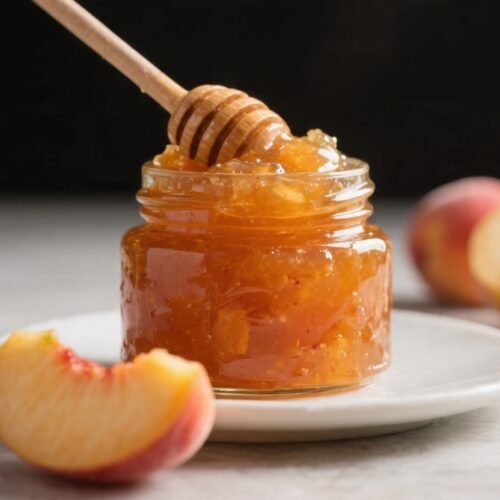
Honey Sweetened Peach Jam - Bright, Simple, and Naturally Sweet
Ingredients
- Fresh ripe peaches (about 3 pounds, 8–10 medium), peeled, pitted, and chopped
- Honey (3/4 to 1 cup, to taste; a mild wildflower or clover honey works well)
- Lemon juice (2–3 tablespoons, fresh; plus 1 teaspoon lemon zest, optional)
- Pinch of salt (about 1/8 teaspoon)
- Optional flavor boosters: 1/2 teaspoon vanilla extract, a pinch of cinnamon, or a small knob of grated fresh ginger
Instructions
- Prep the peaches. Bring a pot of water to a boil. Score a shallow X on the bottom of each peach, blanch 30–45 seconds, then move to an ice bath. Slip off the skins, pit, and chop. If you like a smoother jam, chop finely; for chunkier jam, go larger.
- Macerate for juiciness. In a large, wide pot, combine peaches, honey, lemon juice, zest (if using), and salt. Stir and let sit 15–20 minutes until the fruit releases juice. This helps dissolve the honey and prevents scorching.
- Start the simmer. Set the pot over medium heat and bring to a steady simmer, stirring often. Once bubbling, reduce to medium-low so it stays lively but not aggressive. Skim any light foam that gathers on top for a clearer finish.
- Break down the fruit. After 10–15 minutes, use a potato masher to gently smash the peaches to your preferred texture. Keep simmering, stirring frequently so the bottom doesn’t stick.
- Cook to the set you like. Continue simmering 25–35 minutes total, until the jam thickens and a spoon dragged across the bottom leaves a brief line. For a firmer set, cook a touch longer. For a looser, spoonable jam, stop earlier.
- Test for doneness. Chill a small plate in the freezer. Drop a spoonful of jam on the cold plate and wait 30 seconds. Push it with your finger. If it wrinkles and holds a soft mound, it’s done. If it runs, cook 5 more minutes and test again.
- Finish the flavor. Off the heat, stir in vanilla, cinnamon, or ginger if you like. Taste and adjust with a squeeze of lemon for brightness or a drizzle more honey for sweetness.
- Jar it up. Ladle hot jam into clean, warm jars, leaving about 1/4 inch headspace. Wipe rims and seal. For refrigerator jam, cool to room temperature, then chill. For shelf-stable storage, process jars in a boiling water bath for 10 minutes, adjusting for altitude as needed.