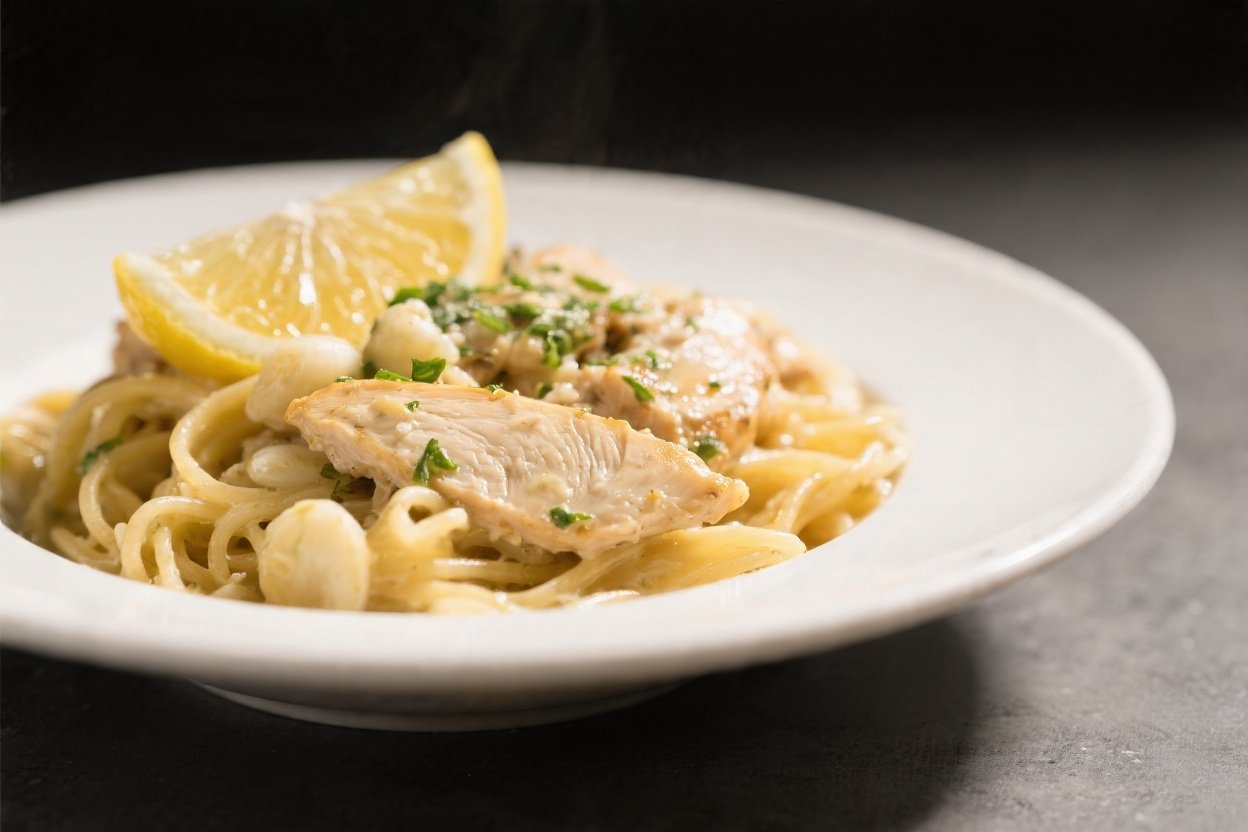
This Lemon Garlic Chicken Pasta brings together juicy chicken, a silky lemon-butter sauce, and just the right hit of garlic. It’s simple enough for a weeknight, but it feels a little special without any fuss. The flavors are fresh and balanced—zesty lemon, savory parmesan, and a hint of heat.
You’ll get a creamy finish without heavy cream, so it tastes light but still satisfying. If you love a dish that feels restaurant-worthy with pantry ingredients, this is it.
What Makes This Special
- Bright flavor, minimal effort: Fresh lemon juice and zest transform a simple pasta into something lively and memorable.
- Balanced texture: The starchy pasta water creates a glossy, silky sauce that clings to each strand.
- Weeknight-friendly: From prep to plate in about 30 minutes—no special equipment needed.
- Light but satisfying: Butter and olive oil add richness without making it heavy.
- Flexible: Works with chicken breast or thighs, and it’s easy to make gluten-free or dairy-free.
Ingredients
- 10–12 oz (285–340 g) pasta (spaghetti, linguine, or fettuccine)
- 1 lb (450 g) boneless, skinless chicken (breasts or thighs), cut into thin strips or bite-size pieces
- 2 tbsp olive oil, divided
- 2 tbsp unsalted butter
- 4 cloves garlic, minced (more if you love garlic)
- 1 large lemon (zest and 3–4 tbsp juice)
- 1/2 cup grated Parmesan (plus more for serving)
- 1/2–3/4 cup reserved pasta water (as needed)
- 1/4 tsp red pepper flakes (optional, for gentle heat)
- Salt and black pepper, to taste
- Fresh parsley, chopped, for garnish
- Optional add-ins: 1 cup baby spinach, 1/2 cup peas, or 1/2 cup halved cherry tomatoes
Instructions
- Boil the pasta: Bring a large pot of salted water to a boil. Cook pasta until just shy of al dente, 1–2 minutes less than package directions. Reserve at least 1 cup of pasta water, then drain.
- Season the chicken: Pat the chicken dry. Season generously with salt and black pepper. You can add a pinch of garlic powder or paprika for extra flavor.
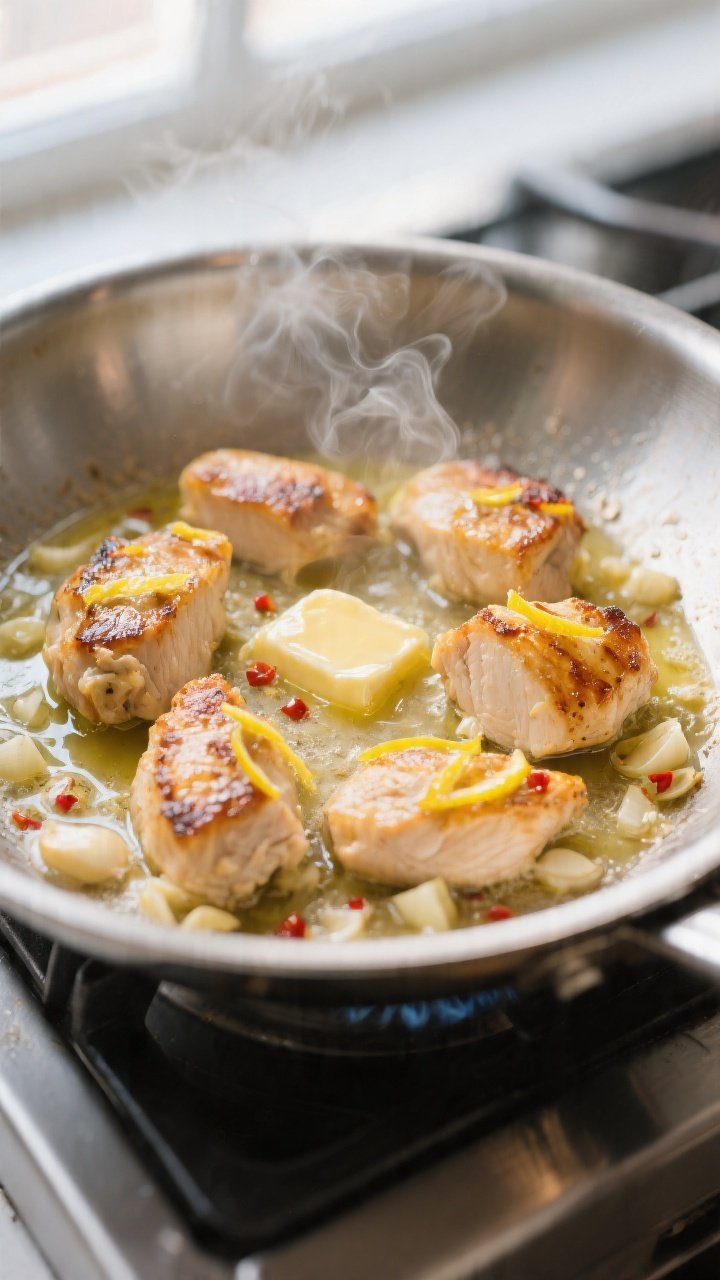
- Sear the chicken: Heat 1 tbsp olive oil in a large skillet over medium-high heat. Add chicken in a single layer. Cook 4–6 minutes, turning once, until golden and cooked through. Transfer to a plate.
- Build the sauce base: Reduce heat to medium. Add remaining 1 tbsp olive oil and the butter to the same skillet. When the butter foams, add minced garlic and red pepper flakes. Stir 30–45 seconds until fragrant—don’t let it brown.
- Add lemon: Stir in lemon zest and 3 tbsp lemon juice. Scrape up any browned bits from the pan. Add 1/2 cup reserved pasta water and bring to a gentle simmer.
- Emulsify: Whisk or stir to bring the sauce together. It should look glossy, not oily. If it seems thin, simmer 1–2 minutes more. If it tightens too much, splash in more pasta water.
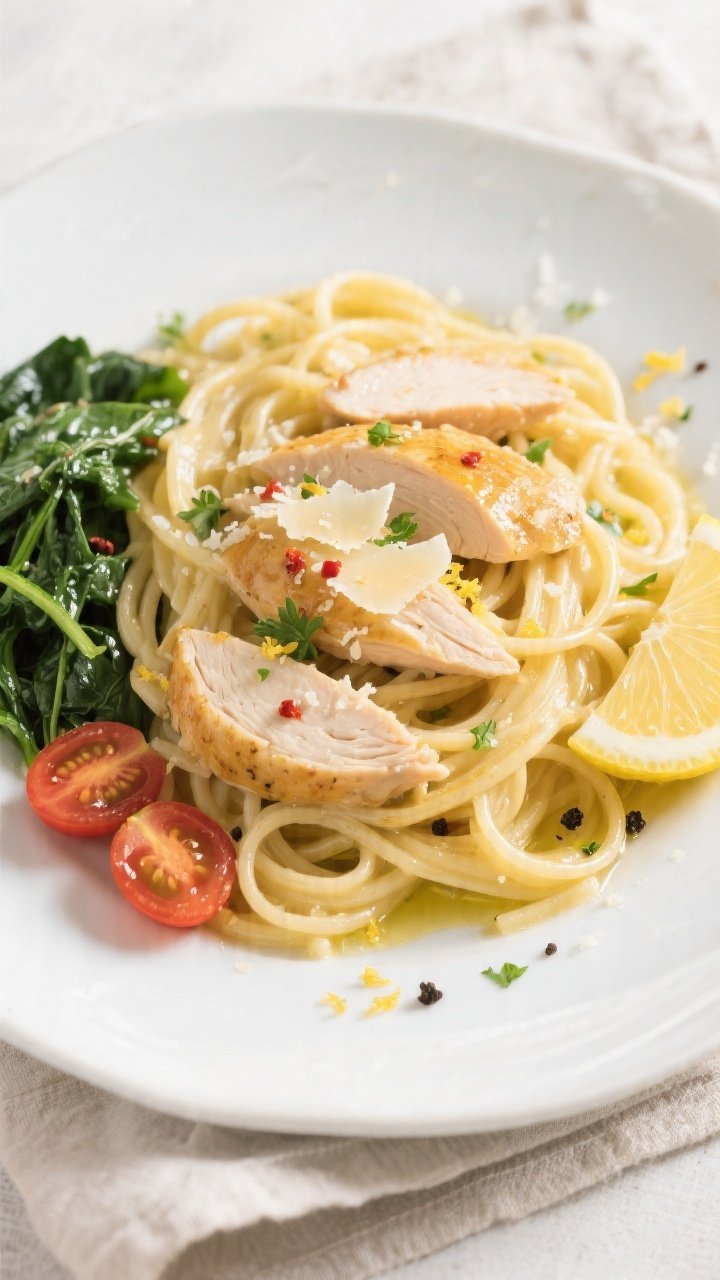
- Toss everything: Add the drained pasta and cooked chicken to the skillet. Reduce heat to low. Sprinkle in the Parmesan and toss continuously until the cheese melts and the sauce coats the pasta. If using spinach, peas, or tomatoes, fold them in now. Adjust with extra pasta water as needed for a silky texture.
- Taste and finish: Taste and adjust with salt, more lemon juice, or black pepper. The flavor should be bright but balanced. Garnish with chopped parsley and extra Parmesan.
- Serve: Plate immediately while hot and glossy. Add a light drizzle of olive oil if you like.
Storage Instructions
- Refrigerate: Cool completely, then store in an airtight container for up to 3 days.
- Reheat: Warm gently in a skillet over low heat with a splash of water or broth to loosen the sauce. Avoid high heat to prevent drying.
- Freezing: Not ideal due to the cheese and lemon, which can separate. If you must, freeze up to 1 month, then thaw overnight and reheat gently with extra liquid and a fresh squeeze of lemon.
Why This is Good for You
- Lean protein: Chicken provides high-quality protein to keep you full and support muscle health.
- Healthy fats: Olive oil adds heart-friendly monounsaturated fats.
- Vitamin boost: Lemon offers vitamin C, which supports immune health and brightens flavor without extra salt.
- Portion control made easy: The strong lemon-garlic profile satisfies quickly, so smaller servings still feel complete.
- Flexible carbs: Use whole-wheat or legume-based pasta for extra fiber and steady energy.
Common Mistakes to Avoid
- Overcooking the pasta: Pull it early so it can finish in the sauce without turning mushy.
- Skipping pasta water: This starchy liquid is key to a silky, cohesive sauce. Always reserve some.
- Burning the garlic: Bitter garlic can overpower the dish. Keep heat moderate and stir constantly.
- Adding cheese too fast: Dumping Parmesan into a high-heat sauce can cause clumping. Lower the heat and add gradually while tossing.
- Unbalanced acidity: Lemon should shine, not shock. Start with less juice and add more to taste.
Recipe Variations
- Creamy version: Stir in 1/4 cup heavy cream or half-and-half after the pasta water for a richer finish.
- Herb-forward: Add fresh basil or thyme with the parsley. A few torn basil leaves add a sweet aroma.
- Veggie-loaded: Sauté asparagus tips, broccoli florets, or zucchini with the garlic. Fold in spinach at the end.
- Gluten-free: Swap in gluten-free pasta and check your Parmesan for any additives.
- Dairy-free: Use a plant-based parmesan-style cheese or nutritional yeast, and replace butter with more olive oil.
- Extra protein: Add crispy pancetta or bacon for a smoky note, or toss in drained chickpeas for a fiber boost.
- One-pan shortcut: Use a deep skillet, cook pasta directly in seasoned water, then add chicken and sauce components to reduce dishes.
FAQ
Can I use rotisserie chicken?
Yes. Shred about 2–3 cups of cooked chicken and add it when tossing the pasta with the sauce.
Warm gently to avoid drying it out.
What pasta shape works best?
Long noodles like linguine or spaghetti are classic, but short shapes like penne or rotini work well and hold sauce nicely. Use what you have.
Can I make it without Parmesan?
You can. The sauce will be lighter and less savory.
Try a dairy-free parmesan or add a spoon of miso for umami depth.
How do I keep the sauce from separating?
Keep the heat low when adding cheese, and add it gradually while tossing. Use reserved pasta water to emulsify and keep it glossy.
Is bottled lemon juice okay?
Fresh lemon juice tastes brighter and cleaner. If using bottled, start with less and adjust to taste, since it can be sharper.
Can I prep this ahead?
You can cook the chicken and zest the lemon in advance.
For best texture, cook the pasta and finish the sauce right before serving.
In Conclusion
Lemon Garlic Chicken Pasta is the kind of meal that feels both easy and thoughtful. With a short ingredient list and a few smart steps, you get bright flavor, tender chicken, and a sauce that hugs every noodle. Keep pasta water on standby, taste as you go, and finish with fresh lemon and herbs.
It’s a reliable weeknight favorite that still feels special at the table.
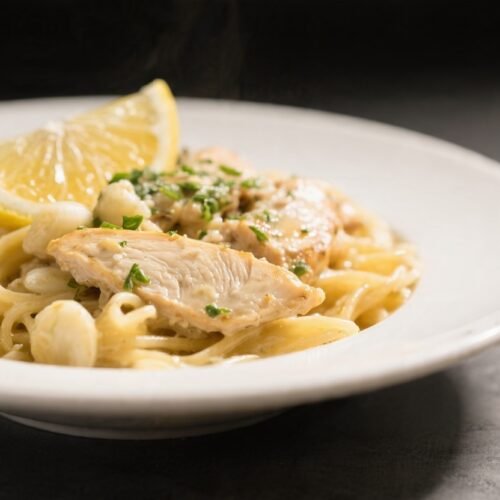
Lemon Garlic Chicken Pasta - Bright, Comforting, and Easy
Ingredients
- 10–12 oz (285–340 g) pasta (spaghetti, linguine, or fettuccine)
- 1 lb (450 g) boneless, skinless chicken (breasts or thighs), cut into thin strips or bite-size pieces
- 2 tbsp olive oil, divided
- 2 tbsp unsalted butter
- 4 cloves garlic, minced (more if you love garlic)
- 1 large lemon (zest and 3–4 tbsp juice)
- 1/2 cup grated Parmesan (plus more for serving)
- 1/2–3/4 cup reserved pasta water (as needed)
- 1/4 tsp red pepper flakes (optional, for gentle heat)
- Salt and black pepper, to taste
- Fresh parsley, chopped, for garnish
- Optional add-ins: 1 cup baby spinach, 1/2 cup peas, or 1/2 cup halved cherry tomatoes
Instructions
- Boil the pasta: Bring a large pot of salted water to a boil. Cook pasta until just shy of al dente, 1–2 minutes less than package directions. Reserve at least 1 cup of pasta water, then drain.
- Season the chicken: Pat the chicken dry. Season generously with salt and black pepper. You can add a pinch of garlic powder or paprika for extra flavor.
- Sear the chicken: Heat 1 tbsp olive oil in a large skillet over medium-high heat. Add chicken in a single layer. Cook 4–6 minutes, turning once, until golden and cooked through. Transfer to a plate.
- Build the sauce base: Reduce heat to medium. Add remaining 1 tbsp olive oil and the butter to the same skillet. When the butter foams, add minced garlic and red pepper flakes. Stir 30–45 seconds until fragrant—don’t let it brown.
- Add lemon: Stir in lemon zest and 3 tbsp lemon juice. Scrape up any browned bits from the pan. Add 1/2 cup reserved pasta water and bring to a gentle simmer.
- Emulsify: Whisk or stir to bring the sauce together. It should look glossy, not oily. If it seems thin, simmer 1–2 minutes more. If it tightens too much, splash in more pasta water.
- Toss everything: Add the drained pasta and cooked chicken to the skillet. Reduce heat to low. Sprinkle in the Parmesan and toss continuously until the cheese melts and the sauce coats the pasta. If using spinach, peas, or tomatoes, fold them in now. Adjust with extra pasta water as needed for a silky texture.
- Taste and finish: Taste and adjust with salt, more lemon juice, or black pepper. The flavor should be bright but balanced. Garnish with chopped parsley and extra Parmesan.
- Serve: Plate immediately while hot and glossy. Add a light drizzle of olive oil if you like.