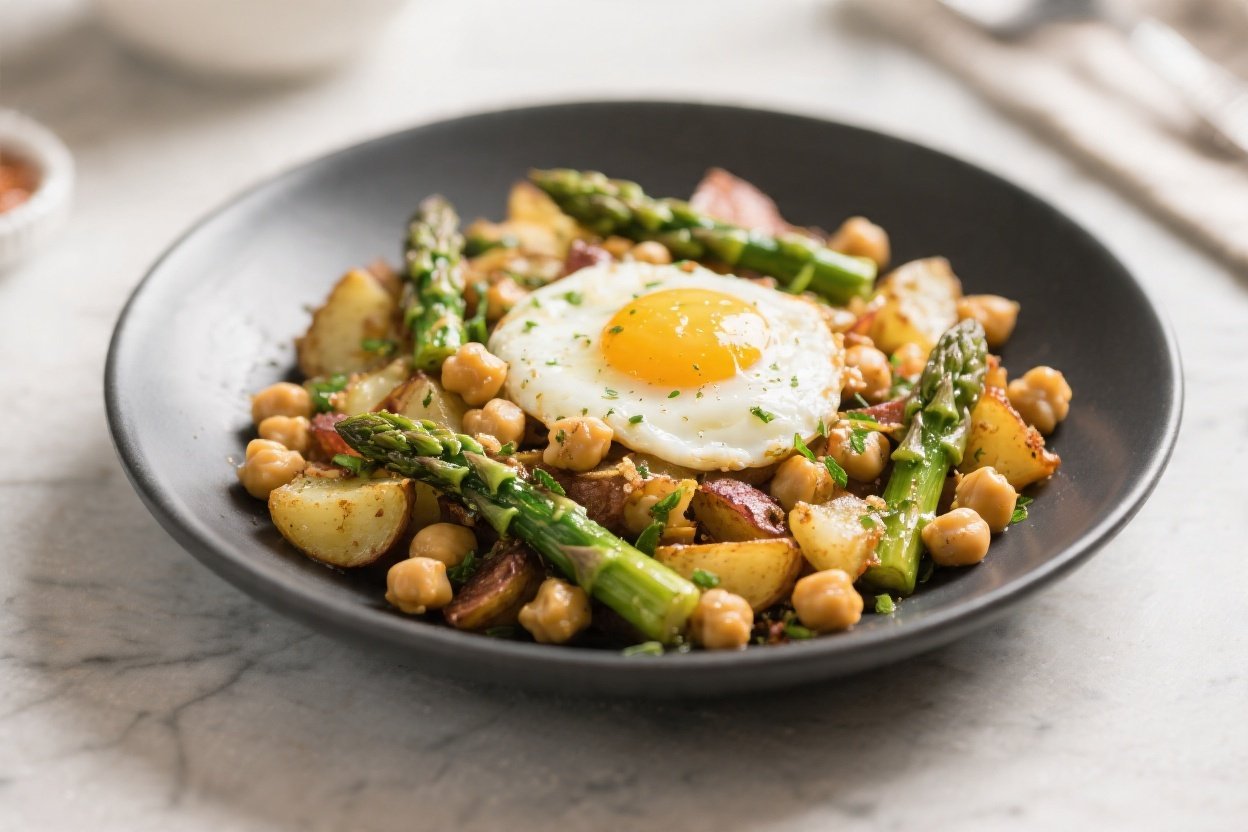
This is the kind of breakfast-for-dinner dish that feels special without asking much of you. Tender potatoes, crisp-tender asparagus, and golden chickpeas form a hearty base, while lemon, herbs, and olive oil bring sunny Mediterranean flavor. A couple of poached eggs on top turn it into a complete, comforting meal.
It’s simple, colorful, and ready in about 35 minutes. Whether you’re feeding two or four, this skillet earns a spot in the weekly rotation.
What Makes This Special
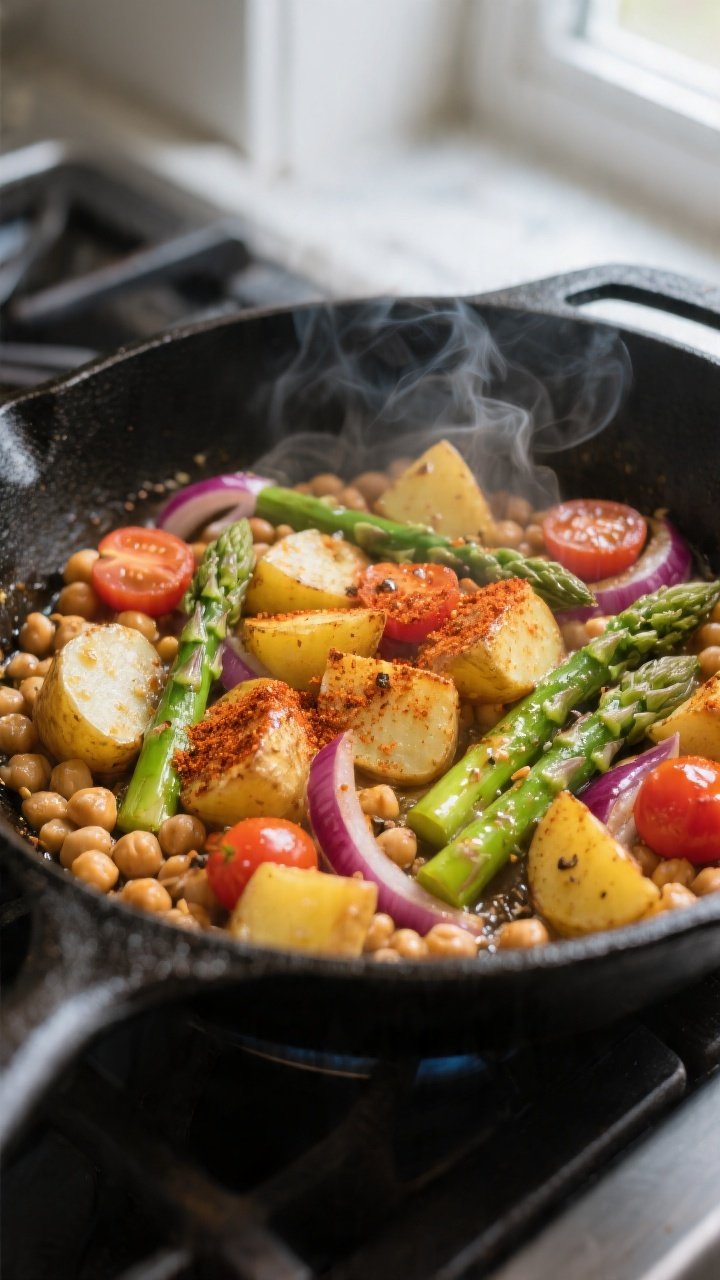
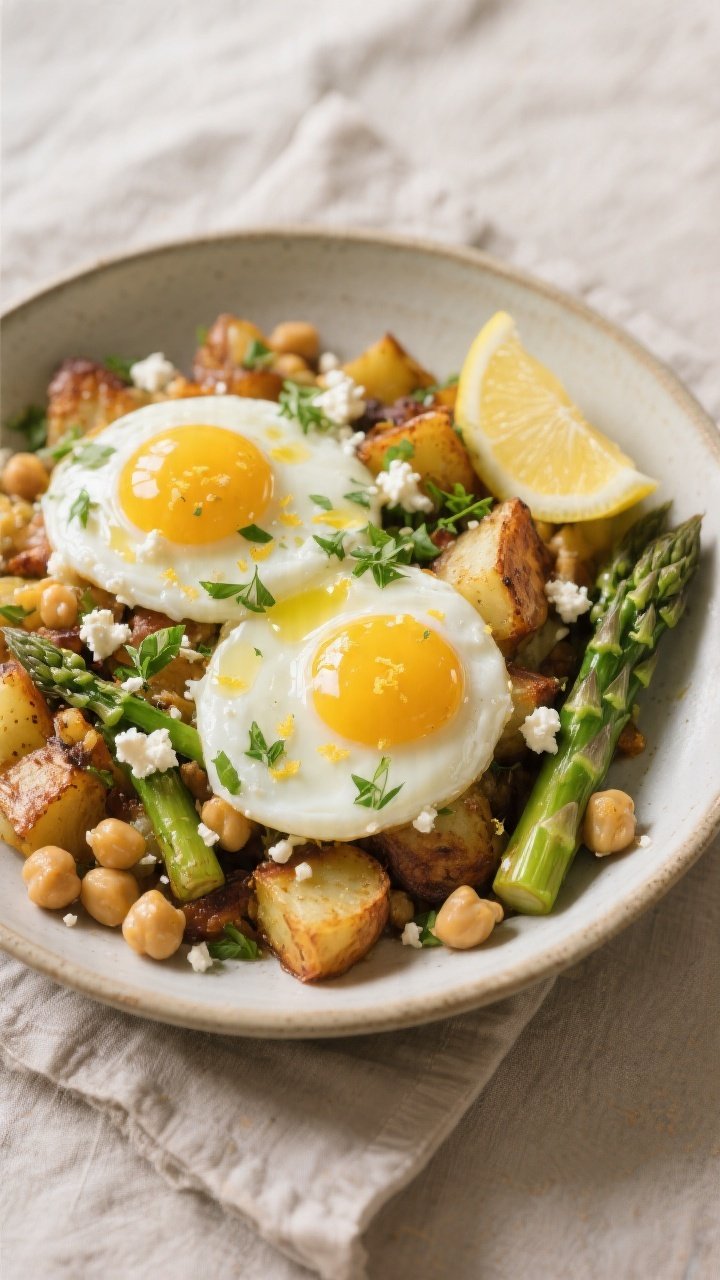
This hash balances hearty and fresh in a way that keeps you coming back for another bite. You get crispy edges on the potatoes, a little snap from asparagus, and creamy yolks that act like a sauce.
Chickpeas add protein and texture, and the lemony-herb finish keeps everything bright. Best of all, it uses pantry and fridge staples, so it’s easy to pull together any night of the week.
What You’ll Need
- Yukon Gold or red potatoes (about 1.5 pounds), diced into 1/2-inch cubes
- Asparagus (1 bunch), trimmed and cut into 1–2 inch pieces
- Cooked chickpeas (1 can, 15 oz), drained and rinsed
- Olive oil (3–4 tablespoons), divided
- Red onion (1 small), thinly sliced
- Garlic (2–3 cloves), minced
- Cherry tomatoes (1 cup), halved (optional but great for color and acidity)
- Smoked paprika (1 teaspoon)
- Ground cumin (1/2 teaspoon)
- Crushed red pepper flakes (pinch), optional
- Lemon (1), zested and juiced
- Fresh parsley or dill (small handful), chopped
- Eggs (4), for poaching
- White vinegar (1 tablespoon), for poaching water
- Sea salt and black pepper, to taste
- Feta or goat cheese (optional), crumbled for serving
How to Make It
- Par-cook the potatoes: Add diced potatoes to a pot of salted cold water. Bring to a boil and cook 5–7 minutes, until just tender but not falling apart. Drain well and let steam off for a minute so they dry.
- Heat the skillet: Set a large skillet over medium-high heat and add 2 tablespoons olive oil. When it shimmers, add the potatoes in an even layer. Sprinkle with salt and pepper. Cook 6–8 minutes, turning occasionally, until golden and crisp on several sides.
- Add aromatics: Push the potatoes to one side. Add 1 tablespoon more oil, then the sliced onion. Sauté 2–3 minutes until softened, then stir in the garlic and cook 30 seconds until fragrant.
- Season it up: Sprinkle smoked paprika, cumin, and red pepper flakes over the pan. Stir to coat potatoes and onions. Add the chickpeas and cook 2–3 minutes so they pick up color and spice.
- Cook the asparagus: Add asparagus and a pinch of salt. Cook 3–4 minutes, stirring, until bright green and crisp-tender. If using tomatoes, add them in the last 2 minutes just to warm and soften slightly.
- Finish with lemon and herbs: Turn off the heat. Add lemon zest, 1–2 teaspoons lemon juice, and most of the chopped herbs. Drizzle with a little more olive oil. Taste and adjust salt, pepper, and lemon.
- Poach the eggs: Bring a medium saucepan of water to a gentle simmer. Add vinegar. Crack each egg into a small cup, then slide it into the water. Poach 3–4 minutes for runny yolks. Remove with a slotted spoon and drain on a paper towel.
- Serve: Spoon the hash into shallow bowls, top each with a poached egg, and finish with remaining herbs. Add a crumble of feta or goat cheese if you like, and a final squeeze of lemon.
Storage Instructions
- Hash: Store leftovers (without eggs) in an airtight container in the fridge for up to 3 days. Reheat in a skillet with a splash of water or oil over medium heat until hot.
- Poached eggs: Best made fresh. If needed, you can poach ahead for 1 day. Chill in iced water, then store in water in the fridge. Rewarm for 30–45 seconds in hot (not boiling) water before serving.
- Freezing: Not recommended. Potatoes and asparagus can turn mushy when thawed.
Why This is Good for You
This skillet leans on whole, minimally processed ingredients. Potatoes offer potassium and fiber, especially if you keep the skins on. Chickpeas bring plant protein and more fiber to help keep you full. Asparagus adds vitamins A, C, and K, plus a fresh, springy bite. Cooking with olive oil provides heart-friendly fats, and finishing with lemon boosts flavor without extra sodium.
A poached egg tops it off with high-quality protein and nutrients like choline and B12.
Pitfalls to Watch Out For
- Soggy potatoes: Dry them well after boiling so they crisp. Don’t crowd the pan; use a large skillet.
- Overcooked asparagus: Add it near the end and pull the pan off heat once it’s bright green and tender-crisp.
- Under-seasoning: Potatoes love salt. Taste at the end and adjust with salt, pepper, and lemon juice.
- Cloudy poaching water: Keep the water at a gentle simmer, not a rolling boil. Crack eggs into cups first for easier, neater transfers.
- Dry hash: A final drizzle of olive oil and a squeeze of lemon bring moisture and shine back to the pan.
Variations You Can Try
- Swap the veg: Use green beans, zucchini, or bell pepper if asparagus isn’t available.
- Change the spice: Try za’atar, oregano, or a pinch of turmeric in place of the paprika and cumin.
- Add greens: Stir in a few handfuls of baby spinach or chopped kale at the end to wilt.
- Make it crispy: Instead of poached, top with a jammy 7-minute egg or a crispy fried egg.
- Go dairy-forward: Finish with feta, ricotta salata, or a dollop of labneh for creamy tang.
- Protein boost: Add flaked canned tuna, leftover roasted chicken, or sautéed chicken sausage.
- Spice lovers: Swirl in harissa or spoon on chili crisp right before serving.
FAQ
Can I skip par-boiling the potatoes?
You can, but you’ll need to cook them longer in the skillet to get tender centers and crispy edges. Par-boiling shaves off time and gives a better texture. If skipping, cut the potatoes smaller (about 3/8 inch) and cook over medium heat, stirring occasionally, until tender.
What type of potatoes work best?
Yukon Golds are ideal because they hold their shape and get creamy inside.
Red potatoes also work well. Russets can crisp nicely, but they’re more likely to break apart unless handled gently.
How do I keep poached eggs from feathering?
Use very fresh eggs, keep the water at a bare simmer, and add a splash of vinegar. Crack each egg into a small cup and slide it gently into the water.
You can also give the water a gentle swirl before adding the egg to help the white wrap around the yolk.
Can I make this vegan?
Yes. Skip the eggs and finish with extra olive oil and lemon. A spoonful of hummus or a sprinkle of toasted pine nuts adds richness.
If you like, use a plant-based feta for the salty finish.
What should I serve with this?
Warm pita or crusty bread is perfect for soaking up the yolk. A simple arugula salad with lemon and olive oil pairs well. If you want more sauce, a quick garlic-yogurt or tahini drizzle is great.
How can I meal-prep this?
Boil and chill the potatoes in advance.
You can also chop the asparagus and onion a day ahead. When ready, crisp the potatoes, add aromatics and chickpeas, then asparagus. Poach eggs fresh or rewarm previously poached eggs in hot water for a minute.
Can I roast the potatoes instead?
Absolutely.
Toss diced potatoes with olive oil, salt, and pepper. Roast at 425°F (220°C) for 20–25 minutes until golden, then finish the hash on the stovetop with onions, spices, chickpeas, and asparagus.
In Conclusion
This Mediterranean potato hash is bright, comforting, and weeknight-friendly. It layers simple ingredients into something that tastes restaurant-worthy, without fuss.
Keep the method, swap in the vegetables you have, and finish with lemon, herbs, and those silky poached eggs. It’s a fast path to a colorful, satisfying meal any time of day.
Mediterranean Potato Hash with Asparagus, Chickpeas & Poached Eggs – A Bright, Satisfying Skillet Meal
Ingredients
- Yukon Gold or red potatoes (about 1.5 pounds), diced into 1/2-inch cubes
- Asparagus (1 bunch), trimmed and cut into 1–2 inch pieces
- Cooked chickpeas (1 can, 15 oz), drained and rinsed
- Olive oil (3–4 tablespoons), divided
- Red onion (1 small), thinly sliced
- Garlic (2–3 cloves), minced
- Cherry tomatoes (1 cup), halved (optional but great for color and acidity)
- Smoked paprika (1 teaspoon)
- Ground cumin (1/2 teaspoon)
- Crushed red pepper flakes (pinch), optional
- Lemon (1), zested and juiced
- Fresh parsley or dill (small handful), chopped
- Eggs (4), for poaching
- White vinegar (1 tablespoon), for poaching water
- Sea salt and black pepper, to taste
- Feta or goat cheese (optional), crumbled for serving
Instructions
- Par-cook the potatoes: Add diced potatoes to a pot of salted cold water. Bring to a boil and cook 5–7 minutes, until just tender but not falling apart. Drain well and let steam off for a minute so they dry.
- Heat the skillet: Set a large skillet over medium-high heat and add 2 tablespoons olive oil. When it shimmers, add the potatoes in an even layer. Sprinkle with salt and pepper. Cook 6–8 minutes, turning occasionally, until golden and crisp on several sides.
- Add aromatics: Push the potatoes to one side. Add 1 tablespoon more oil, then the sliced onion. Sauté 2–3 minutes until softened, then stir in the garlic and cook 30 seconds until fragrant.
- Season it up: Sprinkle smoked paprika, cumin, and red pepper flakes over the pan. Stir to coat potatoes and onions. Add the chickpeas and cook 2–3 minutes so they pick up color and spice.
- Cook the asparagus: Add asparagus and a pinch of salt. Cook 3–4 minutes, stirring, until bright green and crisp-tender. If using tomatoes, add them in the last 2 minutes just to warm and soften slightly.
- Finish with lemon and herbs: Turn off the heat. Add lemon zest, 1–2 teaspoons lemon juice, and most of the chopped herbs. Drizzle with a little more olive oil. Taste and adjust salt, pepper, and lemon.
- Poach the eggs: Bring a medium saucepan of water to a gentle simmer. Add vinegar. Crack each egg into a small cup, then slide it into the water. Poach 3–4 minutes for runny yolks. Remove with a slotted spoon and drain on a paper towel.
- Serve: Spoon the hash into shallow bowls, top each with a poached egg, and finish with remaining herbs. Add a crumble of feta or goat cheese if you like, and a final squeeze of lemon.