I love making this dish when I want something comforting but elegant, a recipe that feels like a special occasion without demanding hours in the kitchen. It’s ideal for a weeknight dinner that still feels celebratory, or for a casual gathering where you want to impress without stress. The pork stays juicy with a quick sear, and the Dijon cream sauce adds bright tang and richness that pairs beautifully with simple sides. It’s also a dependable option for meal prep, since the leftovers reheat gently and the flavors deepen overnight.
This dish shines because it uses straightforward ingredients you can find in any grocery store, and the steps come together quickly. You’ll find that a few pantry staples—mustard, cream, white wine or stock, and fresh herbs—do all the heavy lifting to create a restaurant-worthy sauce in minutes. Let’s break down exactly how to make Pork Tenderloin with Dijon Cream Sauce, along with helpful tips and variations to make it your own.
Ingredients You’ll Need for Pork Tenderloin with Dijon Cream Sauce
Good ingredients matter here because the whole dish rests on a clean pork flavor and a bright, velvety sauce.
The pork tenderloin, trimmed and tied if needed, forms the tender, lean centerpiece. Look for a piece that feels firm and pinkish-red with a fine grain. For the seasoning, you’ll use salt, pepper, and a touch of olive oil to help with the sear and a bit of garlic powder or fresh minced garlic for aroma. The sauce leans on Dijon mustard for its sharp, tangy kick and heavy cream to create a lush, luxe finish. A splash of dry white wine or chicken stock lightens the richness, while fresh thyme and a kiss of lemon zest brighten the plate. For finishing touches, keep a little extra cream on hand if you want to loosen the sauce, and have chopped parsley ready for a fresh green contrast.
First, gather the pork tenderloin, optional but recommended kitchen string for tying, and your pantry essentials. Then assemble the marinade and the sauce: Dijon mustard to anchor the sauce, heavy cream to create that satin texture, a small splash of wine or stock to balance, and fresh thyme for aroma. Finally, prepare any optional toppings like sautéed mushrooms or bitter greens if you want to add a little extra depth. This combination results in a dish that tastes as good as it smells while keeping cleanup minimal.
Ingredients You’ll Need for Pork Tenderloin with Dijon Cream Sauce
To start, you’ll need a pork tenderloin (about 1 to 1.5 pounds), trimmed and ready. This cut cooks quickly and stays tender when you don’t overcook it. For the seasonings, gather kosher salt and black pepper, plus a light drizzle of olive oil to encourage a golden crust. If you like a deeper aroma, have a small amount of garlic on hand, either as powder or fresh minced garlic.
For the Dijon cream sauce, you’ll use Dijon mustard (preferably a smooth, medium-spicy variety), heavy cream, a splash of dry white wine or chicken stock to loosen the sauce and add depth, and fresh thyme leaves. A little lemon zest can punch up the brightness, and a pinch of salt and pepper to taste will finish the sauce just right.
Base flavors come from a small amount of aromatic ingredients: onion or shallot for the sauce base, and optional mushrooms if you want a savory, earthier match to the pork. If you’re cooking for kids or avoiding dairy, you can substitute the cream with a full-fat coconut milk or a milk-thickened roux for a lighter yet still silky texture, though the classic dairy version is truly irresistible here.
Optional toppings can include a handful of parsley or chives for color and freshness, and even a few crisp pancetta bits if you want a savory crunch to contrast the creamy sauce. The beauty of this recipe is that it remains flexible, so you can tailor it to what you have on hand while keeping the core technique intact.
How to Make the Dijon Cream Sauce and Prep the Pork
![[HERO] Pork tenderloin slice on rustic wooden board, shallow depth](https://flavorterrace.com/wp-content/uploads/2026/03/temp_1774708036758.jpg)
This section covers the two big components: searing the pork to a caramelized crust, then building a silky Dijon cream sauce that clings to every slice.
- Season the pork tenderloin generously with salt and black pepper, and pat it dry so the surface will sear properly.
- Heat a tablespoon of olive oil in a skillet over medium-high heat until shimmering, then sear the pork on all sides until deeply golden.
- Remove the pork and set it aside to rest; this keeps the juices from running out when you slice it.
- In the same pan, reduce the heat to medium and sauté a small amount of minced garlic or a minced shallot for 30 seconds until fragrant.
- Stir in Dijon mustard and a splash of white wine or stock, scraping up any browned bits from the bottom.
- Pour in heavy cream, stirring to blend, and simmer until the sauce thickens to coat the back of a spoon; season with salt and pepper to taste.
- Return the sliced pork to the pan for a brief reheat, coating the pieces in the glossy sauce; finish with thyme and a touch of lemon zest if using.
How to Cook Pork Tenderloin for Best Results
Timing is everything with pork tenderloin, because it can dry out quickly if overcooked. You want an immediate, flavorful sear and just enough heat remaining to finish cooking through the center even after you rest the meat.
- Preheat the pan well so the surface can form a good crust, then avoid moving the meat too much during the initial sear.
- Use a quick sear on all sides, then let the meat rest for 5 to 10 minutes so the juices redistribute for a tender slice.
- If you prefer a more precise method, finish the pork in a 425°F oven after searing, checking for an internal temperature of 145°F, then rest before slicing.
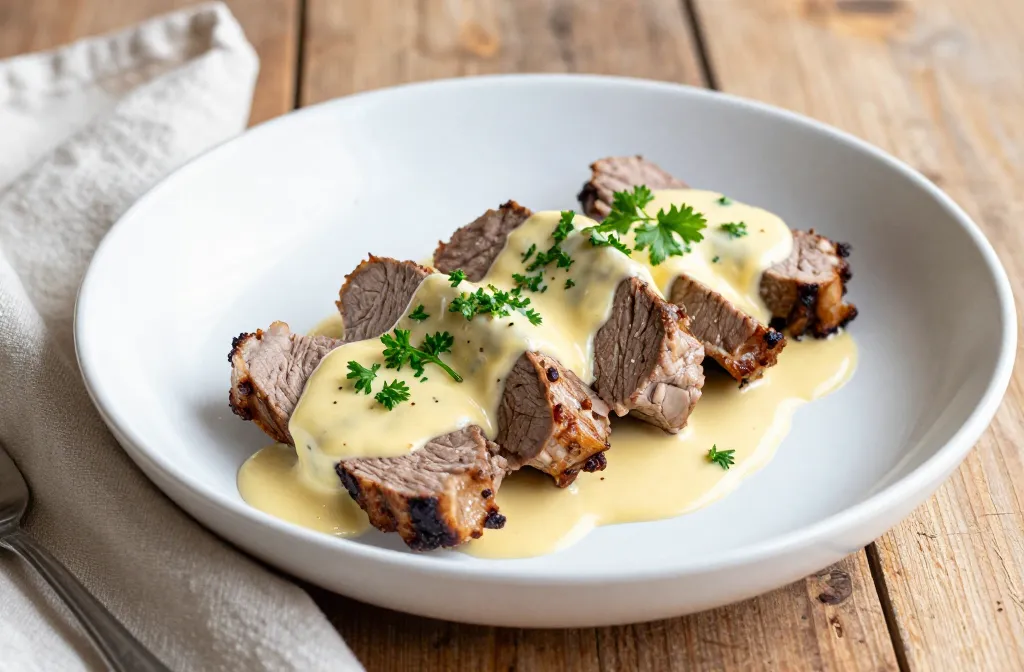
- Slice the pork into thick medallions or clean rounds, and spoon the Dijon cream sauce over the top for serving.
Assembling the Perfect Pork Tenderloin with Dijon Cream Sauce
With the pork sliced and the sauce glossy, you’ll assemble the dish in a way that makes the plate feel inviting and coherent.
- Arrange the pork medallions on warm plates and spoon generous amounts of sauce over them, letting some edge onto the plate for a glossy finish.
- Scatter a little fresh thyme or chopped parsley for color and aroma; if you added lemon zest to the sauce, a tiny twist of zest on top is a nice finishing touch.
- Offer optional sides and keep the extra sauce on the side for anyone who wants a little more richness with each bite.
Tips for the Best Pork Tenderloin with Dijon Cream Sauce at Home
![[RECIPE 1] Dijon cream sauce swirl in white bowl, soft wood backdrop](https://flavorterrace.com/wp-content/uploads/2026/03/temp_1774708040425.jpg)
- Choose a pork tenderloin that is firm to the touch with a light pink color; avoid any that look dull or grayish.
- Pat the meat dry before searing to ensure a good crust; moisture on the surface can steam the meat rather than sear it.
- Keep the sauce simmering gently; a rapid boil can break the emulsion, causing the cream to separate.
- Balance the flavor with a touch of acidity—lemon zest or a splash of wine helps cut the richness of the cream.
- Make-ahead tip: prepare the sauce up to the point of thickening, then reheat gently with a splash of cream to restore silkiness when ready to serve.
Delicious Variations to Try
- Spicy Dijon Twist: Add a pinch of crushed red pepper flakes to the sauce for a warming heat that sings with the richness.
- Herb-Studded: Replace thyme with a mix of tarragon and rosemary for a more vibrant, aromatic finish.
- Protein Swap: Use lamb chops or chicken breasts in the same Dijon cream framework for a different but equally elegant result.
- Dairy-Free: Make the sauce with coconut cream and a touch of olive oil to keep it silky without dairy, finishing with a squeeze of lemon.
- Low-Carb/Gluten-Free: Serve with sautéed greens and mushrooms instead of starchy sides, and ensure the chicken stock is gluten-free if needed.
- Vegetarian Option: Create a Dijon mushroom cream sauce using a hearty mushroom medley and plain non-dairy milk to keep the texture rich.
What to Serve with Pork Tenderloin with Dijon Cream Sauce
- Creamy mashed potatoes or mashed cauliflower to soak up the sauce
- Buttery green beans, sautéed with a touch of garlic
- Golden roasted carrots or parsnips for a sweet contrast
- Herbed or lemony quinoa or wild rice for a hearty grain option
- A crisp green salad with a light vinaigrette to balance richness
Recipe FAQ’s
Can I make this ahead and reheat later?
Yes. You can prepare the Dijon cream sauce in advance and reheat gently, adding a splash of cream or stock if it thickens too much. The pork can be cooked ahead and sliced, then warmed in the sauce just before serving.
Can I substitute the pork with another protein?
Absolutely. Chicken breast or thighs, or even a boneless pork loin cut, can work with the same Dijon cream technique. Adjust cook times to ensure the protein reaches a safe, juicy internal temperature without overcooking.
What equipment do I need?
A sturdy skillet or frying pan with a thick bottom is ideal for an even sear. A meat thermometer helps ensure precision, and a wooden spoon or silicone spatula is perfect for deglazing the pan and scraping browned bits.
Pork Tenderloin with Dijon Cream Sauce
Ingredients
For the Pork
- 1 lb pork tenderloin trimmed of silver skin
- 1 tbsp olive oil
- 1/2 teaspoon salt
- 1/4 teaspoon frshly ground black pepper
- 1/2 teaspoon garlic powder or 1 clove garlic minced
For the Dijon Cream Sauce
- 1 small shallot finely chopped
- 2 tbsp Dijon mustard
- 1/4 cup dry white wine or chicken stock for deglazing
- 1/2 cup heavy cream
- 1 teaspoon fresh thyme leaves
- 1 teaspoon lemon zest
- Salt and freshly ground black pepper, to taste
Optional for Serving
- Creamy mashed potatoes or egg noodles
- Roasted asparagus, green beans, or steamed broccolini
- Crusty bread for mopping up the sauce
Instructions
Step 1: Prep and Sear the Pork
- Pat the pork tenderloin thoroughly dry with paper towels — this is the most important step for achieving a deep, golden crust. Season all over with salt, pepper, and garlic powder if using. Heat the olive oil in a large oven-safe skillet over medium-high heat until shimmering. Lay the tenderloin in the pan and sear without moving for 2–3 minutes per side, rotating to brown all surfaces evenly — about 8–10 minutes total. The crust should be deeply golden and caramelized. Transfer to a plate and set aside while you build the sauce; the pork will finish in the sauce momentarily.
Step 2: Build the Sauce Base
- Reduce the heat to medium. If using a shallot, add it to the same pan now and cook for 1–2 minutes, stirring, until softened and lightly golden. Add the minced garlic if using and cook for 30 seconds until fragrant. Add the Dijon mustard and stir it into the pan, letting it cook for about 30 seconds — this brief step mellows the sharpness and deepens its flavor. Pour in the white wine or chicken stock and scrape up all the browned bits from the bottom of the pan with a wooden spoon; those caramelized bits are pure concentrated flavor that transforms the sauce.
Step 3: Finish the Cream Sauce
- Pour in the heavy cream and stir to combine. Increase the heat slightly to bring the sauce to a gentle simmer and cook for 3–4 minutes, stirring occasionally, until the sauce has reduced and thickened enough to coat the back of a spoon. Stir in the fresh thyme leaves and lemon zest if using. Taste and season carefully with salt and pepper — the Dijon brings its own saltiness, so go gradually.
Step 4: Finish the Pork in the Sauce
- Return the seared pork tenderloin to the skillet and spoon the sauce over the top. Cook over medium-low heat for a further 4–6 minutes, turning once, until the internal temperature of the pork reaches 145°F (63°C) on an instant-read thermometer. Remove from the heat and let the pork rest in the pan for 5 minutes — this allows the juices to redistribute and keeps every slice moist and tender.
Step 5: Slice and Serve
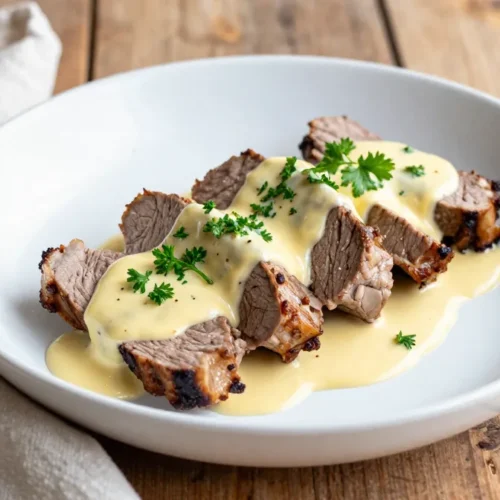
- Transfer the tenderloin to a cutting board and slice into ½-inch medallions on a slight diagonal for a clean, elegant presentation. Arrange on a warm serving plate or individual plates and spoon the Dijon cream sauce generously over each portion. Finish with fresh parsley, a few extra thyme sprigs, and an optional squeeze of lemon juice to brighten the richness of the sauce. Serve immediately with mashed potatoes, roasted vegetables, or crusty bread alongside.