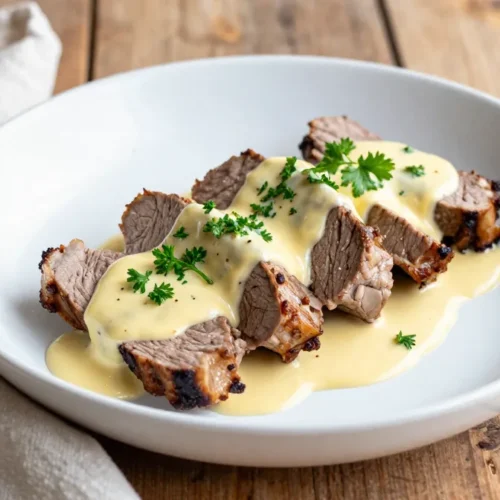
Pork Tenderloin with Dijon Cream Sauce
Pork Tenderloin with Dijon Cream Sauce is a comforting, elegantly simple dish where lean pork meets a bright, silky sauce. The crusty sear locks in moisture while the Dijon cream adds a luxurious coat that clings to each slice. This is a versatile weeknight centerpiece or a polished weekend meal that still comes together quickly.
Ingredients
For the Pork
- 1 lb pork tenderloin trimmed of silver skin
- 1 tbsp olive oil
- 1/2 teaspoon salt
- 1/4 teaspoon frshly ground black pepper
- 1/2 teaspoon garlic powder or 1 clove garlic minced
For the Dijon Cream Sauce
- 1 small shallot finely chopped
- 2 tbsp Dijon mustard
- 1/4 cup dry white wine or chicken stock for deglazing
- 1/2 cup heavy cream
- 1 teaspoon fresh thyme leaves
- 1 teaspoon lemon zest
- Salt and freshly ground black pepper, to taste
Optional for Serving
- Creamy mashed potatoes or egg noodles
- Roasted asparagus, green beans, or steamed broccolini
- Crusty bread for mopping up the sauce
Instructions
Step 1: Prep and Sear the Pork
- Pat the pork tenderloin thoroughly dry with paper towels — this is the most important step for achieving a deep, golden crust. Season all over with salt, pepper, and garlic powder if using. Heat the olive oil in a large oven-safe skillet over medium-high heat until shimmering. Lay the tenderloin in the pan and sear without moving for 2–3 minutes per side, rotating to brown all surfaces evenly — about 8–10 minutes total. The crust should be deeply golden and caramelized. Transfer to a plate and set aside while you build the sauce; the pork will finish in the sauce momentarily.
Step 2: Build the Sauce Base
- Reduce the heat to medium. If using a shallot, add it to the same pan now and cook for 1–2 minutes, stirring, until softened and lightly golden. Add the minced garlic if using and cook for 30 seconds until fragrant. Add the Dijon mustard and stir it into the pan, letting it cook for about 30 seconds — this brief step mellows the sharpness and deepens its flavor. Pour in the white wine or chicken stock and scrape up all the browned bits from the bottom of the pan with a wooden spoon; those caramelized bits are pure concentrated flavor that transforms the sauce.
Step 3: Finish the Cream Sauce
- Pour in the heavy cream and stir to combine. Increase the heat slightly to bring the sauce to a gentle simmer and cook for 3–4 minutes, stirring occasionally, until the sauce has reduced and thickened enough to coat the back of a spoon. Stir in the fresh thyme leaves and lemon zest if using. Taste and season carefully with salt and pepper — the Dijon brings its own saltiness, so go gradually.
Step 4: Finish the Pork in the Sauce
- Return the seared pork tenderloin to the skillet and spoon the sauce over the top. Cook over medium-low heat for a further 4–6 minutes, turning once, until the internal temperature of the pork reaches 145°F (63°C) on an instant-read thermometer. Remove from the heat and let the pork rest in the pan for 5 minutes — this allows the juices to redistribute and keeps every slice moist and tender.
Step 5: Slice and Serve
- Transfer the tenderloin to a cutting board and slice into ½-inch medallions on a slight diagonal for a clean, elegant presentation. Arrange on a warm serving plate or individual plates and spoon the Dijon cream sauce generously over each portion. Finish with fresh parsley, a few extra thyme sprigs, and an optional squeeze of lemon juice to brighten the richness of the sauce. Serve immediately with mashed potatoes, roasted vegetables, or crusty bread alongside.