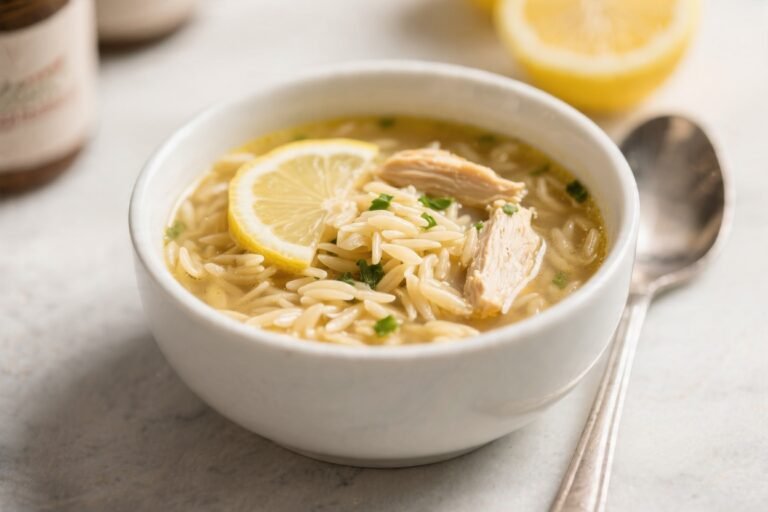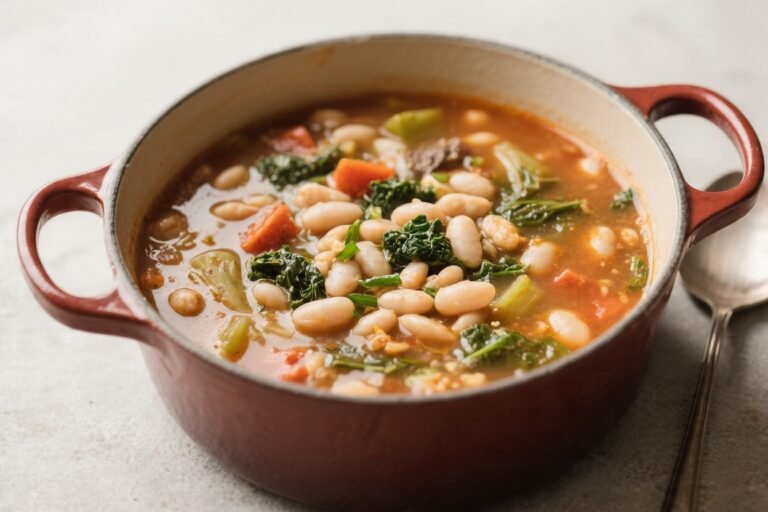
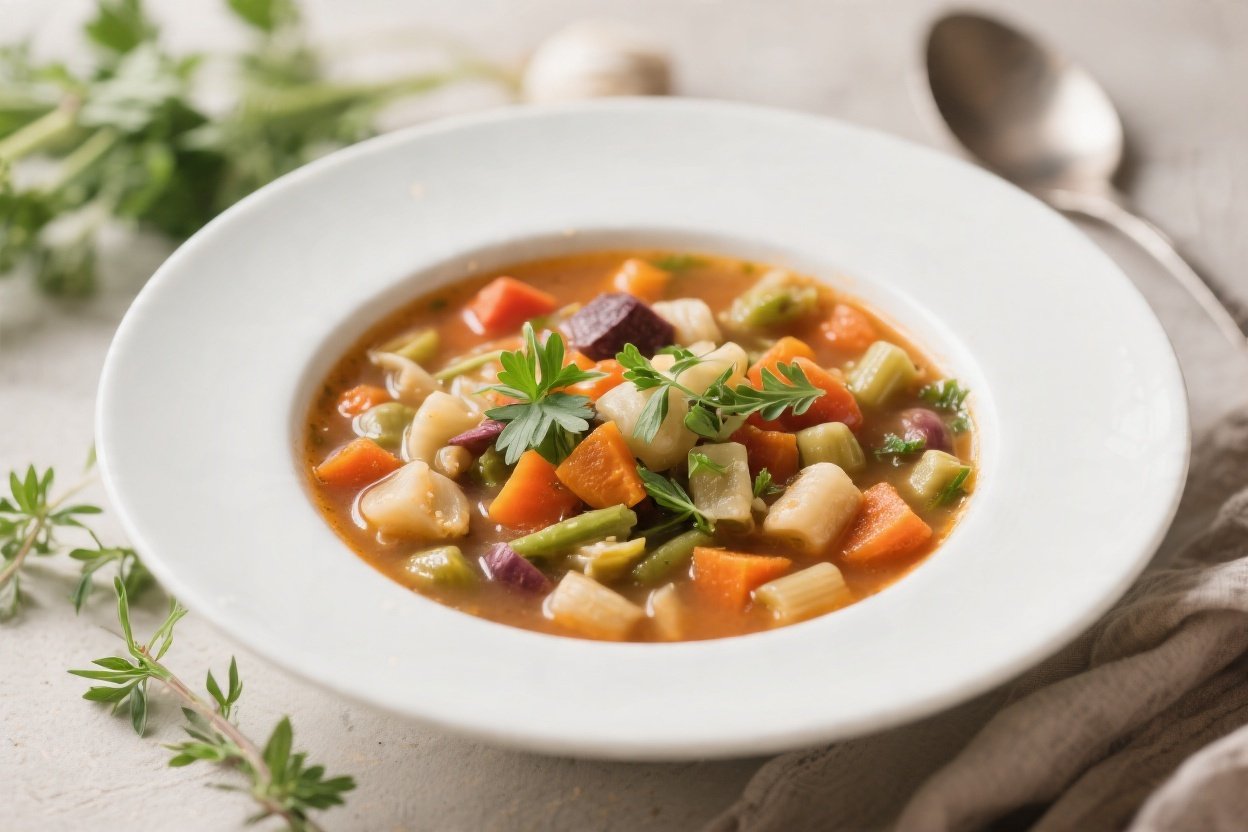
Spring calls for a soup that’s fresh, colorful, and full of life. This minestrone is exactly that—loaded with tender vegetables, fragrant herbs, and a clean, vibrant broth. It’s cozy without feeling heavy, and it tastes like the first warm day after a long winter.
You’ll use what’s in season, make quick swaps if needed, and end up with a bowl that feels both wholesome and deeply satisfying. It’s simple enough for a weeknight but pretty enough to serve to friends.
What Makes This Special
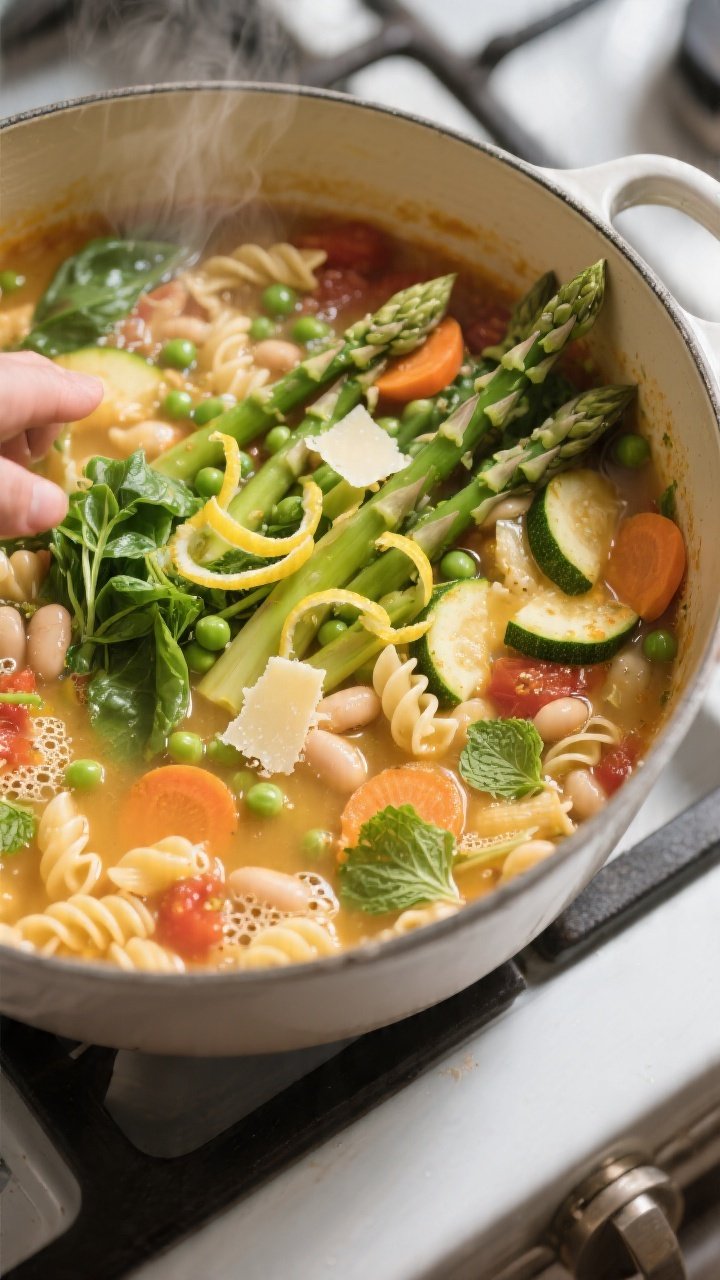
- Season-driven: This soup leans on spring stars like asparagus, peas, leeks, and baby spinach for a fresh, green finish.
- Herb forward: A mix of basil, parsley, and mint brings brightness and lift, making the broth feel lively.
- Light yet filling: White beans and small pasta make it satisfying without weighing you down.
- Flexible: You can swap in what you have—zucchini for asparagus, chard for spinach, or farro instead of pasta.
- Make-ahead friendly: The broth and veg hold up well, and you can cook the pasta separately to keep it from getting mushy.
Ingredients
- Olive oil: 2 tablespoons
- Leek: 1 large, white and light green parts only, thinly sliced (or 1 medium onion, diced)
- Garlic: 3–4 cloves, minced
- Carrots: 2 medium, diced
- Celery: 2 stalks, diced
- Zucchini: 1 medium, diced
- Asparagus: 1 bunch (about 1 pound), trimmed and cut into 1-inch pieces
- Peas: 1 cup fresh or frozen
- Baby spinach or tender greens: 3–4 cups, loosely packed
- Cannellini beans: 1 can (15 ounces), drained and rinsed
- Small pasta: 3/4 cup (ditalini, small shells, or orzo)
- Vegetable broth: 6 cups (low-sodium)
- Crushed tomatoes: 1 cup (optional for a lightly blushed broth)
- Lemon: 1, zest and juice
- Fresh basil: 1/2 cup, chopped
- Fresh parsley: 1/4 cup, chopped
- Fresh mint: 2 tablespoons, chopped (optional but lovely)
- Parmesan rind: 1 piece (optional, skip for vegan)
- Salt and black pepper: to taste
- Red pepper flakes: a pinch (optional)
- Parmesan cheese: grated, for serving (optional)
Step-by-Step Instructions
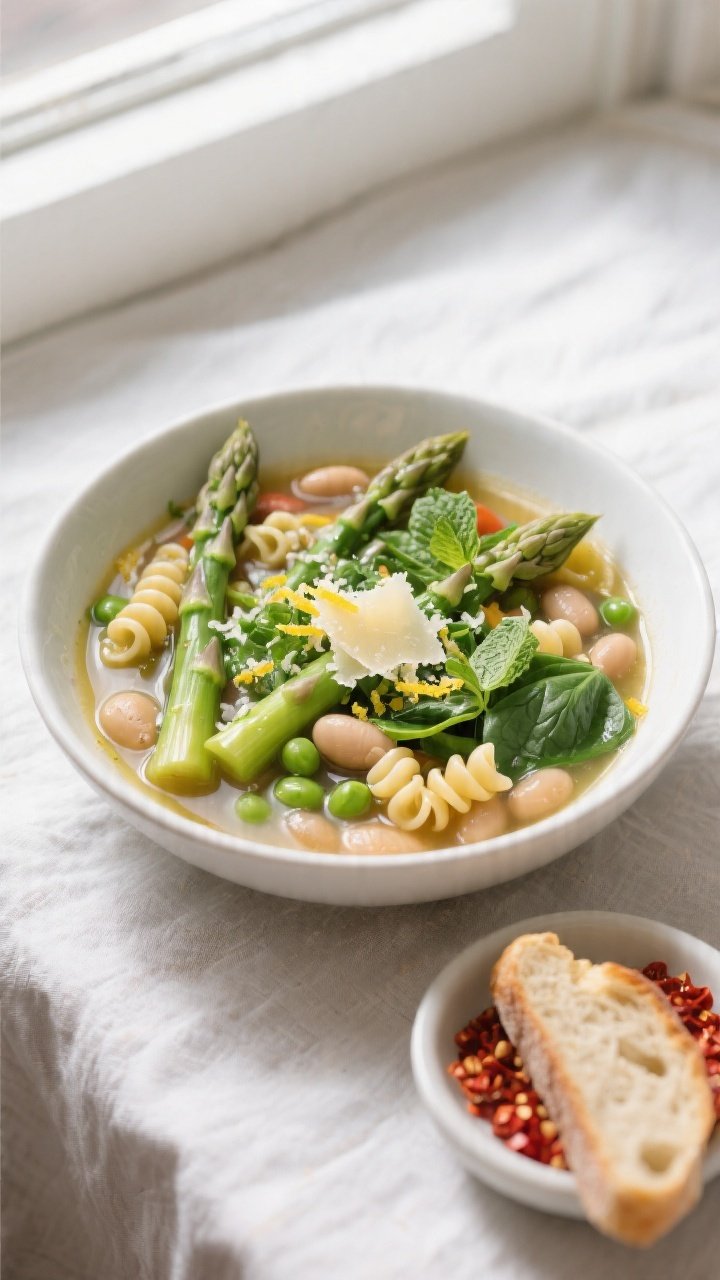
- Sweat the aromatics: Warm the olive oil in a large pot over medium heat. Add the leek (or onion) with a pinch of salt. Cook 4–5 minutes until softened and glossy. Stir in the garlic and cook 30 seconds until fragrant.
- Build the base: Add carrots and celery. Cook 5 minutes, stirring occasionally, until slightly tender. If using red pepper flakes, add them now.
- Add broth and optional tomatoes: Pour in the vegetable broth and crushed tomatoes if using. Drop in the Parmesan rind for extra depth if you have it. Bring to a gentle boil, then reduce to a simmer.
- Stagger the veg: Add zucchini and cannellini beans. Simmer 5 minutes. Then add the pasta and cook according to package directions, usually 7–9 minutes, stirring so it doesn’t stick.
- Add tender greens: When the pasta is almost done, stir in asparagus and peas. Simmer 3–4 minutes until the asparagus is just tender and peas are bright.
- Finish with greens and herbs: Turn off the heat. Stir in spinach, basil, parsley, and mint. They should wilt from the residual heat. Remove and discard the Parmesan rind.
- Brighten and season: Add lemon zest and juice. Taste and season with salt and black pepper. Adjust to your liking—more lemon for brightness, more herbs for aroma.
- Serve: Ladle into bowls. Top with a drizzle of good olive oil, a sprinkle of Parmesan if you like, and extra herbs. Serve with crusty bread.
Storage Instructions
- Refrigerator: Store in airtight containers for up to 4 days. The flavors deepen after a day.
- Keep pasta separate: If you expect leftovers, cook the pasta separately and add it to bowls when serving. This prevents it from soaking up broth and turning soft.
- Freezer: Freeze the soup without pasta and without tender greens for up to 3 months. Add fresh spinach and cooked pasta when reheating.
- Reheating: Warm gently on the stove over medium heat. Add a splash of water or broth if it thickens. Re-season with salt, pepper, and a squeeze of lemon.
Why This is Good for You
- Fiber-rich: Beans, vegetables, and whole-grain pasta (if you choose it) support digestion and steady energy.
- Vitamins and minerals: Asparagus, peas, and spinach pack folate, vitamin K, vitamin C, and iron.
- Light on saturated fat: It’s mostly vegetables and olive oil, with optional Parmesan for a savory boost.
- Hydrating and satisfying: The broth keeps it light, while the beans and pasta make it filling.
Pitfalls to Watch Out For
- Overcooking greens and asparagus: Add them at the end to keep them bright and crisp-tender.
- Mushy pasta: Cook pasta just to al dente, or better yet, cook it separately and add to each bowl.
- Under-seasoned broth: Taste at multiple points. Spring vegetables are delicate; they need enough salt, pepper, and lemon to shine.
- Too many tomatoes: A little crushed tomato is nice, but too much can drown out the fresh herbs. Keep it light or skip entirely.
- Skipping the zest: Lemon zest adds high notes that make everything pop. Don’t forget it.
Variations You Can Try
- Grain swap: Use farro, barley, or quinoa instead of pasta. Cook separately and stir in before serving.
- Protein boost: Add shredded rotisserie chicken or sautéed shrimp at the end. For a vegetarian protein lift, add extra beans.
- Herb twist: Try dill and chives in place of mint and basil for a different spring vibe.
- Pesto finish: Swirl in a spoonful of basil pesto right before serving for a richer, herb-packed bowl.
- Brothy or hearty: Add more broth for a lighter style, or double the beans and veg for a thicker, stew-like feel.
- Dairy-free umami: Skip Parmesan and add a splash of soy sauce or a teaspoon of white miso to the pot for depth.
FAQ
Can I make this gluten-free?
Yes. Use gluten-free small pasta or swap in cooked quinoa or rice.
Be sure your broth is certified gluten-free.
What if I don’t have leeks?
Use a yellow onion or two shallots. The flavor will still be sweet and aromatic.
Can I make it in a slow cooker?
Partly. Sauté the aromatics first, then add everything except pasta, asparagus, peas, and greens to the slow cooker.
Cook on Low 4–5 hours. Add pasta (pre-cooked), asparagus, peas, and greens in the last 15–20 minutes.
How do I keep the soup bright green?
Add tender vegetables at the end, avoid boiling hard once greens are in, and finish with lemon and fresh herbs off the heat.
What’s a good substitute for cannellini beans?
Great Northern beans or chickpeas work well. If using chickpeas, simmer a bit longer so they soften into the broth.
Do I have to use tomatoes?
No.
This soup is lovely with a clear, golden broth. Tomatoes add a gentle blush and a touch of acidity, but they’re optional.
How can I make it richer?
Add the Parmesan rind while simmering, finish with a spoonful of pesto, or stir in a splash of cream at the end for a silky texture.
Can I prep this ahead?
Absolutely. Chop the vegetables and herbs up to two days in advance and store separately.
You can also cook the broth and veg, then add pasta, greens, and herbs when reheating.
In Conclusion
Spring minestrone is the kind of soup that feels good to make and even better to eat. It’s flexible, bright, and full of real flavor from simple, seasonal ingredients. With a handful of fresh herbs and a squeeze of lemon, the whole pot comes to life.
Keep this as a template, swap in what you have, and enjoy a bowl that tastes like the season.
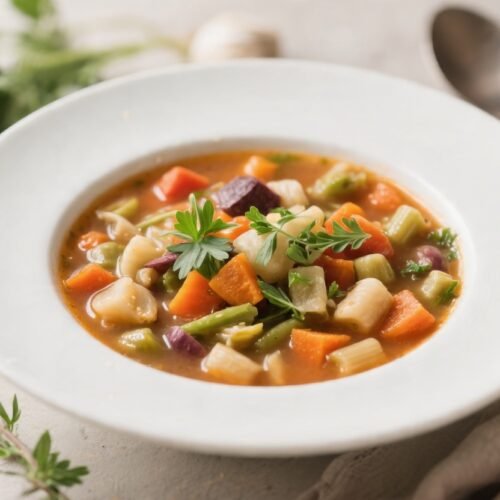
Spring Minestrone Soup with Fresh Herbs & Seasonal Vegetables - Light, Bright, and Comforting
Ingredients
- Olive oil: 2 tablespoons
- Leek: 1 large, white and light green parts only, thinly sliced (or 1 medium onion, diced)
- Garlic: 3–4 cloves, minced
- Carrots: 2 medium, diced
- Celery: 2 stalks, diced
- Zucchini: 1 medium, diced
- Asparagus: 1 bunch (about 1 pound), trimmed and cut into 1-inch pieces
- Peas: 1 cup fresh or frozen
- Baby spinach or tender greens: 3–4 cups, loosely packed
- Cannellini beans: 1 can (15 ounces), drained and rinsed
- Small pasta: 3/4 cup (ditalini, small shells, or orzo)
- Vegetable broth: 6 cups (low-sodium)
- Crushed tomatoes: 1 cup (optional for a lightly blushed broth)
- Lemon: 1, zest and juice
- Fresh basil: 1/2 cup, chopped
- Fresh parsley: 1/4 cup, chopped
- Fresh mint: 2 tablespoons, chopped (optional but lovely)
- Parmesan rind: 1 piece (optional, skip for vegan)
- Salt and black pepper: to taste
- Red pepper flakes: a pinch (optional)
- Parmesan cheese: grated, for serving (optional)
Instructions
- Sweat the aromatics: Warm the olive oil in a large pot over medium heat. Add the leek (or onion) with a pinch of salt. Cook 4–5 minutes until softened and glossy. Stir in the garlic and cook 30 seconds until fragrant.
- Build the base: Add carrots and celery. Cook 5 minutes, stirring occasionally, until slightly tender. If using red pepper flakes, add them now.
- Add broth and optional tomatoes: Pour in the vegetable broth and crushed tomatoes if using. Drop in the Parmesan rind for extra depth if you have it. Bring to a gentle boil, then reduce to a simmer.
- Stagger the veg: Add zucchini and cannellini beans. Simmer 5 minutes. Then add the pasta and cook according to package directions, usually 7–9 minutes, stirring so it doesn’t stick.
- Add tender greens: When the pasta is almost done, stir in asparagus and peas. Simmer 3–4 minutes until the asparagus is just tender and peas are bright.
- Finish with greens and herbs: Turn off the heat. Stir in spinach, basil, parsley, and mint. They should wilt from the residual heat. Remove and discard the Parmesan rind.
- Brighten and season: Add lemon zest and juice. Taste and season with salt and black pepper. Adjust to your liking—more lemon for brightness, more herbs for aroma.
- Serve: Ladle into bowls. Top with a drizzle of good olive oil, a sprinkle of Parmesan if you like, and extra herbs. Serve with crusty bread.