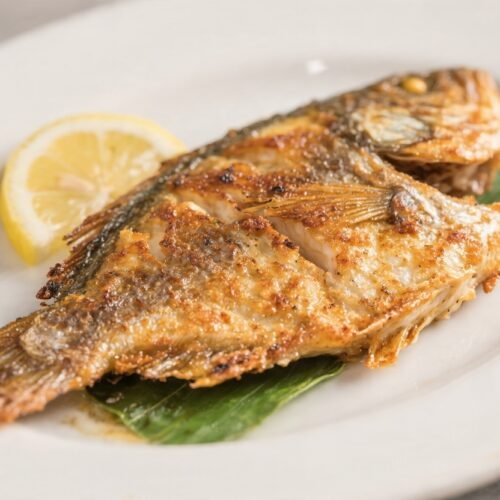
Pat the fish dry. Take the tilapia out of the package and use paper towels to dry both sides.
Removing surface moisture helps the flour stick and ensures the fish sears instead of steaming.
Season generously. Sprinkle both sides with salt, black pepper, garlic powder, and paprika. Aim for even coverage so every bite tastes balanced.
Prepare a light dredge. Add a thin layer of flour to a plate. Dredge each fillet lightly, shaking off the excess.
You want a whisper-thin coating, not a thick crust.
Heat the pan properly. Place a large skillet over medium to medium-high heat. Add 1–2 tablespoons of olive oil and 1 tablespoon of butter. When the butter melts and the mixture shimmers, the pan is ready.
Lay the fish in the pan. Place fillets in the skillet away from you to avoid splatters.
Don’t crowd the pan; cook in batches if needed. You should hear a gentle sizzle right away.
Let it sear undisturbed. Cook the first side for 3–4 minutes, depending on thickness. Don’t poke or move the fish; this helps build a crisp, golden crust.
Flip carefully. Use a thin spatula to flip the fillets.
If they resist, give them another 30 seconds. Cook the second side for 2–3 minutes, until the fish flakes easily and turns opaque.
Finish with lemon and herbs. Turn off the heat. Squeeze fresh lemon over the fish and scatter chopped parsley, dill, or chives on top for freshness.
Serve right away. Tilapia is best hot from the pan.
Pair it with rice, roasted vegetables, a simple salad, or buttery mashed potatoes.