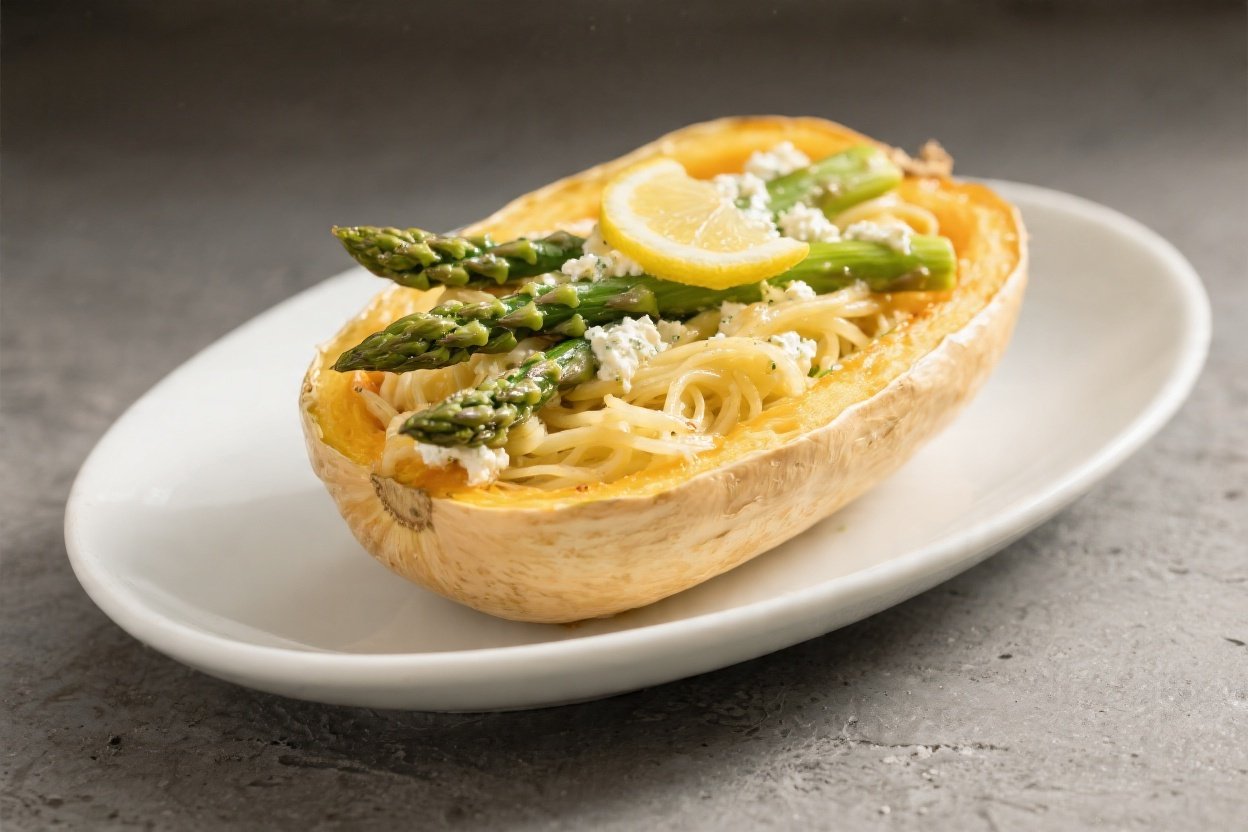
This is the kind of weeknight dish that feels special without demanding much from you. Sweet strands of roasted spaghetti squash get tossed with lemony ricotta, tender asparagus, and a touch of garlic. It’s creamy without cream, light but still filling, and naturally gluten-free.
The flavors are clean and springy, yet cozy enough to enjoy year-round. If you’re looking for a simple way to eat more vegetables without sacrificing comfort, this one fits the bill.
Why This Recipe Works
Spaghetti squash gives you a pasta-like base that soaks up flavor while keeping things light. Ricotta adds creaminess and body without making the dish heavy.
Lemon brightens everything and balances the sweetness of the squash. Asparagus brings a crisp-tender bite and fresh, green flavor. A little olive oil, garlic, and Parmesan tie it all together for a satisfying, balanced bowl.
What You’ll Need
- 1 medium spaghetti squash (about 2.5–3 pounds)
- 1 bunch asparagus, tough ends trimmed, cut into 1–2 inch pieces
- 1 cup whole-milk ricotta (good-quality, well-drained)
- 1 large lemon (zest and juice)
- 3 tablespoons extra-virgin olive oil, divided
- 2–3 garlic cloves, minced
- 1/3 cup grated Parmesan or Pecorino Romano, plus more for serving
- 1/4 teaspoon red pepper flakes (optional, for gentle heat)
- Kosher salt and freshly ground black pepper
- Fresh basil or parsley, chopped, for garnish (optional)
How to Make It
- Preheat and prep the squash. Heat the oven to 400°F (200°C). Halve the spaghetti squash lengthwise and scoop out the seeds. Drizzle the cut sides with 1 tablespoon olive oil, then season with salt and pepper.
- Roast until tender. Place squash cut-side down on a parchment-lined sheet pan. Roast 35–45 minutes, until the shell gives when pressed and the strands pull away easily with a fork. The edges should look lightly caramelized.
- Mix the ricotta sauce. While the squash roasts, stir ricotta with lemon zest, 1–2 tablespoons lemon juice, 2 tablespoons olive oil, red pepper flakes, and half the grated Parmesan. Season generously with salt and pepper. It should taste bright and well-seasoned.
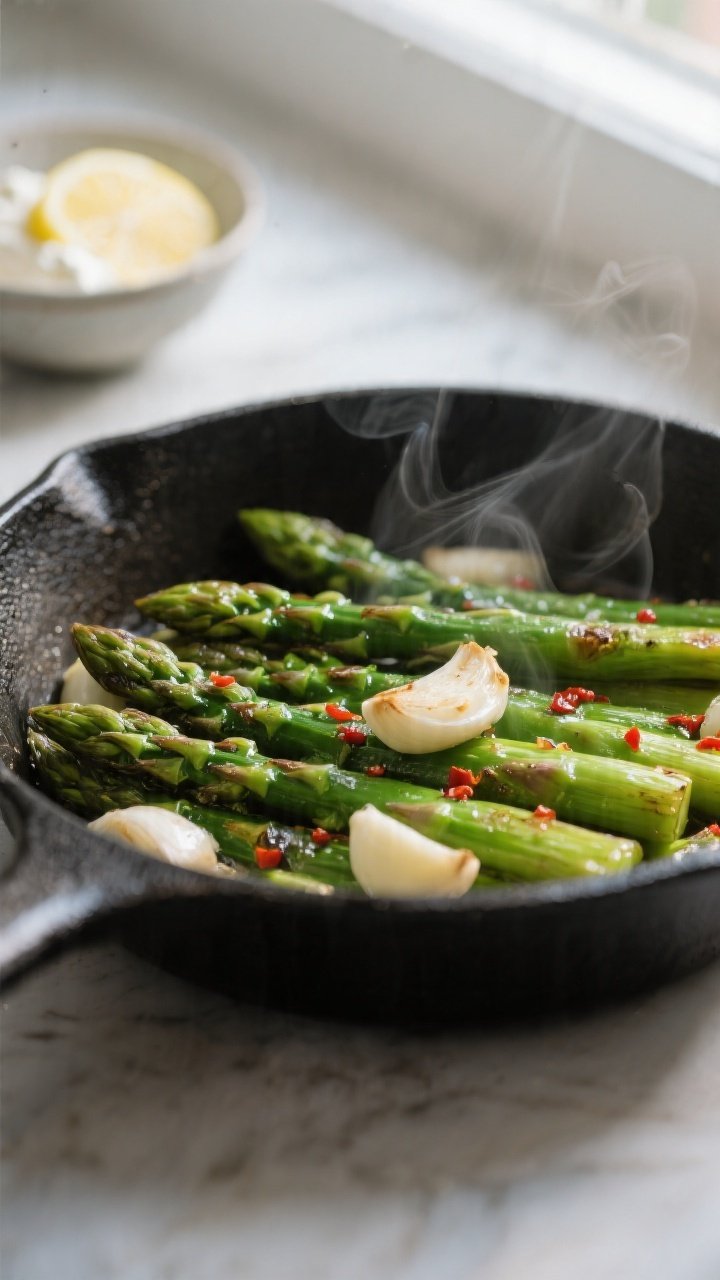
- Cook the asparagus. Heat a large skillet over medium. Add a small splash of olive oil if needed, then the asparagus and a pinch of salt. Sauté 3–5 minutes until crisp-tender and bright green. Add garlic for the last 30–45 seconds, just until fragrant.
- Shred the squash. When the squash is cool enough to handle, use a fork to pull the flesh into long strands. Transfer to a large bowl, keeping some strands in longer pieces for the best “pasta” feel.
- Combine gently. Add the warm asparagus and garlic to the bowl with the squash. Spoon in the ricotta mixture and toss gently until everything is coated. If it feels too thick, loosen with a splash of warm water or a bit more lemon juice.
- Finish and taste. Sprinkle in the remaining Parmesan. Taste and adjust with extra salt, pepper, or lemon juice. You want a bright, creamy balance with a little tang.
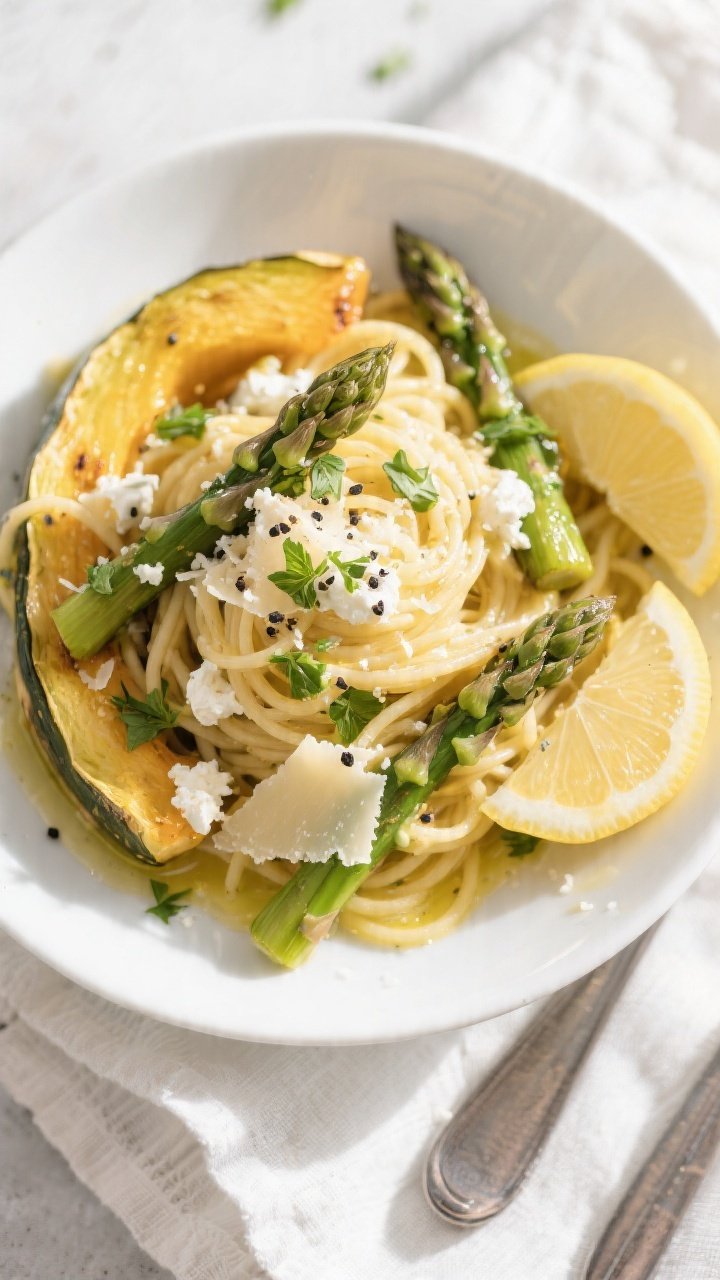
- Serve. Pile into bowls, top with more Parmesan and chopped herbs, and add a drizzle of good olive oil if you like. Serve warm.
Keeping It Fresh
Leftovers keep well for 2–3 days in an airtight container in the fridge.
For best texture, reheat gently on the stovetop over low heat with a splash of water to loosen the sauce. The lemon flavor can fade, so finish with a squeeze of fresh lemon before serving. If the squash releases liquid after chilling, just drain off a bit or cook it off in the pan as you warm it.
Avoid microwaving on high, which can make the asparagus mushy.
Benefits of This Recipe
- Light but satisfying: You get creamy comfort without heavy cream or pasta.
- Vegetable-forward: A full serving of squash and asparagus delivers fiber and vitamins.
- Balanced flavors: Lemon, ricotta, and Parmesan create a bright, savory sauce that feels fresh.
- Weeknight-friendly: Minimal prep and a single sheet pan plus one skillet.
- Flexible: Easy to adapt with different veggies, herbs, or protein add-ins.
Pitfalls to Watch Out For
- Undercooked squash: If it’s still crunchy, keep roasting. Proper tenderness is key for long, pasta-like strands.
- Watery results: Overcooked squash or ricotta with excess whey can water down the sauce. Drain ricotta if it looks loose and don’t over-roast the squash.
- Bland sauce: Ricotta needs help. Taste and adjust with salt, pepper, lemon zest, and Parmesan until it pops.
- Overcooked asparagus: Aim for crisp-tender. It should have some snap, not slump.
- Too much acidity: Lemon is great, but add it gradually. Use zest for intense lemon flavor without extra sourness.
Variations You Can Try
- Add protein: Fold in shredded rotisserie chicken, sautéed shrimp, or crispy chickpeas.
- Go herby: Try dill and chives for a fresh twist, or thyme and parsley for something more savory.
- Make it greener: Add peas, baby spinach, or ribbons of zucchini to the skillet with the asparagus.
- Heat it up: Swap red pepper flakes for a spoon of Calabrian chili paste or a pinch of Aleppo pepper.
- Nutty finish: Toasted pine nuts or almonds add crunch and richness.
- Dairy tweaks: Use part-skim ricotta for lighter, or mascarpone for extra luxe. A spoon of Greek yogurt adds tang.
- Cheese swap: Pecorino brings a saltier, sharper edge than Parmesan.
FAQ
How do I know when the spaghetti squash is done?
The shell should give when pressed, and a fork should easily pull long strands from the edges. If it feels crunchy or resists, keep roasting in 5–7 minute increments.
Can I cook the spaghetti squash in the microwave?
Yes. Pierce the whole squash several times with a knife, microwave 5 minutes to soften, then halve and scoop seeds.
Place cut-side down in a microwave-safe dish with a little water and cook 8–12 more minutes until tender. The oven gives better caramelization, but the microwave is faster.
What’s the best way to drain ricotta?
Spoon it into a fine-mesh strainer set over a bowl and refrigerate 20–30 minutes. For very wet ricotta, line the strainer with cheesecloth.
You want it thick and scoopable, not soupy.
Can I make this dairy-free?
Use a thick, unsweetened plant-based ricotta or blend silken tofu with a little olive oil, lemon zest, nutritional yeast, salt, and pepper. Finish with a dairy-free Parmesan-style topping.
How can I avoid watery squash?
Roast cut-side down for better steam release, and let it rest 5 minutes after baking before shredding. If there’s extra liquid in the bowl, drain it off or cook it out briefly in the skillet.
What if I can’t find asparagus?
Broccoli florets, broccolini, snap peas, or green beans all work.
Keep the cook time short so they stay bright and crisp.
Is this good served cold?
It works best warm, but leftovers can be eaten at room temperature. If serving cold, boost the lemon and salt to keep flavors lively.
Can I prep components ahead?
Yes. Roast the squash and mix the ricotta sauce up to 2 days ahead.
Rewarm the squash gently, cook the asparagus fresh, then toss everything together right before serving.
What’s a good garnish?
Fresh basil or parsley, extra lemon zest, a drizzle of olive oil, and a shower of Parmesan. For crunch, add toasted nuts or breadcrumbs.
How do I make it more saucy?
Loosen the ricotta with a bit of warm water, pasta cooking water (if you’ve made pasta on the side), or a splash of milk. Add more olive oil and lemon to keep the flavor bright.
Wrapping Up
Lemon Ricotta Spaghetti Squash with Asparagus is fresh, creamy, and simple enough for any night.
You get the comfort of a cheesy, lemony bowl with the lightness of peak-season vegetables. Keep the seasoning bold, the asparagus crisp, and the ricotta thick, and you’ll have a reliable favorite on repeat. It’s a flexible, feel-good recipe that checks every box without a fuss.
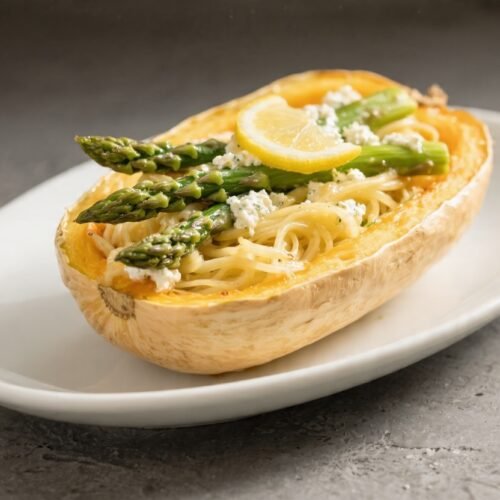
Lemon Ricotta Spaghetti Squash With Asparagus – Bright, Creamy, And Satisfying
Ingredients
- 1 medium spaghetti squash (about 2.5–3 pounds)
- 1 bunch asparagus, tough ends trimmed, cut into 1–2 inch pieces
- 1 cup whole-milk ricotta (good-quality, well-drained)
- 1 large lemon (zest and juice)
- 3 tablespoons extra-virgin olive oil, divided
- 2–3 garlic cloves, minced
- 1/3 cup grated Parmesan or Pecorino Romano, plus more for serving
- 1/4 teaspoon red pepper flakes (optional, for gentle heat)
- Kosher salt and freshly ground black pepper
- Fresh basil or parsley, chopped, for garnish (optional)
Instructions
- Preheat and prep the squash. Heat the oven to 400°F (200°C). Halve the spaghetti squash lengthwise and scoop out the seeds. Drizzle the cut sides with 1 tablespoon olive oil, then season with salt and pepper.
- Roast until tender. Place squash cut-side down on a parchment-lined sheet pan. Roast 35–45 minutes, until the shell gives when pressed and the strands pull away easily with a fork. The edges should look lightly caramelized.
- Mix the ricotta sauce. While the squash roasts, stir ricotta with lemon zest, 1–2 tablespoons lemon juice, 2 tablespoons olive oil, red pepper flakes, and half the grated Parmesan. Season generously with salt and pepper. It should taste bright and well-seasoned.
- Cook the asparagus. Heat a large skillet over medium. Add a small splash of olive oil if needed, then the asparagus and a pinch of salt. Sauté 3–5 minutes until crisp-tender and bright green. Add garlic for the last 30–45 seconds, just until fragrant.
- Shred the squash. When the squash is cool enough to handle, use a fork to pull the flesh into long strands. Transfer to a large bowl, keeping some strands in longer pieces for the best “pasta” feel.
- Combine gently. Add the warm asparagus and garlic to the bowl with the squash. Spoon in the ricotta mixture and toss gently until everything is coated. If it feels too thick, loosen with a splash of warm water or a bit more lemon juice.
- Finish and taste. Sprinkle in the remaining Parmesan. Taste and adjust with extra salt, pepper, or lemon juice. You want a bright, creamy balance with a little tang.
- Serve. Pile into bowls, top with more Parmesan and chopped herbs, and add a drizzle of good olive oil if you like. Serve warm.