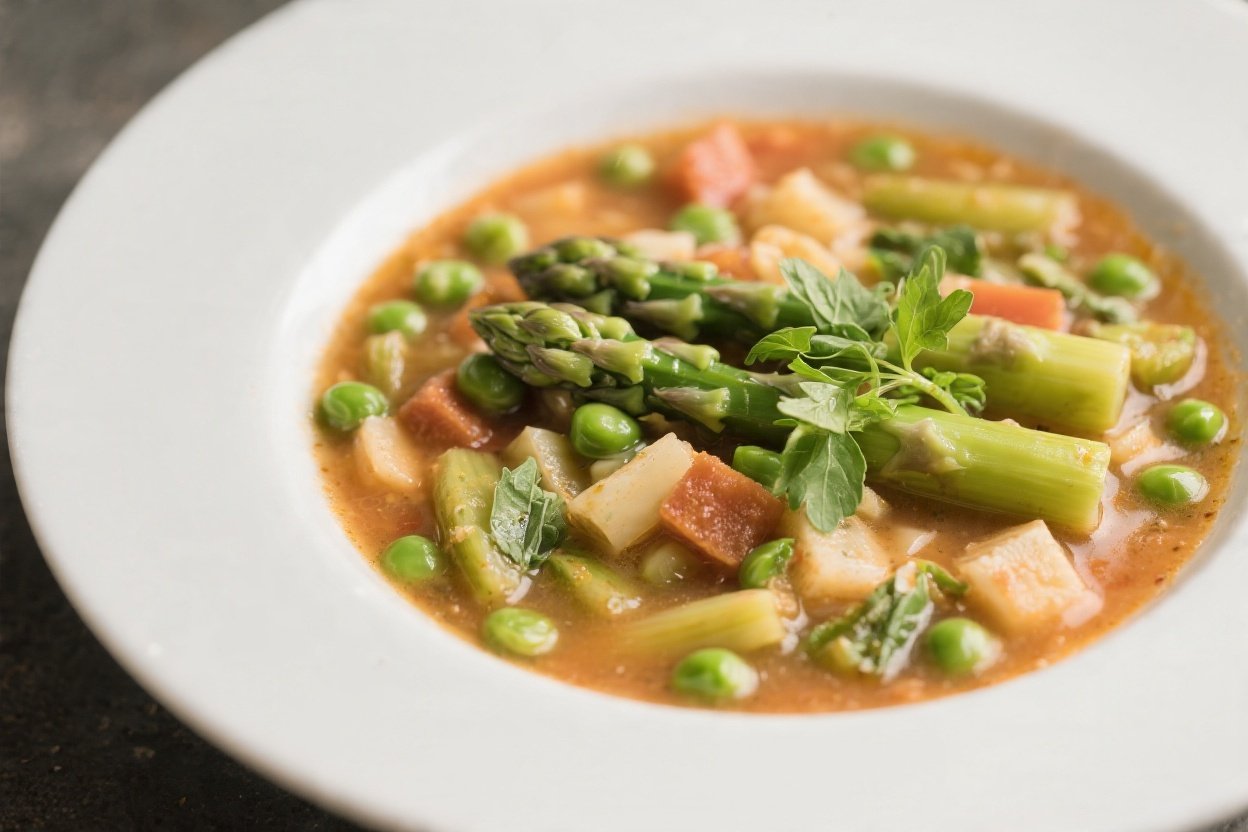
This is the kind of soup that makes a weeknight feel special. It’s light but satisfying, full of tender spring vegetables, and layered with fresh, green flavor. Asparagus, peas, and herbs keep it crisp and bright, while pasta and beans make it comforting.
One pot, simple steps, and you’ve got dinner that tastes like sunshine. Serve it with a squeeze of lemon and a shower of Parmesan, and you’re set.
Why This Recipe Works
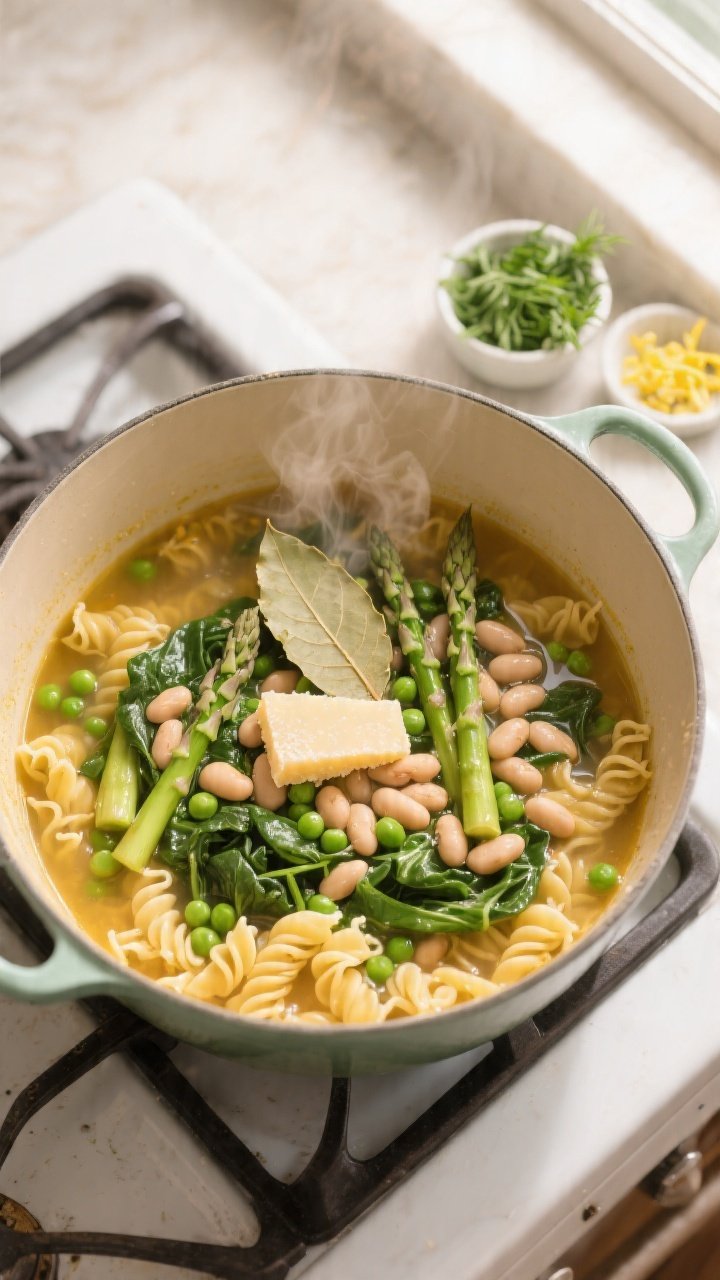
- Seasonal stars: Asparagus and peas cook quickly and bring natural sweetness and snap, so the soup tastes fresh, not heavy.
- Smart layering: Aromatics are sautéed first to build flavor, then broth, pasta, and beans go in, and delicate veggies are added at the end to stay crisp-tender.
- Balanced texture: Small pasta and creamy beans give body without weighing things down. You get a brothy soup with plenty to bite into.
- Bright finish: Lemon zest, lemon juice, and fresh herbs at the end lift the whole pot and keep flavors clean.
- Flexible base: Vegetarian as written, but easy to adapt with chicken, pancetta, or gluten-free pasta if you like.
Ingredients
- 2 tablespoons extra-virgin olive oil, plus more for serving
- 1 medium yellow onion, finely chopped
- 2 medium carrots, diced
- 2 celery stalks, diced
- 3 garlic cloves, thinly sliced
- 1 teaspoon kosher salt, plus more to taste
- Freshly ground black pepper
- 1/4 teaspoon red pepper flakes (optional)
- 6 cups low-sodium vegetable broth (or chicken broth)
- 1 bay leaf
- 1 Parmesan rind (optional, for depth; omit for vegan)
- 3/4 cup small pasta (ditalini, small shells, or orzo)
- 1 (15-ounce) can cannellini or navy beans, drained and rinsed
- 1 bunch asparagus (about 1 pound), trimmed and cut into 1-inch pieces
- 1 cup fresh or frozen peas
- 2 cups baby spinach or chopped tender greens
- 1/4 cup chopped fresh parsley
- 1/4 cup chopped fresh dill or basil (or a mix)
- Finely grated zest of 1 lemon, plus 1–2 tablespoons lemon juice
- Grated Parmesan, for serving (optional)
How to Make It
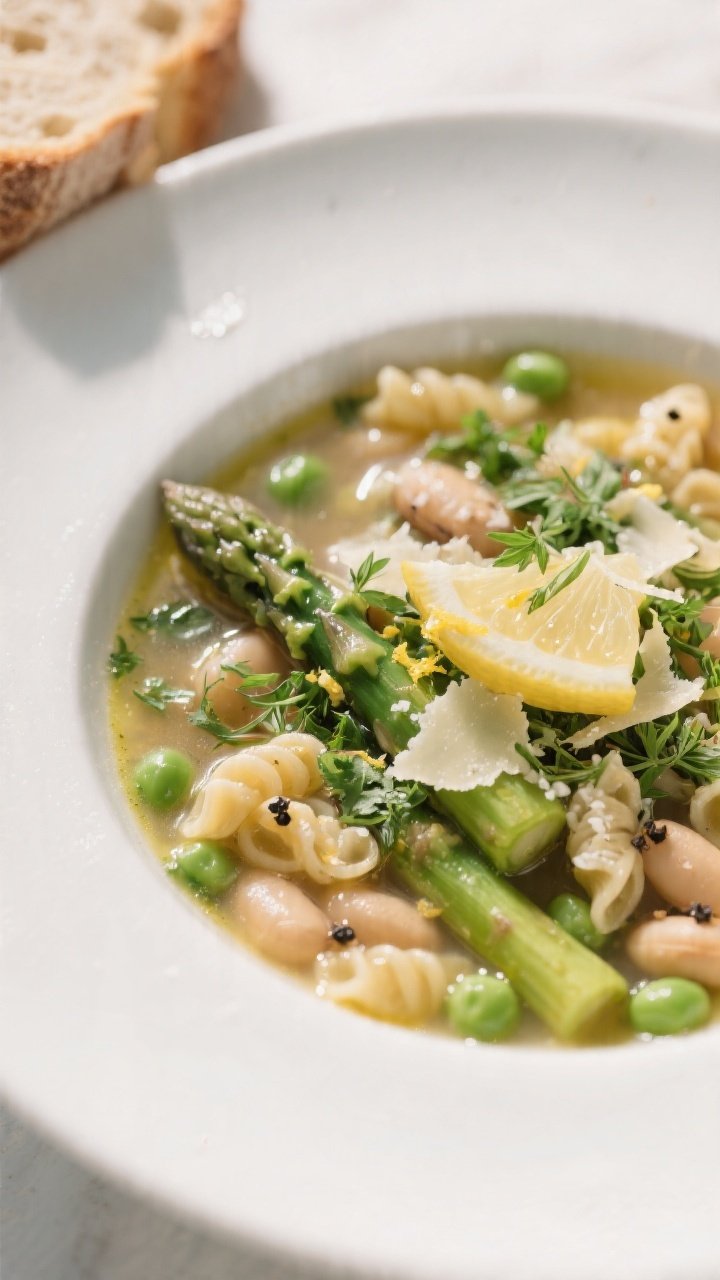
- Sauté the aromatics: Warm the olive oil in a large pot over medium heat. Add onion, carrots, celery, and 1/2 teaspoon salt. Cook, stirring occasionally, until softened and glossy, about 7–8 minutes. Stir in garlic and red pepper flakes; cook 30 seconds until fragrant.
- Add broth and season: Pour in the broth. Add bay leaf and Parmesan rind if using. Bring to a gentle boil, then reduce to a lively simmer. Taste and season with a pinch more salt if needed.
- Cook the pasta: Stir in the pasta. Simmer until just shy of al dente, checking package time and starting to test a minute early.
- Add beans and greens: Stir in the beans and spinach. Simmer 1–2 minutes until the spinach wilts.
- Finish with spring veggies: Add asparagus and peas. Simmer just until the asparagus is bright and tender-crisp and the peas are heated through, 2–4 minutes. You want them vibrant, not mushy.
- Brighten and herb it up: Remove the bay leaf and Parmesan rind. Stir in lemon zest, 1 tablespoon lemon juice, parsley, and dill or basil. Taste and adjust with more salt, pepper, or lemon juice.
- Serve: Ladle into bowls. Top with a drizzle of olive oil and grated Parmesan if you like. Serve right away while the greens still pop.
Keeping It Fresh
- Cook pasta separately for leftovers: If you plan to store the soup, boil the pasta in salted water and store it separately. Add to bowls when reheating so it doesn’t soak up all the broth.
- Stop the cook: For the best color and texture, run just-cooked asparagus under cool water before adding to reheated leftovers, or undercook it slightly on day one.
- Storage: Refrigerate in airtight containers for up to 4 days. Rewarm gently over medium heat; add a splash of broth or water as needed.
- Freezing: Freeze without pasta and without delicate greens for up to 2 months. Add fresh greens and pasta when you reheat.
Benefits of This Recipe
- Nutrient-rich: Asparagus and peas bring fiber, folate, and vitamin C; spinach adds iron and vitamin K; beans add plant protein.
- Light yet filling: The broth keeps it from feeling heavy, while beans and pasta make it satisfying.
- Budget-friendly: Uses pantry staples and flexible produce. Frozen peas work perfectly and are often cheaper.
- Quick and easy: About 35 minutes start to finish, with minimal fuss and one pot.
- Customizable: Works with what you have—swap greens, change herbs, or add a protein.
What Not to Do
- Don’t overcook the asparagus and peas: They should stay bright and slightly snappy, not dull and mushy.
- Don’t forget to season in layers: Add a bit of salt early and taste again at the end. It prevents a flat-tasting soup.
- Don’t boil the pasta to mush: Slightly undercook it in the soup or cook it separately to maintain texture.
- Don’t skip the lemon and herbs: They define the soup’s “spring” character. Even a small squeeze of lemon helps.
- Don’t overcrowd the pot with heavy vegetables: Keep it light. Save starchy root veg for winter soups.
Alternatives
- Pasta swaps: Use small gluten-free pasta, pearled couscous, farro, or skip pasta and add extra beans.
- Bean swaps: Chickpeas, great northern beans, or butter beans all work well.
- Greens: Baby kale, chard, or arugula can replace spinach. Add sturdier greens a few minutes earlier.
- Herbs: Try tarragon for an anise note, mint for extra freshness, or chives for gentle onion flavor.
- Broth base: Use chicken broth for a richer taste, or add 1–2 teaspoons white miso off the heat for umami (skip Parmesan rind if using miso).
- Protein add-ins: Shredded rotisserie chicken, seared shrimp, or crisped pancetta can be stirred in at the end.
FAQ
Can I make this soup vegan?
Yes. Use vegetable broth, skip the Parmesan rind, and finish with extra lemon and herbs. For a cheesy note, sprinkle with nutritional yeast when serving.
What pasta shape works best?
Choose small shapes that fit on a spoon, like ditalini, small shells, or orzo.
They cook evenly and distribute well in each bite.
Can I use frozen asparagus?
Fresh is best for texture, but in a pinch, you can use frozen. Add it straight from the freezer and cook just until warmed through to avoid sogginess.
How do I avoid cloudy broth?
Keep the simmer gentle, not a rolling boil, and avoid over-stirring once the pasta goes in. Cloudiness doesn’t hurt flavor, but a calmer simmer keeps the broth clearer.
Is this good for meal prep?
Absolutely.
Store the broth and veg separately from the pasta if possible. Add fresh herbs and lemon after reheating to refresh the flavor.
Can I add tomatoes?
Yes. Add a cup of diced fresh tomatoes or a half can of crushed tomatoes with the broth for a light, tangy twist.
It shifts the profile but stays delicious.
What if I don’t have lemon?
Use a splash of white wine vinegar or apple cider vinegar at the end. Start with 1 teaspoon and adjust to taste.
How can I thicken the soup a little?
Mash a few beans with a fork and stir them back in, or simmer a minute longer after adding the beans. You’ll get a lightly creamy texture without cream.
In Conclusion
Spring Minestrone with Asparagus, Peas & Fresh Herbs is a bright, feel-good soup that’s simple to make and easy to love.
It’s packed with seasonal vegetables, full of gentle textures, and finished with a clean, fresh snap of lemon and herbs. Keep it vegetarian or riff with your favorite add-ins—either way, it’s a fast path to a wholesome, flavorful meal. Serve it with crusty bread, and enjoy a bowl that tastes like the season.
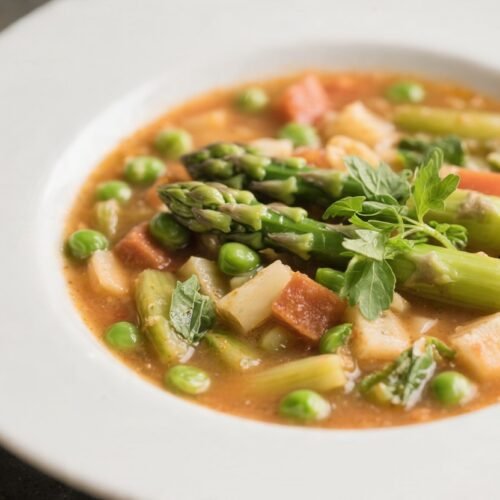
Spring Minestrone with Asparagus, Peas & Fresh Herbs - A Bright, Brothy Vegetable Soup
Ingredients
- 2 tablespoons extra-virgin olive oil, plus more for serving
- 1 medium yellow onion, finely chopped
- 2 medium carrots, diced
- 2 celery stalks, diced
- 3 garlic cloves, thinly sliced
- 1 teaspoon kosher salt, plus more to taste
- Freshly ground black pepper
- 1/4 teaspoon red pepper flakes (optional)
- 6 cups low-sodium vegetable broth (or chicken broth)
- 1 bay leaf
- 1 Parmesan rind (optional, for depth; omit for vegan)
- 3/4 cup small pasta (ditalini, small shells, or orzo)
- 1 (15-ounce) can cannellini or navy beans, drained and rinsed
- 1 bunch asparagus (about 1 pound), trimmed and cut into 1-inch pieces
- 1 cup fresh or frozen peas
- 2 cups baby spinach or chopped tender greens
- 1/4 cup chopped fresh parsley
- 1/4 cup chopped fresh dill or basil (or a mix)
- Finely grated zest of 1 lemon, plus 1–2 tablespoons lemon juice
- Grated Parmesan, for serving (optional)
Instructions
- Sauté the aromatics: Warm the olive oil in a large pot over medium heat. Add onion, carrots, celery, and 1/2 teaspoon salt. Cook, stirring occasionally, until softened and glossy, about 7–8 minutes. Stir in garlic and red pepper flakes; cook 30 seconds until fragrant.
- Add broth and season: Pour in the broth. Add bay leaf and Parmesan rind if using. Bring to a gentle boil, then reduce to a lively simmer. Taste and season with a pinch more salt if needed.
- Cook the pasta: Stir in the pasta. Simmer until just shy of al dente, checking package time and starting to test a minute early.
- Add beans and greens: Stir in the beans and spinach. Simmer 1–2 minutes until the spinach wilts.
- Finish with spring veggies: Add asparagus and peas. Simmer just until the asparagus is bright and tender-crisp and the peas are heated through, 2–4 minutes. You want them vibrant, not mushy.
- Brighten and herb it up: Remove the bay leaf and Parmesan rind. Stir in lemon zest, 1 tablespoon lemon juice, parsley, and dill or basil. Taste and adjust with more salt, pepper, or lemon juice.
- Serve: Ladle into bowls. Top with a drizzle of olive oil and grated Parmesan if you like. Serve right away while the greens still pop.