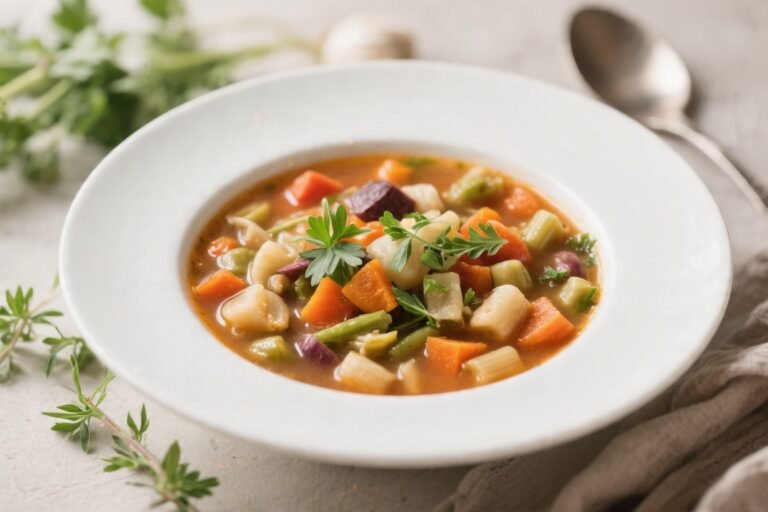
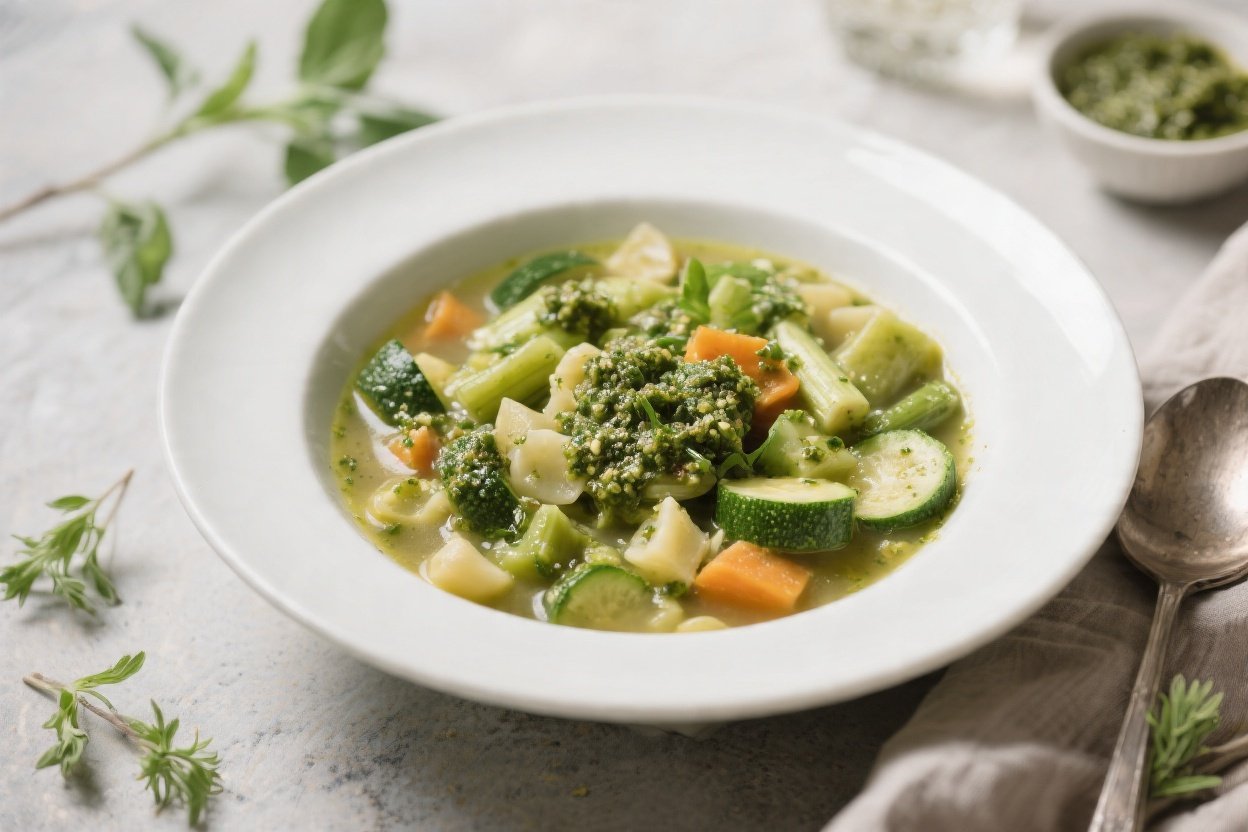
Spring shows up in the produce aisle as much as it does in the weather. This bright, all-green minestrone is a simple way to celebrate tender vegetables, silky greens, and the kind of light, clean flavors that make you want a second bowl. It’s hearty without feeling heavy, thanks to a lemony, dairy-free pesto that ties everything together.
Think easy weeknight cooking with a little glow-up. No fuss, just good, honest food that tastes like the season.
What Makes This Special
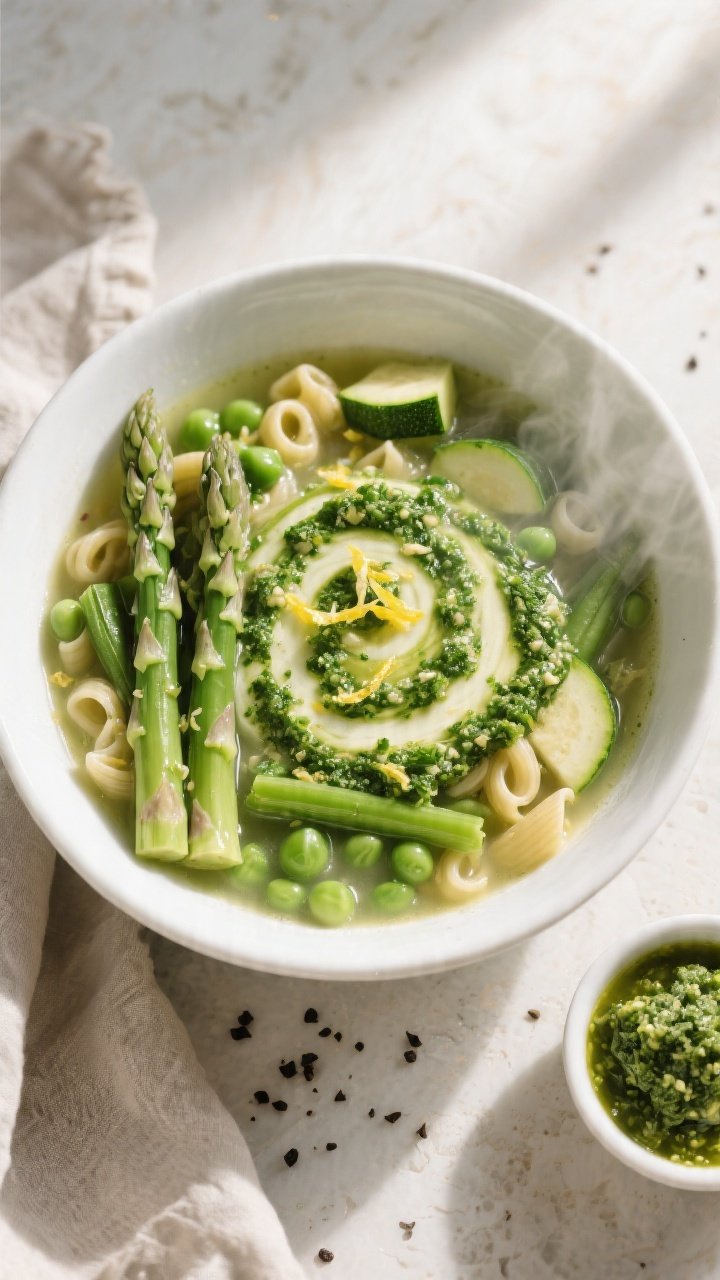
This minestrone is a green-on-green dream—zucchini, leeks, peas, and leafy greens in a fragrant broth, finished with a slick of basil pesto. It’s fully vegan, but it doesn’t lean on substitutes or complicated steps.
The trick is layering flavors: a gentle soffritto base, a quick simmer, then a bright pesto at the end so the flavors stay crisp. It’s also highly customizable—swap in what’s freshest, and it’ll still taste fantastic.
Ingredients
- Olive oil: 3 tablespoons, divided
- Leek: 1 large, white and light green parts only, thinly sliced and well rinsed
- Celery: 2 stalks, diced
- Garlic: 3 cloves, minced
- Zucchini: 2 small, diced
- Asparagus: 1 bunch, trimmed and cut into 1-inch pieces
- Green beans: 1 cup, trimmed and cut into 1-inch pieces
- Frozen or fresh peas: 1 cup
- Cannellini beans: 1 can (15 oz), drained and rinsed
- Small pasta: 3/4 cup (ditalini, small shells, or orzo)
- Vegetable broth: 6 cups, low-sodium
- Bay leaf: 1
- Lemon: 1, zest and juice
- Baby spinach or kale: 3 cups, loosely packed (chopped if using kale)
- Salt and black pepper: to taste
- Crushed red pepper flakes: optional, a pinch
For the Vegan Basil Pesto
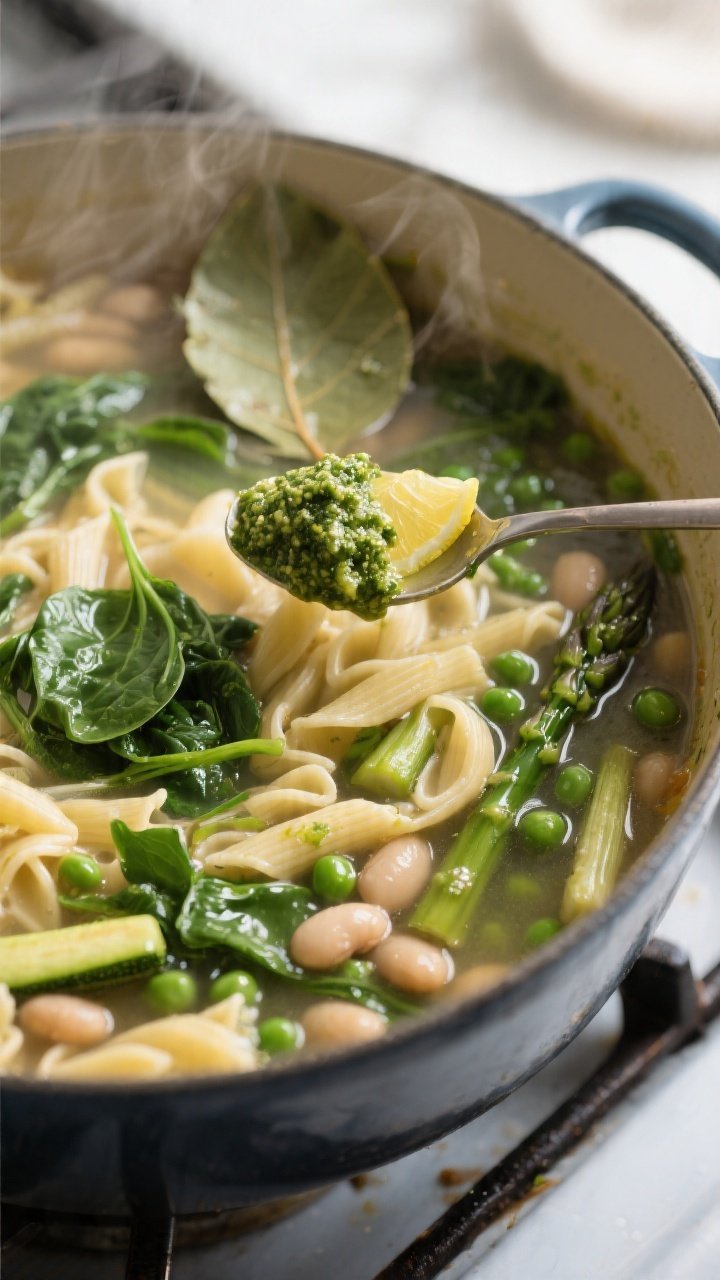
- Fresh basil leaves:</strong > 2 packed cups
- Flat-leaf parsley: 1/2 cup (optional, for a brighter green)
- Pine nuts or walnuts: 1/3 cup, lightly toasted
- Nutritional yeast: 3 tablespoons
- Garlic: 1 small clove
- Lemon juice: 1 to 2 tablespoons
- Olive oil: 1/3 to 1/2 cup
- Salt and black pepper: to taste
Step-by-Step Instructions
- Make the pesto. In a food processor, blend basil, parsley (if using), nuts, nutritional yeast, garlic, lemon juice, salt, and pepper. With the motor running, stream in olive oil until it’s smooth but not runny. Taste and adjust the seasoning. Set aside.
- Sauté the base. Warm 2 tablespoons olive oil in a large pot over medium heat. Add leek and celery with a pinch of salt. Cook 5–7 minutes, stirring, until soft and fragrant, not browned. Add the minced garlic and cook 30 seconds.
- Build the soup. Stir in zucchini, green beans, and asparagus. Cook 2–3 minutes to coat in the aromatics. Pour in vegetable broth and add the bay leaf. Bring to a gentle boil.
- Simmer and season. Reduce heat and simmer 8–10 minutes until the vegetables are just tender. Add peas and cannellini beans. Taste and season with salt, black pepper, and red pepper flakes if you like a little heat.
- Cook the pasta. You have two options: cook the pasta directly in the soup for extra body, or cook it separately in salted water to keep leftovers from getting mushy. If adding to the pot, stir in the pasta and simmer until al dente, usually 7–9 minutes.
- Finish with greens and lemon. Stir in spinach or kale and cook 1–2 minutes until just wilted. Add lemon zest and a squeeze of lemon juice for brightness.
- Swirl in the pesto. Turn off the heat. Stir in 2–3 tablespoons of pesto per serving bowl, or fold a few spoonfuls directly into the pot for a greener broth. Keep extra pesto at the table so everyone can add more.
- Serve. Ladle into warm bowls and top with a final spoon of pesto and a drizzle of olive oil. Crack fresh pepper over the top. If you’re not fully vegan, a sprinkle of grated Pecorino is lovely—but it’s not necessary.
Keeping It Fresh
Green vegetables lose their color and snap if overcooked, so keep the simmer gentle and the timing tight. Add delicate veggies like peas and greens at the end, not the beginning. For leftovers that still taste bright, store the pasta separately and add it to each bowl before reheating.
Keep the pesto in a jar with a thin layer of olive oil on top to prevent browning.
Why This is Good for You
- Fiber-rich and filling: Beans, greens, and vegetables keep you satisfied without weighing you down.
- Healthy fats: Olive oil and nuts in the pesto support heart health and help you absorb fat-soluble vitamins.
- Vitamins and minerals: Asparagus, peas, and spinach bring folate, vitamin K, vitamin C, and iron.
- Plant protein: Cannellini beans and nutritional yeast add protein in a gentle, easy-to-digest way.
- Low on processed ingredients: It’s all about whole foods, fresh flavors, and a clean finish.
What Not to Do
- Don’t boil the life out of it. Overcooking turns everything dull and mushy.
- Don’t add pesto too early. Heat will mute the basil and make the color fade.
- Don’t forget salt. Season in layers—veg base, simmering broth, final taste test.
- Don’t crowd the pot with starch. Too much pasta can steal the broth and tip the balance. Keep it modest.
- Don’t skip the acid. A squeeze of lemon at the end makes the whole pot sing.
Variations You Can Try
- Make it gluten-free: Use small gluten-free pasta or stir in cooked brown rice or quinoa.
- Switch the greens: Try chard, baby kale, or even arugula for a peppery kick.
- Different beans: Chickpeas or butter beans add a new texture and flavor.
- Herb swap pesto: Blend basil with mint or dill for a springy twist. Add a handful of spinach for color.
- Creamy finish: Stir in a spoon of cashew cream for a velvety broth (still vegan).
- Extra veg: Add sliced fennel bulb with the leeks or toss in broccoli florets with the beans.
- Spice it up: Finish with chili oil or a pinch of Aleppo pepper.
FAQ
Can I make this ahead?
Yes.
Cook the soup base without the pasta and greens, cool, and refrigerate for up to 4 days. Reheat gently, then add pasta (pre-cooked) and greens right before serving. Stir in pesto just before eating.
What if I don’t have a food processor for the pesto?
Use a blender and pulse with short bursts, scraping the sides as needed.
No blender? Chop everything very finely with a knife, then mash with a mortar and pestle or the back of a spoon while adding olive oil.
Can I freeze it?
Freeze the soup without pasta, greens, or pesto for best results. Add those fresh after thawing and reheating.
Store in freezer-safe containers for up to 3 months.
How do I keep the pesto green?
Use fresh basil, add a splash of lemon, and cover the surface with a thin layer of olive oil. Store in the fridge in a tightly sealed jar for up to 5 days.
What can I use instead of nutritional yeast?
Try a teaspoon of white miso for savoriness, or a squeeze of lemon plus a pinch of salt. If not vegan, you can use grated Parmesan or Pecorino.
Is this soup high in protein?
It offers moderate plant protein from beans, pasta, and nutritional yeast.
For more, add extra beans or stir in cooked quinoa at the end.
Can I make it oil-free?
Yes. Sauté with a splash of broth instead of oil and make a pesto using blended basil, lemon, a bit of water, and nuts or seeds. It won’t be as silky, but it will still taste fresh.
In Conclusion
Green Spring Minestrone with Pesto is exactly what spring cooking should feel like—simple, fresh, and packed with color.
It’s a flexible recipe that welcomes whatever greens you’ve got and rewards you with a bright, satisfying bowl. Keep the cook time gentle, finish with lemon, and don’t be shy with that pesto. One pot, loads of vegetables, and a bowl that tastes like new beginnings.
Green Spring Minestrone with Pesto – Fresh, Vegan & Gorgeous
Ingredients
- Olive oil: 3 tablespoons, divided
- Leek: 1 large, white and light green parts only, thinly sliced and well rinsed
- Celery: 2 stalks, diced
- Garlic: 3 cloves, minced
- Zucchini: 2 small, diced
- Asparagus: 1 bunch, trimmed and cut into 1-inch pieces
- Green beans: 1 cup, trimmed and cut into 1-inch pieces
- Frozen or fresh peas: 1 cup
- Cannellini beans: 1 can (15 oz), drained and rinsed
- Small pasta: 3/4 cup (ditalini, small shells, or orzo)
- Vegetable broth: 6 cups, low-sodium
- Bay leaf: 1
- Lemon: 1, zest and juice
- Baby spinach or kale: 3 cups, loosely packed (chopped if using kale)
- Salt and black pepper: to taste
- Crushed red pepper flakes: optional, a pinch
- Fresh basil leaves: 2 packed cups
- Flat-leaf parsley: 1/2 cup (optional, for a brighter green)
- Pine nuts or walnuts: 1/3 cup, lightly toasted
- Nutritional yeast: 3 tablespoons
- Garlic: 1 small clove
- Lemon juice: 1 to 2 tablespoons
- Olive oil: 1/3 to 1/2 cup
- Salt and black pepper: to taste
Instructions
- Make the pesto. In a food processor, blend basil, parsley (if using), nuts, nutritional yeast, garlic, lemon juice, salt, and pepper. With the motor running, stream in olive oil until it’s smooth but not runny. Taste and adjust the seasoning. Set aside.
- Sauté the base. Warm 2 tablespoons olive oil in a large pot over medium heat. Add leek and celery with a pinch of salt. Cook 5–7 minutes, stirring, until soft and fragrant, not browned. Add the minced garlic and cook 30 seconds.
- Build the soup. Stir in zucchini, green beans, and asparagus. Cook 2–3 minutes to coat in the aromatics. Pour in vegetable broth and add the bay leaf. Bring to a gentle boil.
- Simmer and season. Reduce heat and simmer 8–10 minutes until the vegetables are just tender. Add peas and cannellini beans. Taste and season with salt, black pepper, and red pepper flakes if you like a little heat.
- Cook the pasta. You have two options: cook the pasta directly in the soup for extra body, or cook it separately in salted water to keep leftovers from getting mushy. If adding to the pot, stir in the pasta and simmer until al dente, usually 7–9 minutes.
- Finish with greens and lemon. Stir in spinach or kale and cook 1–2 minutes until just wilted. Add lemon zest and a squeeze of lemon juice for brightness.
- Swirl in the pesto. Turn off the heat. Stir in 2–3 tablespoons of pesto per serving bowl, or fold a few spoonfuls directly into the pot for a greener broth. Keep extra pesto at the table so everyone can add more.
- Serve. Ladle into warm bowls and top with a final spoon of pesto and a drizzle of olive oil. Crack fresh pepper over the top. If you’re not fully vegan, a sprinkle of grated Pecorino is lovely—but it’s not necessary.